
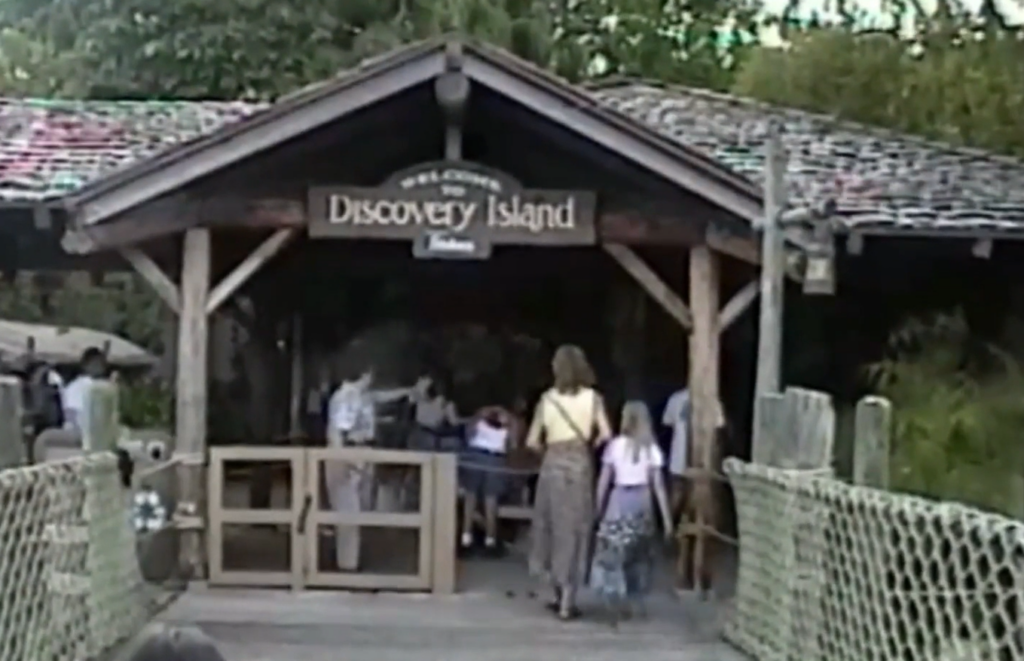
Discovery Island was one of the most unusual attractions ever operated at Walt Disney World: an entire 11.5-acre island in the middle of Bay Lake devoted to exotic birds, animal exhibits, lush botanical environments, and conservation. Long before Disney’s Animal Kingdom opened, guests could board a boat, cross the lake, and spend several hours exploring winding pathways through what was essentially Disney World’s first zoological attraction. Originally opened as Treasure Island on April 8, 1974, the island evolved from a pirate-inspired excursion into a serious wildlife preserve, became Discovery Island in 1977, and ultimately operated until April 8, 1999—exactly 25 years after its opening.
The island sits in Bay Lake between several of Walt Disney World’s earliest resort areas, with Disney’s Contemporary Resort, Disney’s Fort Wilderness Resort & Campground, and Disney’s Wilderness Lodge surrounding the lake today. Unlike Tom Sawyer Island at Magic Kingdom, Discovery Island was not accessible by bridge or raft from a nearby theme park. Visiting it was a separate excursion, reached by Disney boats traveling across Bay Lake.
The island itself predated Walt Disney World by many decades. Before Disney acquired the surrounding Florida property, it passed through several private owners and was known at various times as Raz Island, Idle Bay Isle, and Riles Island. Disney purchased the property during the massive Central Florida land acquisitions that preceded construction of Walt Disney World. What had been a relatively undeveloped island was subsequently reshaped into a landscaped visitor attraction.
When it debuted in 1974, Disney called it Treasure Island, drawing inspiration from the company’s 1950 live-action adaptation of Robert Louis Stevenson’s Treasure Island. Remnants of that original concept remained visible throughout the island’s life, most notably a deliberately wrecked sailing ship positioned along the shoreline. The shipwreck gave approaching guests the impression that they were landing on an isolated tropical outpost rather than entering a conventional zoo.
However, wildlife quickly became far more important than pirates.
Disney extensively landscaped the island, creating lagoons, habitats, walking paths, aviaries, and dense tropical vegetation. Hundreds of birds were introduced, and guests could encounter species from around the world in environments that often felt surprisingly informal compared with traditional zoological exhibits of the period. Flamingos gathered around lagoons, colorful tropical birds occupied large aviaries, and giant tortoises slowly wandered through specially designed habitats.
One of Discovery Island’s most impressive features was its enormous walk-through aviary, described by Disney as one of the largest of its kind. Rather than observing every animal through a conventional barrier, visitors could walk through environments where birds flew around and above them. That sense of immersion became an important precursor to the animal trails Disney would later build at Animal Kingdom.
By 1977, the original Treasure Island identity no longer adequately described what the attraction had become, and Disney renamed it Discovery Island. The new name emphasized exploration, wildlife, and environmental education rather than the remnants of the pirate storyline.
The experience was largely self-guided. Visitors wandered shaded trails with names and exhibits tied to the animals living nearby. Over the years, areas included Flamingo Lagoon, Pelican Bay, Trumpeter Springs, Tortoise Beach, and other habitats devoted to birds and small animals. Lemurs, cranes, swans, parrots, macaws, pelicans, flamingos, and Galápagos tortoises were among the species associated with the island.
 Discovery Island also offered animal presentations. At Parrots Perch, trained birds demonstrated behaviors for guests, providing an educational element similar to the animal presentations that would later become common throughout Disney’s Animal Kingdom. The island was never designed around thrill rides or elaborate Audio-Animatronic attractions. Its appeal came from exploration: taking a boat into Bay Lake, stepping onto an isolated island, and wandering through wildlife habitats at a slower pace than guests generally experienced inside Magic Kingdom.
Over time, Discovery Island became increasingly important to Disney’s developing conservation program. In 1978, it received accreditation from the American Association of Zoological Parks and Aquariums, now known as the Association of Zoos and Aquariums. Disney participated in breeding programs for rare species, and the island became more than simply an entertainment attraction.
Its most historically significant conservation effort involved the dusky seaside sparrow, a small Florida bird whose population had collapsed after much of its marsh habitat was altered or destroyed. Federal and state wildlife agencies attempted to preserve the species through a captive breeding program, and Discovery Island became one of the institutions involved.
Only male purebred dusky seaside sparrows remained by the time conservationists attempted captive breeding, making recovery extraordinarily difficult. Researchers experimented with breeding the remaining males with closely related seaside sparrows in an effort to preserve some of their genetic lineage. The final pure dusky seaside sparrow, a male commonly known as Orange Band, lived at Discovery Island and died in 1987. The species was subsequently declared extinct. The episode remains one of the most sobering chapters in Disney’s conservation history and gave Discovery Island a scientific importance extending far beyond its role as a tourist attraction.
By the 1990s, however, Disney was preparing something vastly larger.
Disney’s Animal Kingdom opened on April 22, 1998, transforming animal care and conservation at Walt Disney World. The new park contained expansive environments such as Kilimanjaro Safaris, Gorilla Falls Exploration Trail, and Maharajah Jungle Trek, along with a substantially larger animal-care infrastructure. Discovery Island’s intimate collection suddenly existed only a short distance from a 500-acre theme park specifically built around animals, nature, and conservation.
The original Discovery Island therefore became increasingly redundant.
 Disney officially closed the island to guests on April 8, 1999, exactly a quarter-century after Treasure Island had first opened. Disney Archives has stated that the opening of Animal Kingdom provided a better venue for showcasing animals, which helps explain why the small Bay Lake preserve was retired. Animals formerly housed on the island were moved to Disney’s Animal Kingdom and other zoological facilities.
There was also a symbolic transfer of identity. The central area surrounding the Tree of Life at Disney’s Animal Kingdom eventually took the name Discovery Island, preserving the title even after the original attraction disappeared. Today, millions of guests pass through Animal Kingdom’s Discovery Island without necessarily realizing that the name originally belonged to a very different Disney attraction located several miles away.
Unlike River Country, however, the old Discovery Island was never substantially cleared for redevelopment.
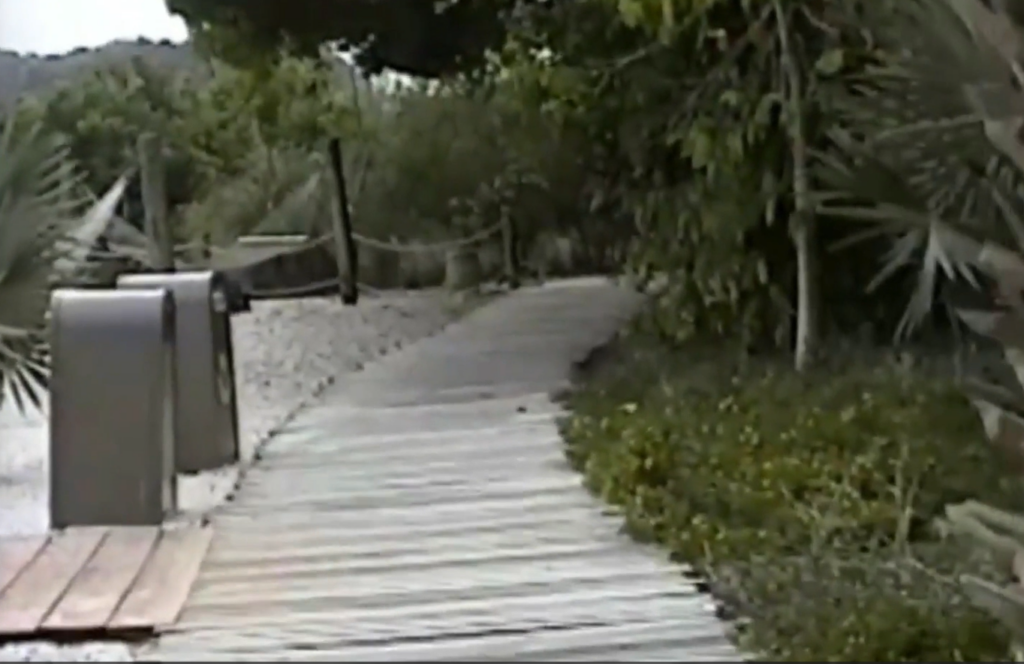
Disney removed the animals and ceased guest operations, but much of the physical infrastructure was simply left behind. Buildings, pathways, aviary structures, docks, animal habitats, utility facilities, and remnants of the original landscaping remained as Florida vegetation gradually reclaimed them. The dense tropical plantings that had once been carefully maintained grew uncontrolled, obscuring paths and structures and transforming the former attraction into one of the most mysterious pieces of abandoned Walt Disney World property.
The island’s unusual condition eventually generated enormous fascination among Disney history enthusiasts. Photographs and stories of deteriorating structures, abandoned enclosures, and overgrown pathways circulated online, helping Discovery Island develop a mythology far larger than the relatively quiet attraction had possessed during its final years.
That fascination has also resulted in unauthorized attempts to enter the island. Discovery Island remains private Walt Disney World property and is not open to guests. Although it can be seen from boats traveling across Bay Lake and from several surrounding resort areas, landing on or exploring the island is prohibited.
From the water, its history is increasingly difficult to recognize. Thick vegetation covers much of the shoreline, and many of the structures that once defined the attraction are hidden beneath decades of plant growth. Yet the island remains physically prominent in the center of Bay Lake, directly within one of Walt Disney World’s oldest recreation corridors.
Discovery Island is particularly important when considered alongside nearby River Country. Within only a few years of Walt Disney World’s 1971 opening, Disney was experimenting far beyond the traditional theme-park model. River Country offered a themed outdoor swimming experience, while Discovery Island provided wildlife encounters, conservation education, and nature exploration. Both attractions helped establish the idea that an entire Walt Disney World vacation could involve much more than simply spending every day inside Magic Kingdom.
Many concepts pioneered on Discovery Island eventually found more sophisticated expression at Disney’s Animal Kingdom. Immersive animal habitats, walk-through aviaries, conservation messaging, exotic landscaping, animal presentations, and the idea that guests could explore wildlife environments along meandering trails all became essential components of the later park.
Discovery Island therefore represents far more than an abandoned island visible from a passing boat. It was Disney World’s first serious experiment with zoological storytelling, an accredited wildlife facility, a participant in endangered-species conservation, and ultimately a conceptual ancestor of Disney’s Animal Kingdom.
Today, nature has largely reclaimed the pathways where guests once watched flamingos, giant tortoises, parrots, and exotic birds. Yet the island itself remains almost exactly where Walt Disney World visitors found it beginning in 1974—sitting quietly in the middle of Bay Lake, surrounded by active resorts and passing boats, carrying more than half a century of Disney history beneath its trees.