
Guests riding Kilimanjaro Safaris at Disney’s Animal Kingdom have a new animal to look for-and her arrival carries considerably more significance than simply adding another species encounter to the attraction.
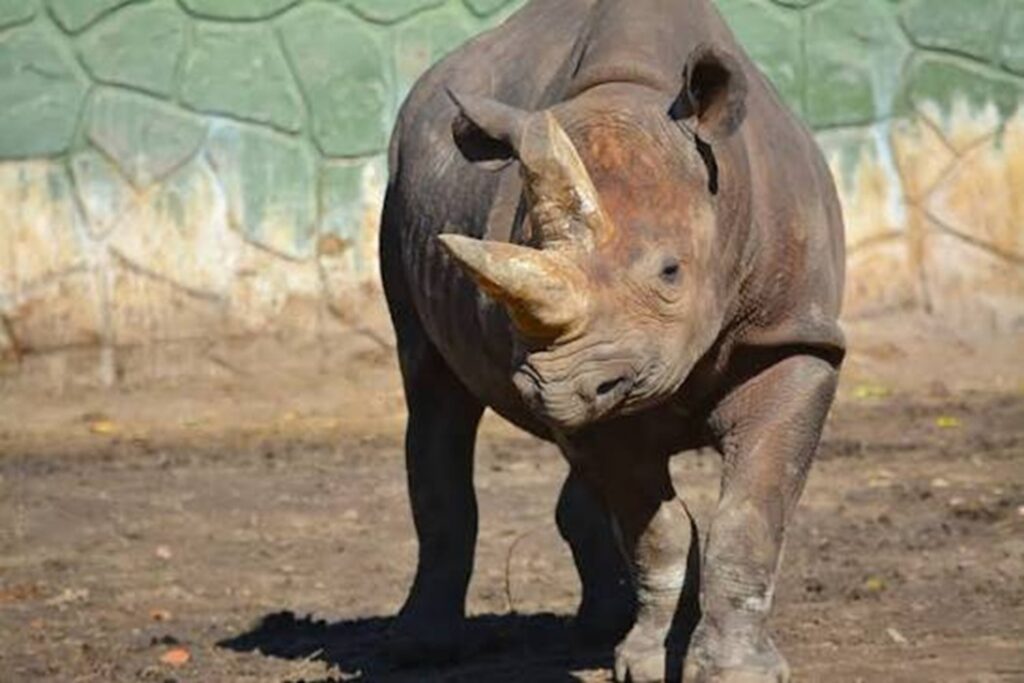
Timu, a female eastern black rhinoceros, has officially joined the animals visible on the Harambe Wildlife Reserve. Her debut follows a carefully planned transfer from the Racine Zoo in Wisconsin earlier this year as part of a conservation breeding program for the critically endangered species.
Timu is not a young rhino making her first move between zoological facilities. She spent more than two decades at the Racine Zoo, arriving there in 2003 and becoming a longtime favorite among visitors.
Her move to Florida was announced in May, although the receiving facility was not publicly identified at the time.
Racine Zoo explained that Timu was being transferred to another Association of Zoos and Aquariums-accredited facility under a breeding recommendation from the Eastern Black Rhinoceros Species Survival Plan. The zoo described her destination only as a facility with a strong record of successful eastern black rhino breeding.
We now know that destination was Walt Disney World.
The transfer was not simply a matter of putting Timu aboard a transport vehicle and introducing her to a new habitat. Racine Zoo said its animal-care team worked closely with staff at the receiving facility ahead of the move, including making changes to Timu’s diet and training routine. Teams also held virtual meetings so her new caregivers could learn more about her behavior and individual needs before she arrived.
That preparation is especially important with an animal of Timu’s size, age and conservation significance.
Timu had previously been paired with another eastern black rhino named Kianga at Racine Zoo under a Species Survival Plan breeding recommendation. Despite opportunities to breed, the pairing did not produce a calf. Kianga was transferred to the Milwaukee County Zoo in 2025, and conservation managers subsequently recommended trying different pairings.
Timu’s relocation to Disney’s Animal Kingdom therefore represents part of a coordinated effort extending far beyond Walt Disney World.
Species Survival Plans are managed breeding and population programs used by accredited zoological organizations to maintain healthy, genetically diverse populations of threatened and endangered animals in human care.
Eastern black rhinos are among the species for which those efforts are particularly important.
Wild populations were devastated during the second half of the 20th century, primarily because of poaching for rhino horn and habitat pressures. Although conservation programs have helped some populations recover, the eastern black rhinoceros remains critically endangered.
Disney’s Animal Kingdom has extensive experience caring for rhinoceroses and participating in conservation efforts involving the animals.
For guests, Timu’s arrival adds another possible encounter during Kilimanjaro Safaris.
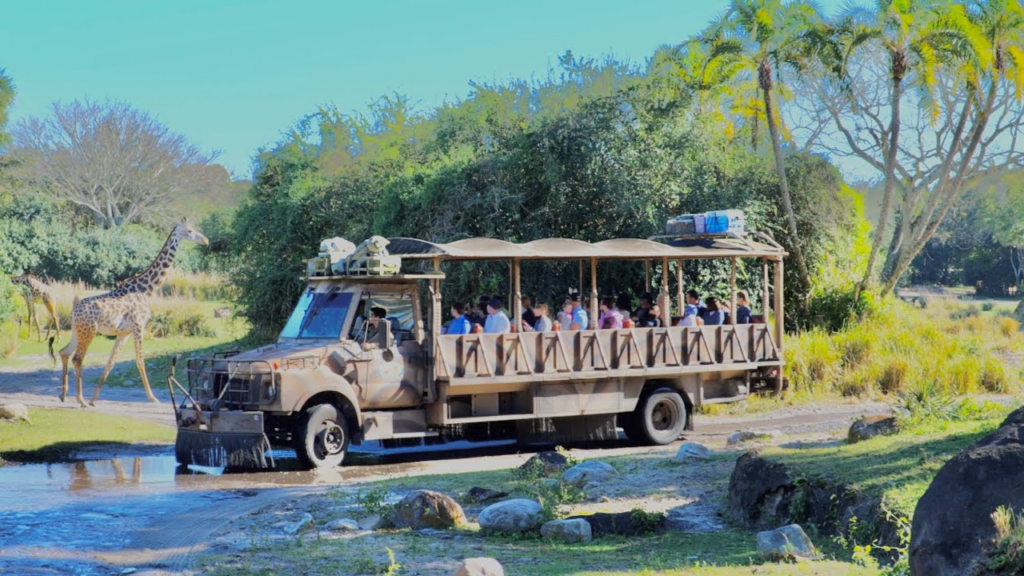
The attraction takes guests through the fictional Harambe Wildlife Reserve aboard open-air safari vehicles. Disney says the reserve encompasses approximately 110 acres and is home to more than 30 animal species across savanna, woodland and wetland environments. Because the animals move freely through their habitats, sightings vary considerably from one safari to another.
That means seeing Timu is not guaranteed.
Guests may encounter her during the roughly 18-minute safari experience, but-as with the lions, giraffes, elephants, zebras and other animals living along the route-where she chooses to spend her time will determine whether she is visible.
Her arrival also creates an interesting connection between the entertainment guests experience aboard Kilimanjaro Safaris and the less-visible conservation work behind Disney’s Animal Kingdom.
Timu did not move to Florida simply because Disney wanted another rhino on its safari. Her transfer was part of a professionally managed breeding recommendation intended to improve the long-term prospects of her species.
Whether that recommendation eventually results in a successful calf remains to be seen.
For now, Timu has completed her transition to Disney’s Animal Kingdom and is beginning to explore her new surroundings.
Guests heading onto Kilimanjaro Safaris therefore have another reason to keep their eyes on the savanna-and one of its newest residents comes with more than 20 years of history and an important new role in the effort to protect one of the world’s most endangered large mammals.