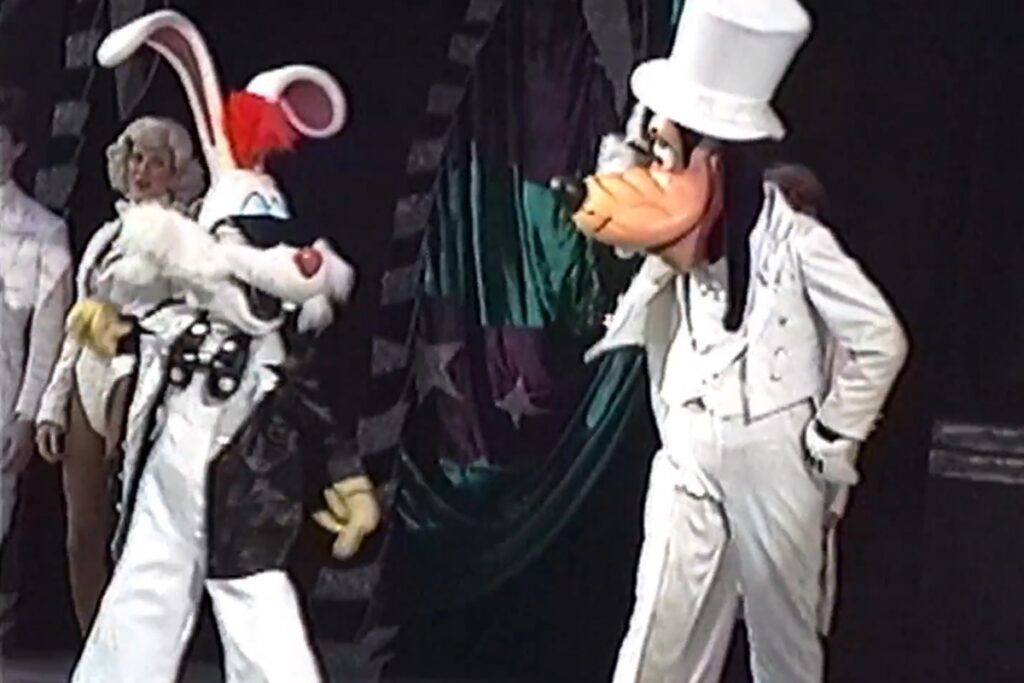
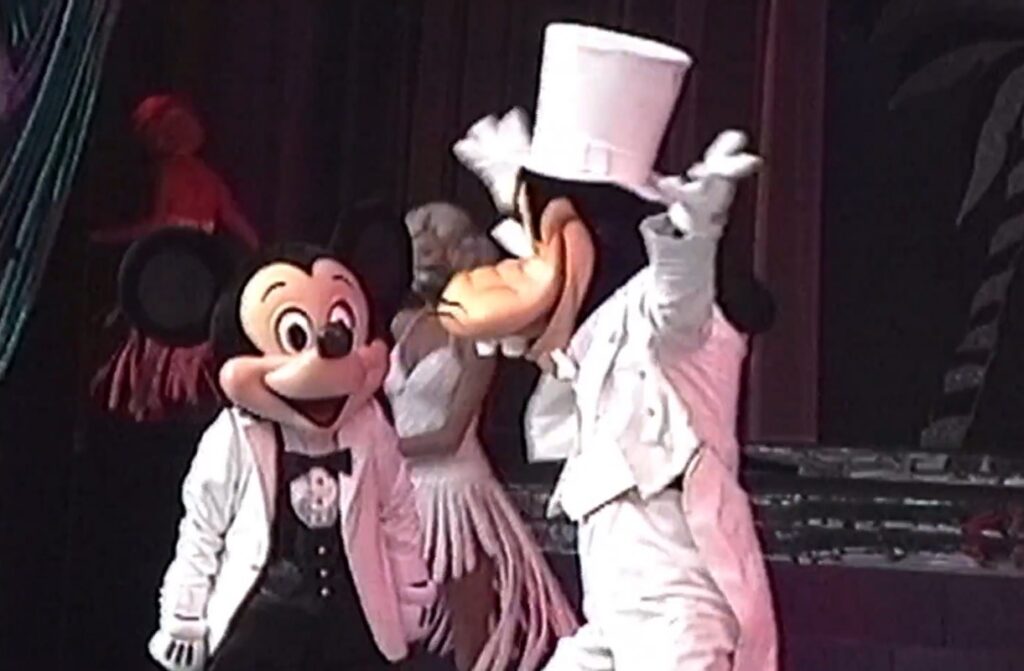
Hollywood’s Pretty Woman was a brief but revealing stage show presented at Disney-MGM Studios during Walt Disney World’s 20th-anniversary celebration. Despite its title, the production was not an adaptation of the 1990 Julia Roberts film Pretty Woman. Instead, it was a musical tribute to famous women from different eras of Hollywood entertainment, filtered through the playful, character-heavy style that defined the park’s early live shows.
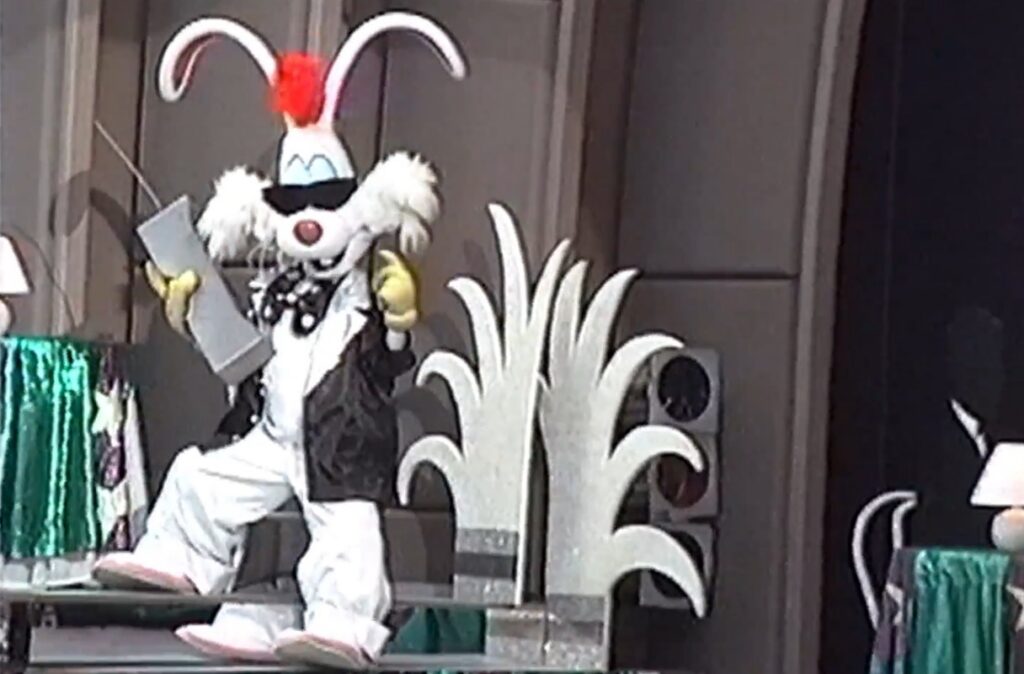
The show took place at the original Theater of the Stars, an outdoor performance venue located on Hollywood Boulevard near the Hollywood Brown Derby. Its premise centered on Club Hollywood, an entertainment venue operated by Mickey Mouse, Minnie Mouse, and Goofy. Roger Rabbit arrived as an influential producer from Maroon Studios, and the Disney characters attempted to impress him with an elaborate revue honoring some of Hollywood’s most recognizable female performers.
The production moved rapidly through a deliberately eclectic set of musical tributes. Its featured inspirations included Jeanette MacDonald, Judy Garland, Ginger Rogers, Carmen Miranda, and Madonna, allowing the show to jump from classic Hollywood glamour to contemporary pop culture within a matter of minutes. That unusual range made Hollywood’s Pretty Woman feel less like a cohesive narrative and more like an energetic nightclub revue. The finale added another layer of star power with appearances by walk-around versions of Kermit the Frog and Miss Piggy.

Hollywood’s Pretty Woman opened on September 24, 1991, and closed on November 3 of the same year, according to the Walt Disney Archives’ Disney A to Z listing. Its run lasted less than six weeks. The Theater of the Stars soon received a much more durable production: Beauty and the Beast – Live on Stage debuted there on November 22, 1991, before moving to a new Sunset Boulevard theater in 1994.
Today, Hollywood’s Pretty Woman is remembered primarily as an artifact of the original Disney-MGM Studios era. Its Roger Rabbit storyline, rapid-fire celebrity impressions, Muppet cameo, and extremely short lifespan capture a period when the park’s entertainment lineup was unusually fluid. Shows could arrive as part of a seasonal campaign, make use of current characters and pop-culture references, and disappear almost immediately to make room for the next Hollywood-inspired production.