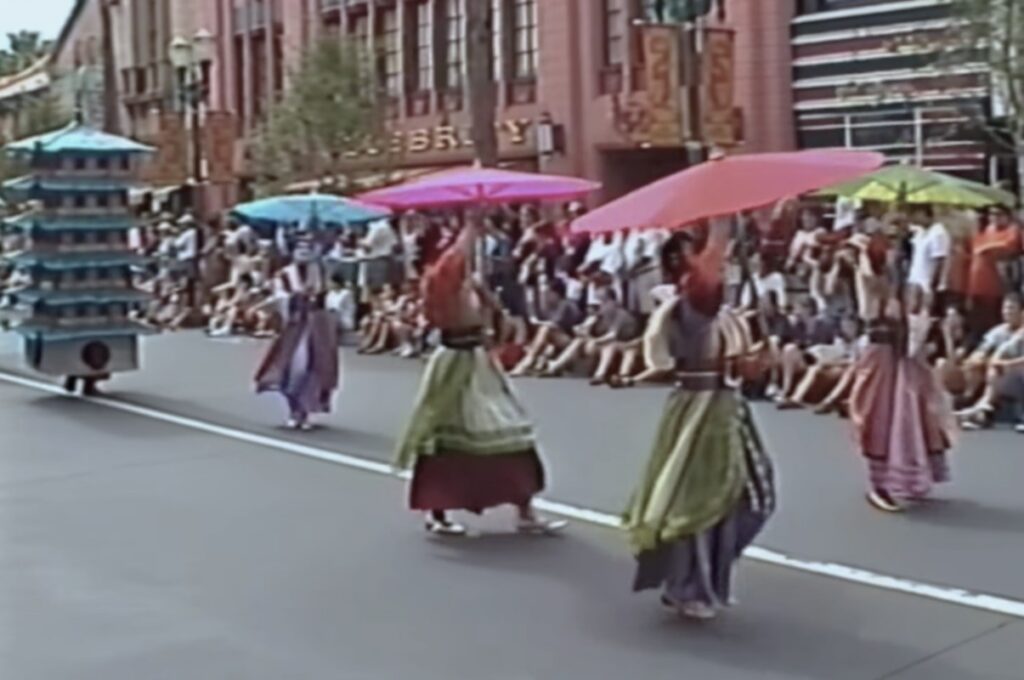
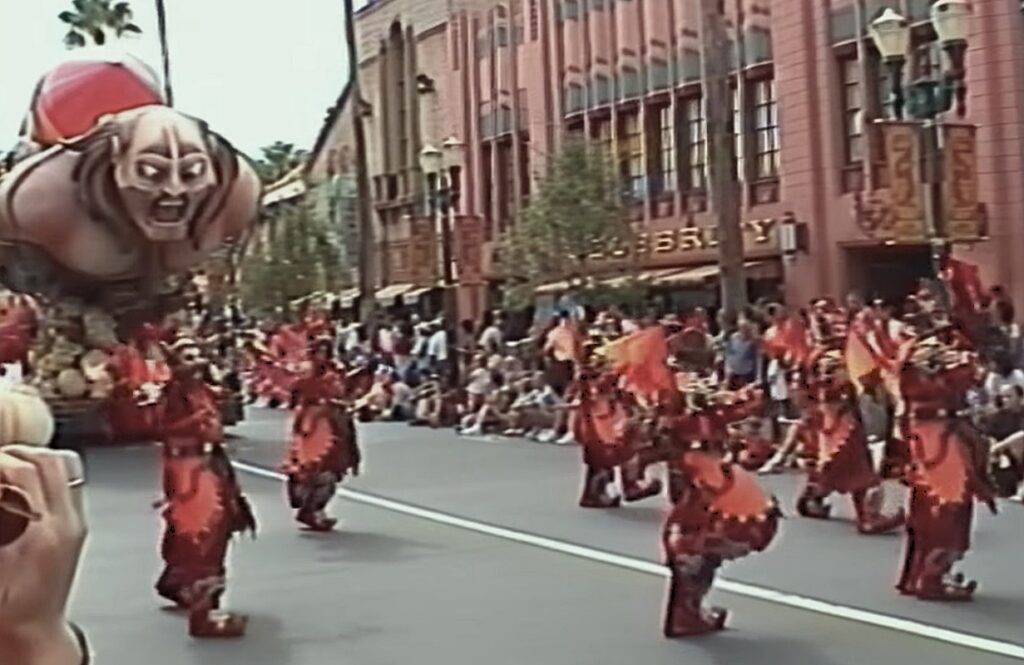
Mulan – The Parade was a daytime procession presented at Disney-MGM Studios during the late 1990s and early 2000s. Debuting on June 19, 1998, the same day Disney’s animated Mulan opened in U.S. theaters, the parade continued the park’s tradition of quickly transforming new animated releases into full-scale street entertainment. It replaced Hercules “Zero to Hero” Victory Parade and gave Hollywood Boulevard another energetic movie tie-in production built around color, music, character, and theatrical spectacle.
The parade was especially well suited to Disney-MGM Studios because Mulan had a unique connection to the park. The film was the first Disney animated feature primarily produced at Walt Disney Feature Animation Florida, making its arrival feel less like a distant corporate promotion and more like a celebration of work created within the larger Walt Disney World creative campus. That connection gave the production a stronger local identity than many of the park’s other film-based parades.
The procession drew heavily from the film’s imagery and music, particularly “Honor to Us All” and “I’ll Make a Man Out of You.” Mushu helped introduce the parade with comic energy, while the Matchmaker, Cri-Kee, Fa Zhou, Fa Li, Little Brother, Huns, soldiers, acrobats, lion dancers, stilt walkers, Shang, Mulan, and the Emperor appeared throughout the route. The show blended traditional Chinese-inspired visual motifs with Disney’s oversized, highly theatrical parade style, creating a production that was both ceremonial and playful.
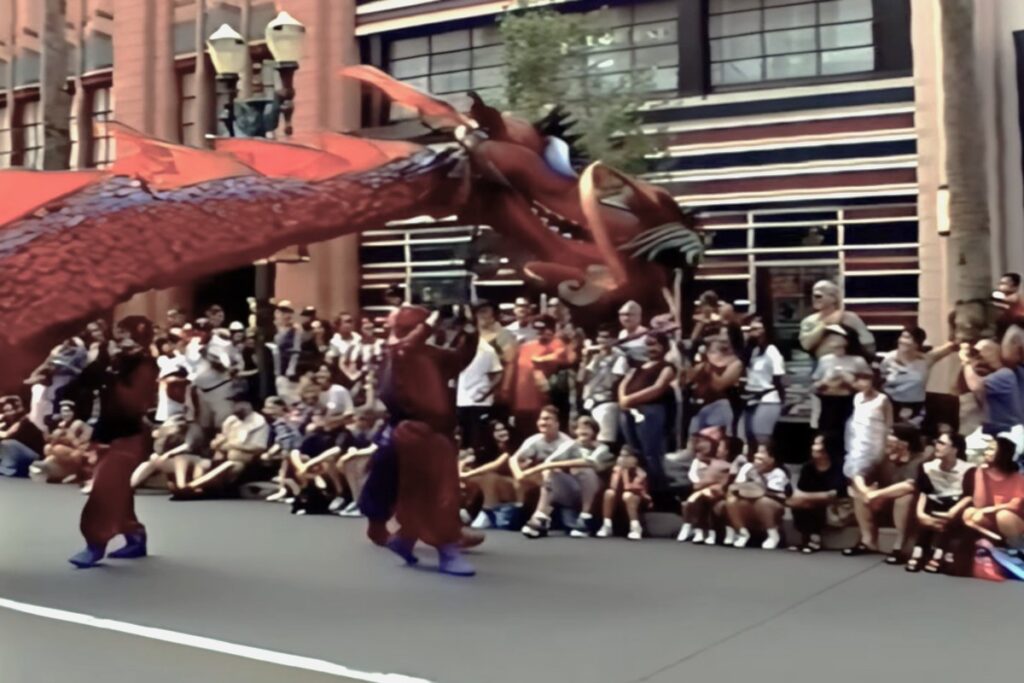
Its most famous element was a massive 150-foot dragon and Great Wall of China unit that wound down Hollywood Boulevard with soldiers positioned along the top. Operated by a large group of performers, the dragon gave the parade a kinetic centerpiece and made it feel considerably more elaborate than a simple character cavalcade. Other units highlighted the film’s humor, family themes, military training scenes, and climactic victory celebration.
Mulan – The Parade ended on March 11, 2001, and was later succeeded by Disney Stars and Motor Cars Parade as Disney-MGM Studios shifted toward a broader Hollywood-style character procession. Today, it is remembered as one of the park’s strongest animated-film parades: visually rich, culturally distinctive, and closely tied to a brief period when Disney’s newest animated features could quickly take over Hollywood Boulevard in grand fashion.