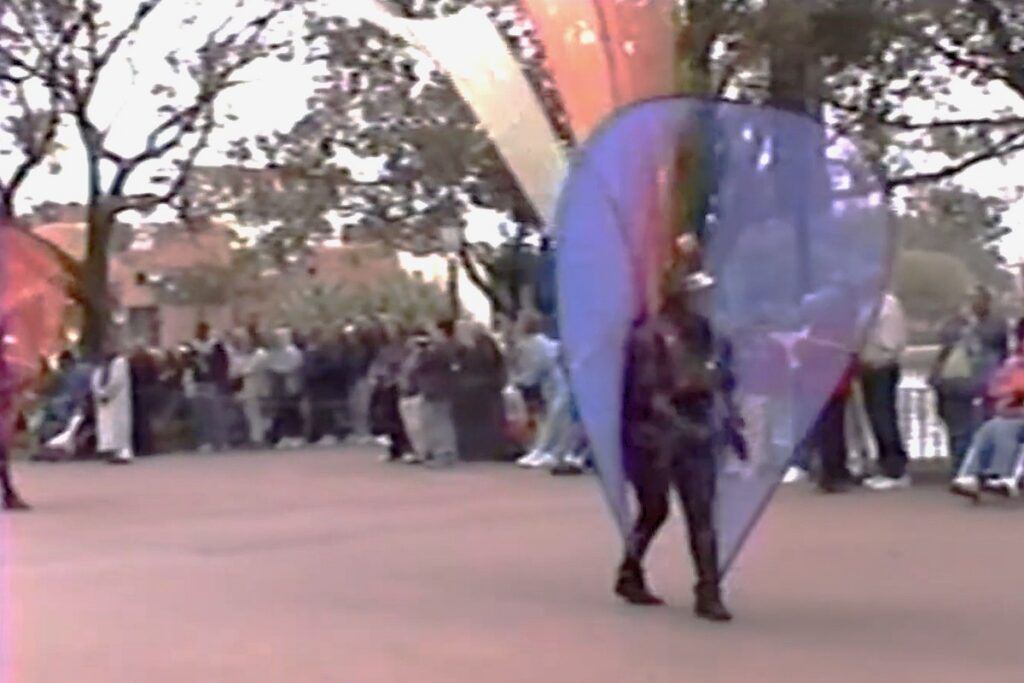
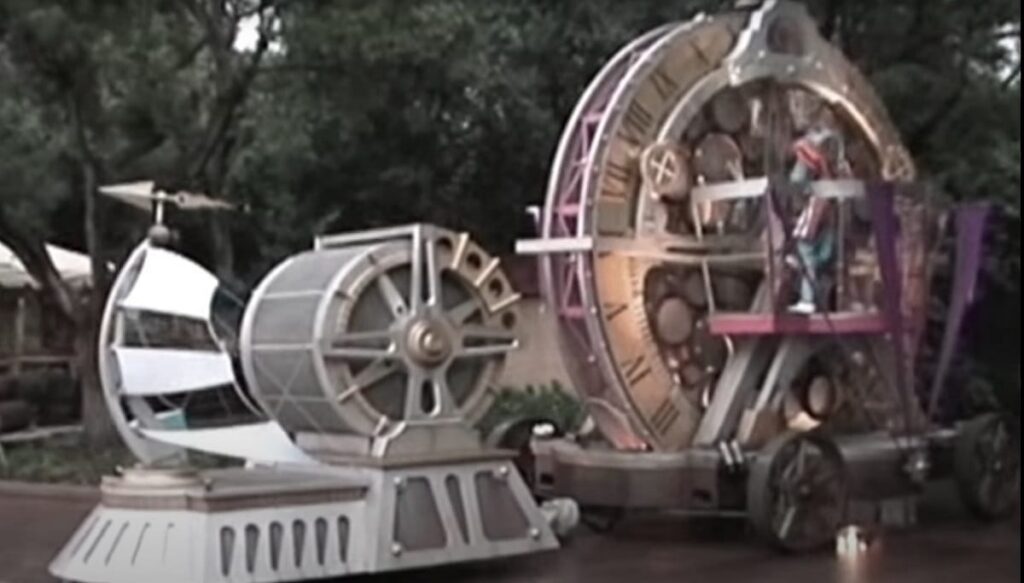
Tapestry of Dreams was an elaborate EPCOT parade presented around World Showcase during Walt Disney World’s 100 Years of Magic celebration. Introduced in autumn 2001 as a reworked version of Tapestry of Nations, it transformed the earlier parade’s message of global unity into a celebration of childhood imagination, personal aspirations, and Walt Disney’s creative legacy. The production continued through March 1, 2003, and remains one of the most fondly remembered entertainment offerings in EPCOT history.
The parade retained the enormous abstract puppets and rolling percussion units created for Tapestry of Nations. Towering figures with wings, segmented bodies, spinning discs, flowing fabric, and exaggerated limbs moved along the World Showcase promenade while performers manipulated them through harnesses and control poles. Their designs were intentionally not tied to any single country or culture, allowing them to represent universal ideas and emotions rather than recognizable Disney characters. Massive drum units supplied a powerful rhythmic heartbeat that could be heard approaching well before the procession came into view.
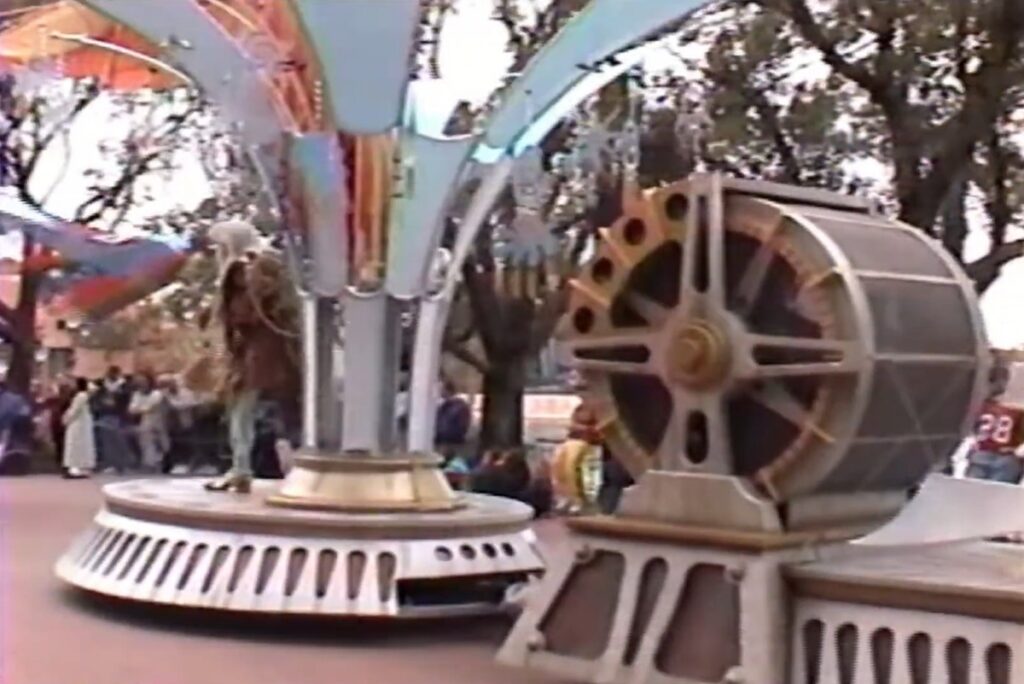
Tapestry of Dreams replaced the earlier Sage of Time character with three Dreamseekers. Elfin represented nature, magic, and emotion; Cosmo embodied space, infinity, and the unknown; and Leonardo Columbus symbolized discovery, invention, and genius. Children could create Dreamtale tokens at EPCOT’s Kidcot locations and place them into the Dreamseekers’ butterfly-like nets as the parade passed, giving the experience an unusually personal and participatory element.
Its soundtrack blended the familiar musical foundation of Tapestry of Nations with new narration, children expressing their dreams in different languages, and a prominent tribute to Walt Disney as an enduring example of someone who turned imagination into reality. The music was atmospheric rather than conventionally catchy, combining orchestral passages, percussion, chimes, voices, and the parade’s distinctive invented vocalizations into something that felt ceremonial and unmistakably EPCOT.
Historically, Tapestry of Dreams represented a rare period when EPCOT supported a full-scale parade through World Showcase. The narrow promenade and heavy guest traffic made such productions operationally difficult, and no comparable daily parade has replaced it. Today, it is remembered for its artistry, emotionally resonant score, and unusual lack of familiar franchise characters. Rather than selling a specific film or personality, Tapestry of Dreams celebrated imagination itself—a theme that fit EPCOT remarkably well and helped make its brief run feel far more significant than its two-year lifespan might suggest.