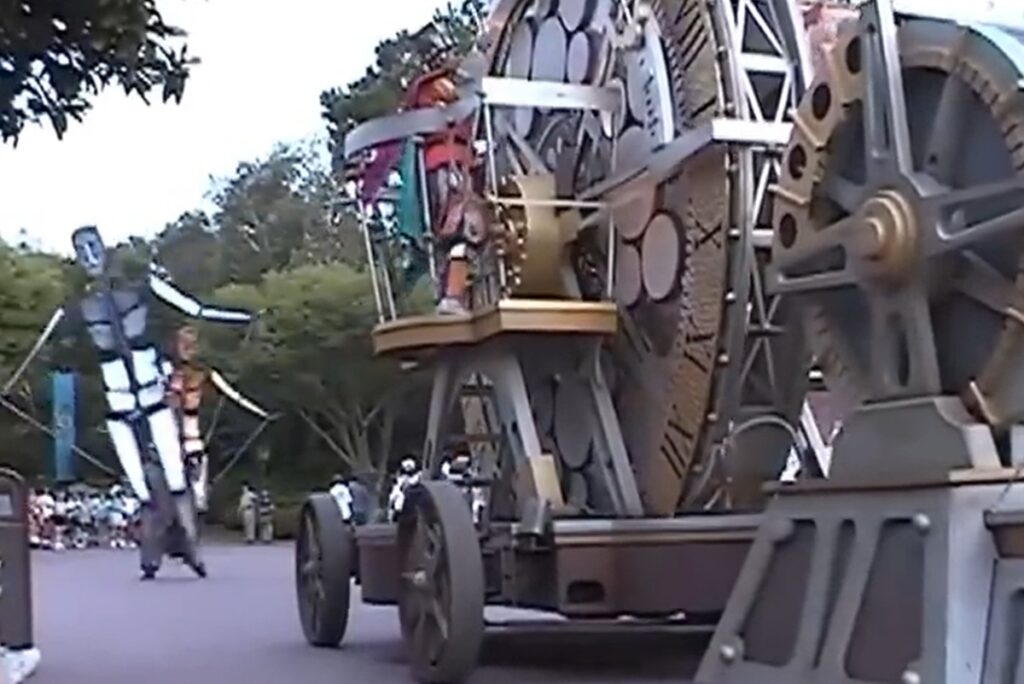
Tapestry of Nations was a large-scale processional created for EPCOT’s Millennium Celebration, transforming the World Showcase promenade into a moving pageant about international unity, peace, and humanity’s shared future. It debuted on October 1, 1999, and continued through September 9, 2001, when it was succeeded by the revised Tapestry of Dreams. Unlike most Disney parades, it contained no familiar animated characters or conventional storybook floats. Instead, it relied on abstract puppetry, music, percussion, and symbolic imagery to create something that felt distinctly suited to EPCOT.
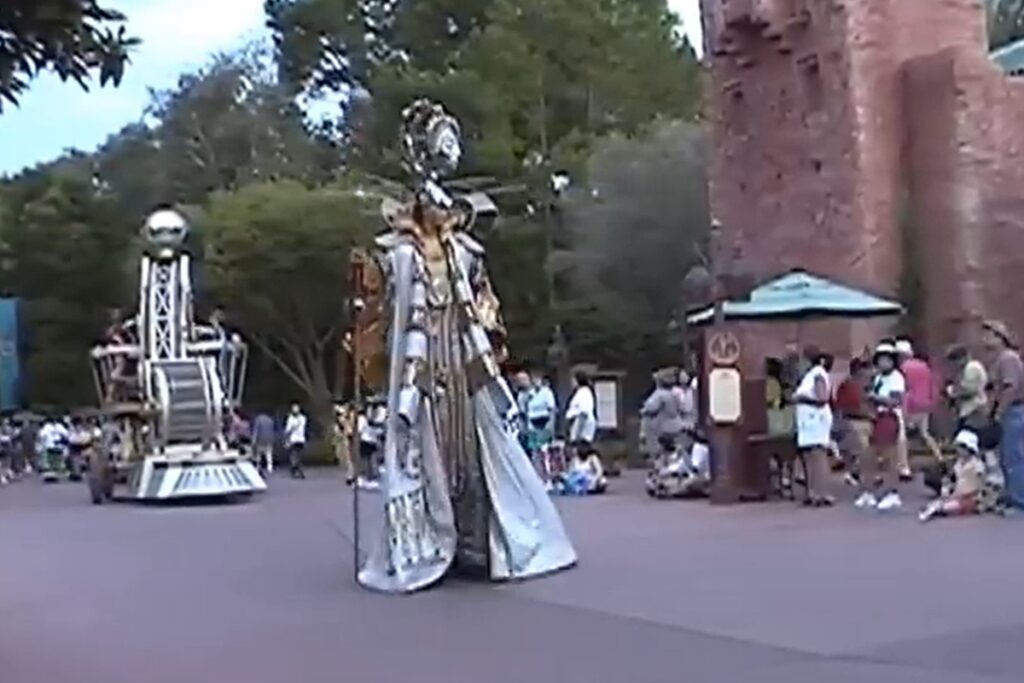
The procession was introduced by the Sage of Time, an elaborate stilt-walking figure who welcomed guests to a gathering of nations at the turn of the millennium. Wearing a white-and-gold costume decorated with celestial and alchemical symbols, the Sage represented the passage of time and humanity’s connection across generations. Behind him came enormous puppets representing broad archetypes and forces of nature rather than individual countries. Their long limbs, translucent wings, spinning elements, and brilliantly patterned fabrics allowed them to sweep over the crowd and interact directly with guests lining the route.
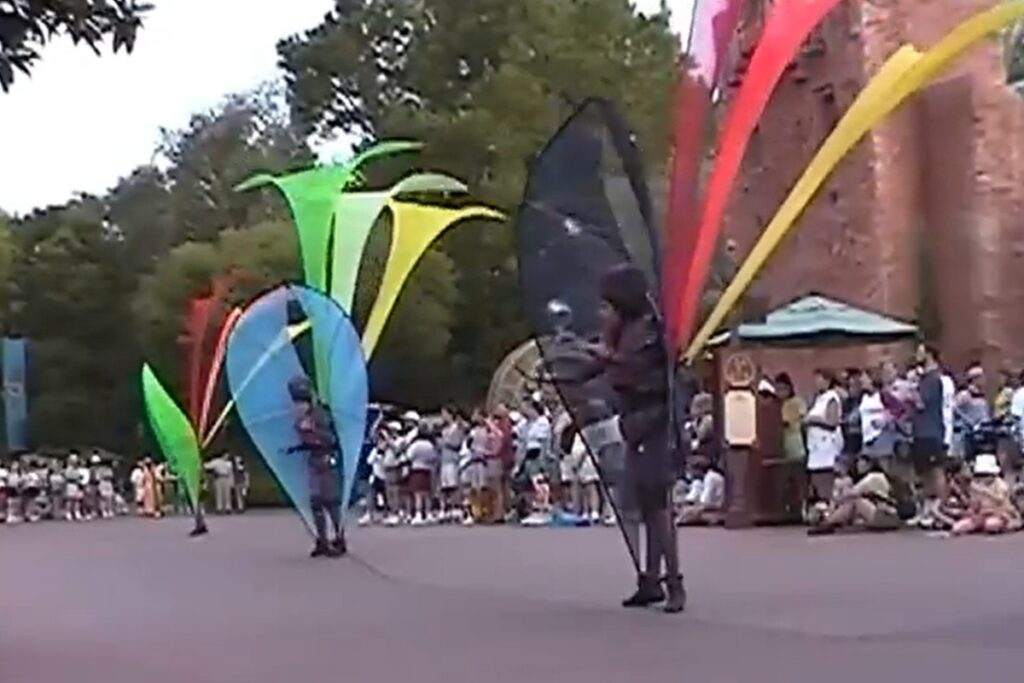
The puppets were designed by Michael Curry, whose theatrical work also included the celebrated puppetry of The Lion King on Broadway. Performers carried the figures using body harnesses and control poles, making the puppets appear to dance, bow, soar, and reach toward spectators. Massive rolling percussion units followed, with drummers supplying the production’s physical pulse as the procession moved through World Showcase. The imagery deliberately avoided representing any specific culture, reinforcing the parade’s theme that humanity formed one interconnected global community.
Just as important as the puppets was Gavin Greenaway’s score. Recorded with orchestral musicians and a large chorus, the music combined sweeping symphonic passages, resonant drums, chimes, and invented vocal sounds that suggested a universal language without belonging to any real nation. The recurring “millennium heartbeat” could be heard across World Showcase before the parade arrived, creating an unusually ceremonial atmosphere.
Tapestry of Nations was later reshaped into Tapestry of Dreams, which replaced the Sage of Time with three Dreamseekers and shifted the message from global unity toward childhood imagination. The original production, however, remains the more closely associated with EPCOT’s Millennium Celebration.
Today, Tapestry of Nations is regarded as one of EPCOT’s defining extinct entertainment offerings. Its abstract artistry, emotional soundtrack, and complete absence of franchise-driven characters gave it a timeless quality. More than a conventional parade, it felt like a moving ceremony—one that briefly turned World Showcase into a shared gathering place for the entire world.