
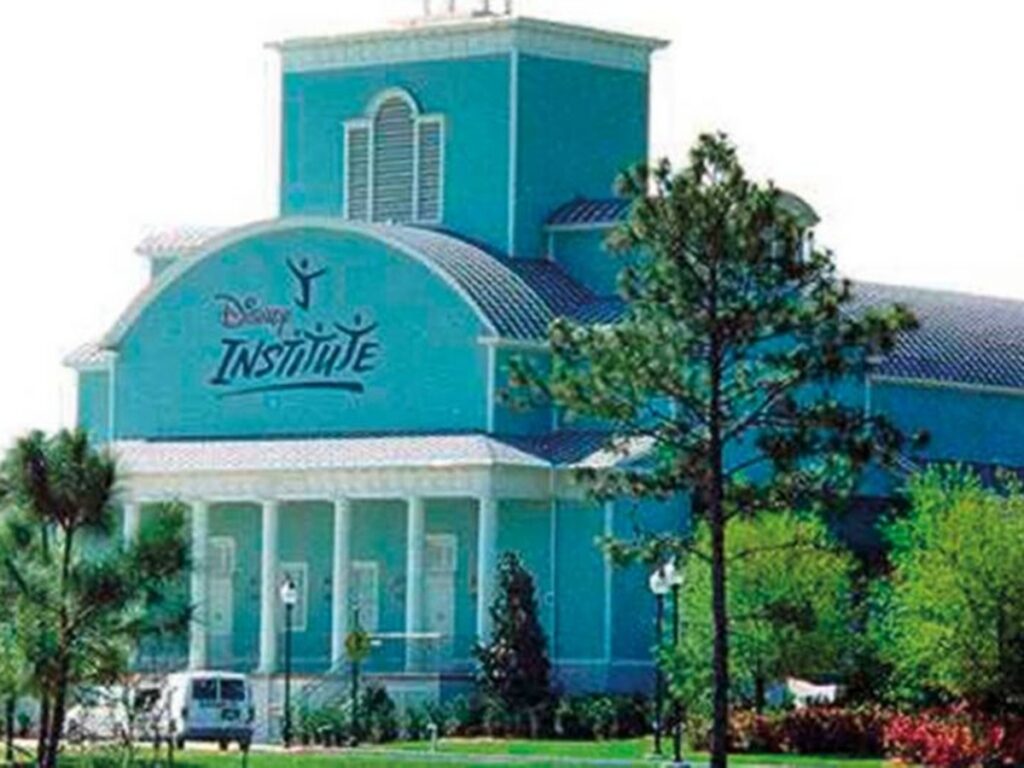
Seasons was an upscale, full-service restaurant located at the Disney Institute, an experimental Walt Disney World resort and educational destination that opened on February 9, 1996. Situated within the Institute’s main building, Seasons specialized in contemporary American cuisine emphasizing fresh, seasonal Florida produce, Atlantic seafood, meats, and pasta dishes. The restaurant was distinguished by its four dining rooms, each decorated to represent a different season of the year, and an unusual dinner program featuring menus that changed nightly.
Unlike most Walt Disney World restaurants, Seasons was conceived as part of a larger vacation experience centered on education, creativity, and personal enrichment rather than theme park entertainment. Guests staying at the Disney Institute could participate in classes covering culinary arts, animation, music, photography, gardening, fitness, and numerous other subjects.
Seasons complemented these activities by offering a sophisticated but relatively informal dining experience. Its combination of seasonal ingredients, changing menus, and carefully designed dining rooms reflected the Institute’s emphasis on experimentation and creativity.
The restaurant occupied part of the extensively remodeled former Lake Buena Vista Club building, which had housed several earlier Walt Disney World dining establishments dating to the 1970s.
Although Seasons was generally well regarded for its food and atmosphere, it struggled to attract sufficient business. The restaurant closed in 2000, approximately four years after opening, several years before the Disney Institute itself ceased operating as a vacation resort.
The original dining space was subsequently incorporated into Disney’s Saratoga Springs Resort & Spa, which opened in 2004.
Origins of the Disney Institute
The history of Seasons is closely connected to one of the most unusual resort concepts ever developed at Walt Disney World.
During the 1980s, Disney chairman and CEO Michael Eisner became interested in creating a vacation destination centered on educational and recreational experiences.
The concept was inspired partly by institutions such as the Chautauqua Institution in western New York, where visitors could attend lectures, participate in classes, enjoy live performances, and pursue personal interests in a resort-like setting.
Eisner believed that Disney could combine these activities with the company’s established strengths in entertainment, hospitality, and themed environments.
The resulting project became the Disney Institute.
Rather than constructing an entirely new resort from the ground up, Disney chose to redevelop the existing Disney Village Resort near the Lake Buena Vista Golf Course.
The property already contained vacation accommodations, landscaped grounds, recreational facilities, and a clubhouse.
The existing villas were incorporated into the new resort, while additional facilities were constructed for educational programs.
Architect Tom Beedy designed many of the Institute’s new buildings to resemble a small New England town.
The project included studios and classrooms, a cinema, performing arts facilities, a spa and fitness center, retail locations, and dining facilities.
The Disney Institute officially opened on February 9, 1996.
Its original programs covered subjects such as animation, culinary arts, design, photography, gardening, television production, music, and personal fitness.
Seasons was developed as the primary full-service restaurant supporting this unusual vacation community.
The Lake Buena Vista Club Connection
Seasons occupied a location with a substantial dining history.
The original Lake Buena Vista Club opened on November 22, 1974, as a golf and recreational clubhouse serving Walt Disney World’s expanding Lake Buena Vista vacation community.
The facility overlooked the Lake Buena Vista Golf Course and surrounding waterways.
Its amenities included a full-service restaurant, golf pro shop, tennis courts, swimming facilities, and a marina.
The restaurant was originally an upscale establishment emphasizing continental cuisine and formal country club hospitality.
During the 1970s, its menu included dishes such as French onion soup, Coquilles St. Jacques, seafood specialties, Steak Diane, and other traditional continental preparations.
The restaurant also offered unusual recreational dining experiences, including dinners combined with boat cruises from the nearby shopping village.
During the late 1980s, Disney modernized the restaurant and introduced a more casual dining concept.
The establishment became known as Pompano Grill around 1988, offering seafood, grilled meats, and American cuisine in a relaxed country club environment.
The larger facility was renamed the Disney Village Clubhouse in September 1988.
In 1993, the restaurant returned to the Lake Buena Vista Club name.
The Lake Buena Vista Club Restaurant served its final guests on March 20, 1994, and the clubhouse officially closed the following day.
Disney subsequently began converting the property into the main building of the Disney Institute.
Seasons was the new restaurant developed as part of that transformation.
Construction and Expansion
The conversion of the former Lake Buena Vista Club into the Disney Institute’s main building required extensive construction.
The original clubhouse was substantially expanded to accommodate guest registration, retail facilities, lounge areas, and the new restaurant.
According to Disney historian Jim Korkis, the existing restaurant had approximately 120 seats before redevelopment.
Disney extended the front and sides of the building, adding approximately 340 seats to the dining facilities.
The expansion substantially increased the building’s capacity and altered its original interior layout.
A new kitchen was constructed, occupying much of the former restaurant’s dining area.
The surrounding parking lot was also redesigned, with portions converted into landscaped gardens.
The finished building housed the Institute’s Welcome and Check-In Center, a specialty shop called Dabblers, and a gathering area known as the Gathering Place Lounge.
Seasons occupied the dining portion of the expanded complex.
Although it retained the same general location as the former Lake Buena Vista Club Restaurant, Seasons was not simply a renamed version of that earlier establishment.
Its kitchen, seating capacity, interior design, culinary program, and overall concept were substantially different.
The new restaurant was designed specifically to support the Disney Institute’s educational vacation experience.
Four Dining Rooms Representing the Seasons
The restaurant’s name was reflected directly in its interior design.
Seasons featured four dining rooms, each themed to a different season of the year: spring, summer, autumn, and winter.
The individual rooms incorporated decorative elements, murals, and colors associated with their assigned seasons.
This approach created a subtle but distinctive visual identity.
Rather than using Disney characters or elaborate fictional scenery, the restaurant celebrated the changing natural environment.
The four-season concept also connected the dining room décor to the restaurant’s culinary philosophy, which emphasized fresh ingredients and menus that changed over time.
The dining areas were intended to create different atmospheres while remaining part of one cohesive restaurant.
The result was an elegant but relatively casual environment consistent with the broader Disney Institute.
Unlike the resort’s educational studios and activity spaces, Seasons did not require guests to participate in classes or organized programs.
It functioned as a conventional table-service restaurant, allowing diners to enjoy meals in a comfortable setting.
The seasonal decorative concept also distinguished Seasons from the more elaborate themed restaurants operating elsewhere at Walt Disney World during the 1990s.
Chef Marianne Hunnel and the Culinary Concept
Chef Marianne Hunnel was closely associated with Seasons and its culinary program.
Official Disney Institute promotional materials from 1999 identified Hunnel as the chef responsible for developing the restaurant’s creative dinner offerings.
The restaurant emphasized fresh seasonal Florida produce, seafood from the Atlantic, meats, and pasta dishes.
This focus reflected a broader movement in American dining during the 1990s toward regional ingredients, lighter preparations, and frequently changing menus.
Instead of relying exclusively on a fixed selection of familiar entrées, Seasons offered dishes designed around the availability of ingredients.
The changing menu also complemented the Disney Institute’s educational mission.
Guests attending culinary classes during the day could continue exploring different foods and preparations at dinner.
The restaurant’s kitchen was intended to provide meals that were sophisticated without requiring an excessively formal atmosphere.
Historical accounts describe the food as upscale but the service environment as relatively relaxed.
This distinguished Seasons from older Walt Disney World fine-dining restaurants that had emphasized formal dress codes and traditional continental cuisine.
Breakfast and Lunch
Seasons served breakfast, lunch, and dinner during its early operating years.
Breakfast was comparatively conventional, offering familiar morning dishes for guests preparing to attend classes and other activities.
Lunch also followed a relatively traditional format.
Official Disney literature from 1999 described the lunch menu as emphasizing light salads, sandwiches, and seafood.
These selections were appropriate for the Institute’s daily schedule.
Guests could enjoy a meal between morning and afternoon classes without committing to a lengthy dining experience.
The focus on lighter food also reflected the resort’s wellness and personal enrichment concept.
Although breakfast and lunch were more conventional than the restaurant’s evening offerings, they maintained the restaurant’s emphasis on fresh ingredients.
A complete surviving breakfast or lunch menu with individual dish names and prices has not been conclusively established in the historical references used for this entry.
The Rotating Dinner Experience
Dinner was the most distinctive part of Seasons’ dining program.
Rather than offering precisely the same selection every evening, the restaurant introduced themed dinners that changed nightly.
A contemporary newspaper account published on July 11, 1996, provides valuable information about the original dining experience.
According to the article, guests paid a fixed price and received a family-style meal featuring four appetizers, three entrées, and two desserts.
The dishes were served for sharing rather than ordered individually from a conventional à la carte menu.
The approach allowed diners to sample a wider selection of food and encouraged a communal dining experience.
The nightly themes provided additional variety.
Because the menus changed, guests staying at the Disney Institute for several days could return to Seasons and encounter a different meal.
This was especially appropriate for the Institute, where many guests participated in multi-day educational vacation packages.
The rotating dinner concept also gave the culinary staff opportunities to experiment with different ingredients and preparations.
It was one of the restaurant’s most distinctive operating features.
Vegetarian Night and a Surviving 1996 Menu
The July 11, 1996, newspaper account documented a vegetarian-themed dinner at Seasons.
This report provides one of the clearest surviving descriptions of a specific meal served during the restaurant’s opening year.
The menu included gazpacho, grilled mushrooms and orzo salad, vegetable tempura with wasabi dressing, and black-and-white bean chili.
Dessert included a rich chocolate preparation.
The entire family-style meal cost $25.50 per person.
The article also described the restaurant’s wine selection favorably.
These details provide useful evidence of the restaurant’s culinary identity.
The vegetarian menu combined dishes and techniques associated with several culinary traditions.
Gazpacho reflected Spanish cuisine, while the orzo salad incorporated Mediterranean ingredients.
Vegetable tempura and wasabi dressing introduced Japanese influences, and the bean chili represented a familiar American-style preparation.
This international approach distinguished Seasons from the earlier Lake Buena Vista Club Restaurant, which had emphasized traditional continental cuisine.
It also demonstrated how the restaurant used its changing menu to introduce diners to varied culinary styles.
The fixed-price format allowed the chefs to organize the meal around a theme rather than simply presenting a standard list of appetizers and entrées.
The 1996 vegetarian dinner is especially valuable historically because it documents specific dishes and prices from a restaurant whose surviving menus are otherwise relatively scarce.
The Gathering Place Lounge
Seasons was located near the Gathering Place Lounge, another important part of the Disney Institute’s main building.
The lounge provided a comfortable environment where guests could relax between classes, socialize, or enjoy the atmosphere of the resort.
Its furnishings included sofas and chairs arranged around a grand piano.
According to historian Jim Korkis, Disney executive Judson Green occasionally played the piano in the evening.
This informal entertainment reinforced the Institute’s emphasis on creativity and personal interaction.
The Gathering Place Lounge was distinct from Seasons, although the two facilities were located within the same expanded clubhouse complex.
Together, they helped establish the building as the social center of the Disney Institute.
Guests could check in, visit the Dabblers shop, relax in the lounge, and enjoy meals without leaving the central building.
Dining Competition and Operational Challenges
Despite its unusual concept, Seasons faced several challenges.
The largest was its dependence on the Disney Institute’s guest population.
Unlike restaurants at the Magic Kingdom, EPCOT, or the major monorail resorts, Seasons was not located along a heavily traveled guest corridor.
Visitors who were not staying at the Disney Institute had to make a deliberate trip to reach the restaurant.
The property’s layout and parking arrangements also made access somewhat inconvenient for outside diners.
Meanwhile, nearby Downtown Disney offered a growing selection of restaurants and entertainment venues.
Restaurants in the Marketplace, Pleasure Island, and the developing West Side attracted visitors who were already spending time shopping or enjoying nighttime entertainment.
Seasons offered a sophisticated dining experience, but it lacked the high-profile Disney theming and convenient location that helped attract customers to other resort restaurants.
The Disney Institute itself also struggled to achieve the sustained popularity Disney had anticipated.
Although early visitors frequently praised the classes and facilities, demand for educational vacations proved more limited than expected.
Disney began modifying the Institute’s programs within its first year.
Some classes were consolidated or discontinued, and the company increasingly marketed the Institute’s facilities for corporate training and group events.
These changes reduced the potential audience for Seasons.
With fewer guests participating in the original educational vacation experience, the restaurant faced increasing difficulty generating sufficient business.
Closure in 2000
Seasons closed in 2000, approximately four years after its opening.
The exact final operating date has not been reliably established.
Historical accounts consistently identify 2000 as the closure year, although surviving documentation does not establish a specific day or month.
Its closure occurred before the Disney Institute ended its original resort operations.
In the summer of 2000, Disney stopped offering much of the Institute’s programming to individual tourists and shifted its emphasis toward corporate groups and organized retreats.
The Disney Institute continued operating in this modified form until 2002.
The last overnight guests departed on February 11, 2002.
Seasons’ closure reflected the difficulties of supporting a substantial full-service restaurant within a resort whose original business model had failed to attract the anticipated number of guests.
Although historical reviews of Seasons were generally positive, its culinary quality was not enough to overcome the location’s limited dining audience.
Its closure also marked the end of the Disney Institute’s most ambitious original restaurant concept.
Transformation into Disney’s Saratoga Springs Resort & Spa
Following the closure of the Disney Institute, Disney redeveloped the property into Disney’s Saratoga Springs Resort & Spa.
The new Disney Vacation Club resort opened in May 2004.
Its architecture and decorative theme drew inspiration from Saratoga Springs, New York, a historic vacation destination associated with horse racing, mineral springs, and upscale resort hospitality.
The former Disney Institute main building became the Carriage House, the resort’s principal guest services and dining complex.
The old Seasons restaurant was extensively remodeled.
Its kitchen was rearranged, interior walls were repositioned, and the dining spaces were divided into new operations.
The redevelopment produced two establishments: Artist’s Palette and The Turf Club Bar & Grill.
Artist’s Palette became the resort’s principal quick-service restaurant and marketplace.
The Turf Club Bar & Grill introduced a new table-service dining concept inspired by the private clubhouses associated with horse racing.
Its décor included dark wood furnishings, photographs of jockeys and racehorses, and historic equestrian memorabilia.
The Turf Club’s location overlooking the golf course also provided a connection to the site’s original Lake Buena Vista Club history.
Although The Turf Club Bar & Grill occupies part of the former Seasons complex, the transition involved substantial interior reconstruction.
It is therefore more accurate to describe Artist’s Palette and The Turf Club as later uses of the Seasons space rather than straightforward renamings of the original restaurant.
Connection to Sunshine Seasons at EPCOT
One interesting aspect of Seasons’ legacy is the later use of a similar four-season decorative concept at EPCOT.
When The Land pavilion’s food court was reimagined as Sunshine Seasons in 2005, the dining area incorporated sections representing spring, summer, autumn, and winter.
Decorative colors, carpeting, and other design details distinguished the seating areas.
This arrangement closely resembled the concept used at the Disney Institute’s Seasons restaurant.
Historical researcher Jack Spence observed the connection in his 2014 retrospective on the former Institute restaurant.
However, Sunshine Seasons was not a relocation of Seasons.
The EPCOT food court had its own history, dating to the opening of The Land pavilion in 1982, when the location operated as the Farmers Market.
It later became Sunshine Season Food Fair before adopting the Sunshine Seasons name in 2005.
The restaurants had different locations, menus, service formats, and operating histories.
Their principal historical connection was the shared decorative concept of dividing a dining facility into areas representing the four seasons.
Historical Significance
Seasons occupies a distinctive place in Walt Disney World dining history because it was developed specifically for one of Disney’s most unusual resort experiments.
When the Disney Institute opened in 1996, the company was attempting to introduce a different type of vacation experience, one centered on education, creativity, wellness, and personal development.
Seasons reflected this concept through its changing menus, regional ingredients, themed dining rooms, and communal dinner experiences.
Its emphasis on seasonal Florida produce and contemporary cuisine was consistent with trends developing in American restaurants during the 1990s.
The nightly rotating menus were particularly unusual for a Walt Disney World resort restaurant.
Instead of relying entirely on a fixed selection of dishes, Seasons encouraged guests to experience different culinary themes over multiple visits.
Its 1996 vegetarian dinner, featuring gazpacho, vegetable tempura, orzo salad, bean chili, and chocolate dessert, illustrates the restaurant’s willingness to combine different culinary traditions.
The restaurant is also significant because of its location.
The building had previously housed the Lake Buena Vista Club Restaurant and Pompano Grill, establishments associated with Walt Disney World’s original 1970s vacation community.
The redevelopment into Seasons represented a major architectural and culinary transformation of that historic clubhouse.
The subsequent conversion into Artist’s Palette and The Turf Club Bar & Grill illustrates how Disney repeatedly adapted the same location to accommodate different resort concepts.
Although Seasons operated for only about four years, it remains an interesting example of Disney’s willingness to experiment with dining formats that differed from traditional theme park restaurants.
Its history is inseparable from the larger story of the Disney Institute, an ambitious project that ultimately failed to attract a broad vacation audience but introduced facilities and ideas that continued influencing Walt Disney World after its closure.
Today, the Seasons name survives primarily in historical resort materials, restaurant menus, photographs, and accounts from guests who experienced the original Disney Institute.
The restaurant’s former location remains part of the Carriage House at Disney’s Saratoga Springs Resort & Spa, preserving a physical connection to one of the most unusual chapters in Walt Disney World’s resort and dining history.