
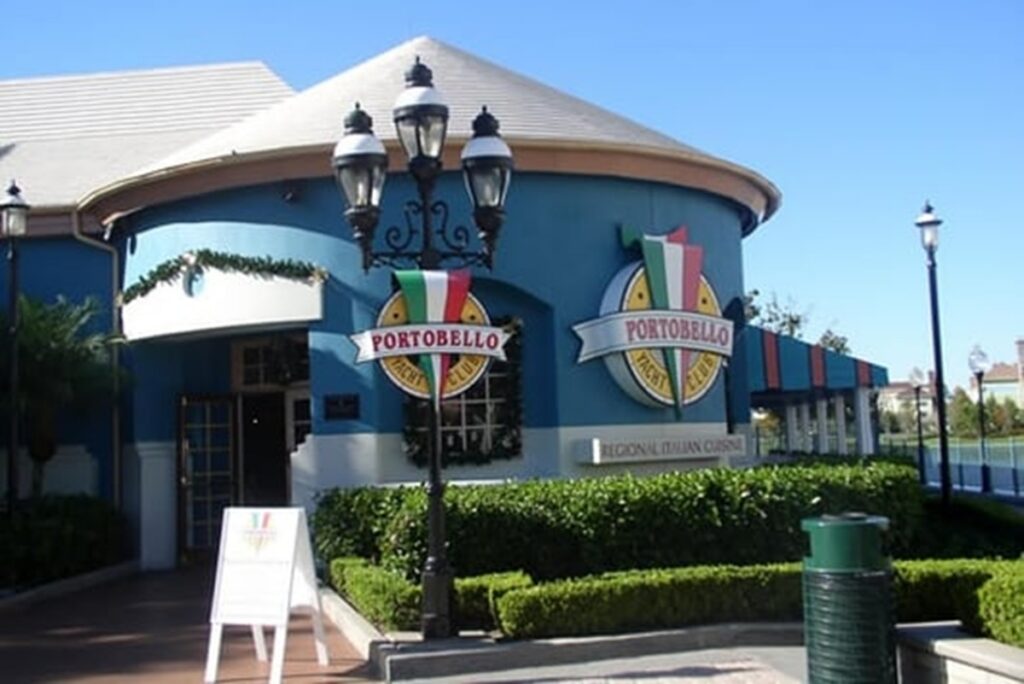
Portobello Yacht Club was an Italian table-service restaurant located on Pleasure Island at Walt Disney World, in the shopping and entertainment district now known as Disney Springs. Opening on May 1, 1989, alongside Pleasure Island itself, the restaurant offered Italian cuisine in a waterfront setting inspired by a traditional yacht club. Operated by Levy Restaurants, Portobello became known for its wood-fired pizzas, pasta, seafood, steaks, and particularly its complimentary bread served with roasted garlic. In October 2008, the restaurant underwent a substantial transformation and became Portobello Country Italian Trattoria, adopting a more rustic Italian dining concept. Portobello closed permanently in April 2017 and reopened on June 28, 2018, as Terralina Crafted Italian. Unlike many extinct Pleasure Island restaurants, its original building was not demolished and continues serving guests at Disney Springs.
Portobello occupied a prominent waterfront location beside the Empress Lilly riverboat, which later became Fulton’s Crab House and ultimately Paddlefish.
The restaurant’s position overlooking Village Lake provided a quieter dining experience than the nightclubs that dominated much of Pleasure Island.
Guests could enjoy Italian food inside an airy dining room or sit outside overlooking the water and surrounding pedestrian areas.
Although the restaurant’s name suggested a nautical establishment, Portobello was never an actual yacht club. Its identity was part of the fictional history Disney Imagineers created for Pleasure Island.
That story gave the building a particularly interesting background.
The Pleasure family residence
Pleasure Island officially opened on May 1, 1989, as a major expansion of Walt Disney World’s shopping and entertainment district.
Disney developed the island as an adult-oriented nightlife destination featuring dance clubs, restaurants, live music, comedy performances, and specialty shops.
Rather than creating a collection of unrelated businesses, Imagineers invented a detailed history centered on Merriweather Adam Pleasure, an eccentric industrialist, entrepreneur, inventor, and adventurer.
According to the story, Pleasure had established a successful collection of manufacturing businesses on the island during the early twentieth century.
His enterprises included shipbuilding, sailmaking, fireworks production, and other industrial activities.
The buildings were supposedly abandoned following the decline of his business empire before being restored for entertainment use.
Each restaurant and nightclub incorporated elements of that fictional history.
Portobello Yacht Club occupied what was presented as the former home of Merriweather Pleasure and his wife, Isabella.
An original historical plaque identified the building as the Pleasure Family Home, dating to 1918.
According to the plaque, the Pleasure family lived there for approximately twenty years.
Isabella supposedly hosted numerous tea socials, garden parties, and croquet tournaments during their residence.
Her gatherings were known for elaborate food and entertaining conversation.
The plaque also attributed a mischievous expression to Isabella, suggesting that guests with unkind gossip should come sit beside her.
This playful characterization was typical of Pleasure Island’s original environmental storytelling.
The building was presented as having been restored in 1989 through a partnership between Disney and Levy Restaurants.
The nearby Portobello Rose Garden also had a fictional history.
According to another plaque, Isabella Pleasure spent years attempting to cultivate a truly blue rose.
The garden reinforced the idea that the building had once been a substantial private residence rather than a purpose-built commercial restaurant.
These stories were fictional, but they provided a distinctive identity for the property.
Unlike Fireworks Factory, which occupied an imaginary industrial facility, Portobello was associated with the domestic life of the Pleasure family.
Its dining rooms and garden-like setting were therefore consistent with the building’s invented history.
Opening in 1989
Portobello Yacht Club opened on May 1, 1989.
It was one of the original dining establishments introduced with Pleasure Island.
The restaurant was operated by Levy Restaurants, a Chicago-based hospitality company that developed a substantial presence at Walt Disney World.
Levy also operated Fireworks Factory and later became associated with other Downtown Disney restaurants, including Fulton’s Crab House.
Portobello’s concept differed from the island’s more theatrical entertainment venues.
Its primary attraction was Italian dining in a comparatively relaxed waterfront environment.
The building incorporated nautical details appropriate to its yacht-club name, but its overall atmosphere was intended to resemble an upscale Italian restaurant.
The setting was especially appealing to visitors seeking a substantial dinner before attending Pleasure Island’s nightclubs.
Guests could dine at Portobello and then visit the Adventurers Club, Comedy Warehouse, Mannequins Dance Palace, or another entertainment venue.
The restaurant also attracted families and visitors who were not necessarily interested in nightlife.
Because it was a conventional table-service restaurant, Portobello could appeal to guests looking for Italian food independently of the surrounding clubs.
Its location near the Empress Lilly made it particularly easy to recognize.
The two waterfront establishments were among the island’s most prominent dining landmarks.
The original dining experience
Portobello Yacht Club combined relatively casual surroundings with a menu that offered more variety than a conventional pizza restaurant.
Italian cuisine was the foundation of the concept from its opening.
Wood-fired pizzas became one of its recognizable specialties.
The kitchen also prepared pasta, seafood, steaks, chicken, and Italian appetizers.
An important feature was its approachability.
Portobello was suitable for a special dinner, but it did not require the same degree of formality as Walt Disney World’s most expensive signature restaurants.
Families could order pizza and pasta, while adults seeking a more substantial meal could choose seafood or steak.
The restaurant also had a reputation for particularly good complimentary bread service.
Guests were served bread accompanied by a whole head of roasted garlic.
The garlic was cooked until it became soft enough to spread onto the bread.
This simple preparation became one of the restaurant’s most frequently remembered features.
Longtime visitors recall the roasted garlic as one of the reasons they returned to Portobello.
It also reflected the restaurant’s emphasis on recognizable Italian ingredients prepared with care.
Another remembered specialty was a steak topped with a Parmesan-and-breadcrumb crust.
The combination created a crisp, savory topping over the cooked beef.
Although the exact preparation changed over the restaurant’s history, firsthand recollections identify the dish as a favorite during the Yacht Club era.
The 2004 menu
A surviving June 2004 menu provides a particularly useful snapshot of Portobello Yacht Club before its later transformation.
The restaurant offered separate lunch and dinner menus.
Its appetizers included Bruschetta alla Toscana, prepared with grilled sourdough bread, olive oil, marinated tomatoes, and fresh basil.
Another specialty was Funghi Arrostiti con Polenta.
This consisted of wood-roasted portobello mushrooms served with creamy polenta and Gorgonzola cheese.
The dish incorporated the mushroom associated with the restaurant’s name while emphasizing Italian culinary traditions.
Fried calamari was served with tomato-basil and roasted-garlic dipping sauces.
A traditional tomato and mozzarella salad combined sliced tomatoes, red onion, mozzarella, olive oil, balsamic vinegar, and basil.
More elaborate dinner appetizers included Gulf shrimp wrapped in prosciutto di Parma and Manila clams poached in white wine.
These dishes placed Portobello above the level of a conventional casual pizza establishment.
The pizza menu was especially varied.
Pizza alla Fantasia combined grilled chicken, spinach pesto, fontina cheese, tomatoes, and basil.
The Quattro Formaggi pizza featured mozzarella, Gorgonzola, Parmigiano, and fontina cheeses.
Guests could also create their own pizzas or calzones using toppings such as mushrooms, sausage, spinach, caramelized onions, prosciutto, pancetta, and anchovies.
The menu included pasta and traditional Italian entrées as well.
Although pizza was an important part of the restaurant’s identity, it was only one category within a broader dining experience.
Desserts included Sicilian cannoli, mascarpone-based desserts, gelato, sorbet, and chocolate cake.
A particularly distinctive offering was Crema Cotta Caramellata, a white chocolate custard finished with a crisp caramelized sugar topping.
The June 2004 menu priced this dessert at $6.95.
The beverage selection included Italian wines, sparkling wines, specialty cocktails, espresso, and nonalcoholic drinks.
The Bellini Portobello combined peach purée, peach schnapps, and sparkling Italian wine.
A nonalcoholic variation was also available.
These selections reinforced the restaurant’s Italian identity and made it appropriate for both casual meals and special occasions.
The importance of the waterfront setting
Portobello’s location was central to its appeal.
Unlike many Pleasure Island nightclubs, which emphasized enclosed entertainment environments, the restaurant offered substantial windows and outdoor dining areas overlooking the water.
Guests could enjoy their meals while watching activity along the surrounding walkways and waterfront.
The restaurant also provided a useful contrast to the energy of Pleasure Island.
A visitor could spend part of the evening inside a crowded nightclub and then enjoy a relatively quiet dinner overlooking Village Lake.
Its large windows, wood furnishings, and traditional restaurant service created a more relaxed atmosphere.
This distinction became increasingly important as the surrounding entertainment district evolved.
Portobello remained a restaurant destination even when Pleasure Island’s nightlife offerings began changing.
The 2008 transformation
In 2008, Disney announced major changes to Pleasure Island.
The remaining nightclubs would close permanently after September 27, ending the district’s original nightlife-centered operating model.
However, several restaurants would remain in business.
Portobello Yacht Club was one of them.
Levy Restaurants simultaneously announced plans for a substantial renovation of the restaurant.
The project included interior and exterior changes, updated dining areas, and a new menu direction.
Unlike the nightclub closures, the Portobello renovation was intended to preserve and improve an existing dining establishment.
Work began in August 2008.
The renovations were conducted in phases to allow portions of the restaurant to remain open.
The most substantial work required a temporary closure in late September and early October.
Disney’s historical records identify October 12, 2008, as the transition date to Portobello Country Italian Trattoria.
The restaurant’s redesigned concept emphasized rustic Italian cooking rather than the original yacht-club identity.
The name was sometimes shortened simply to Portobello.
The shift represented a change in atmosphere and culinary presentation, but not a relocation or the introduction of a completely unrelated business.
Levy Restaurants remained the operator, and the restaurant continued occupying the same waterfront building.
Portobello Country Italian Trattoria
The redesigned restaurant emphasized the atmosphere of an Italian country trattoria.
The interior incorporated natural materials, darker wood furnishings, white tablecloths, and a more understated decorative approach.
Large windows continued providing waterfront views.
The dining room’s focus was increasingly on food rather than elaborate theming.
The menu emphasized rustic Italian dishes prepared with quality ingredients.
James Beard Award-winning chef Tony Mantuano became closely associated with the restaurant’s culinary development.
Mantuano was known for his work at Spiaggia in Chicago and his expertise in Italian cuisine.
His involvement helped reshape the restaurant’s menu, moving it toward a more focused selection of regional Italian preparations.
The transformation retained several familiar categories, including pizza and pasta, while introducing new interpretations of traditional dishes.
One of the most prominent changes was the development of a dedicated Meatball Bar.
This concept offered a casual option for guests who wanted a lighter meal or drink without committing to a complete restaurant experience.
The Meatball Bar became one of Portobello’s distinctive features during the late 2000s and early 2010s.
It offered specialty meatballs and smaller dishes that complemented the restaurant’s beverage selection.
Visitors could also order from the regular lunch menu while sitting in the bar area.
The addition helped Portobello serve guests seeking a quick bite as well as those planning a full dinner.
The updated menu
A January 2013 menu provides a detailed record of the Country Italian Trattoria concept.
Appetizers included lightly fried calamari with tomato-basil sauce, Sambuca shrimp, mozzarella-stuffed rice balls, and Sicilian eggplant fries.
The restaurant also offered wood-roasted portobello mushrooms with Gorgonzola cheese, polenta, and rosemary sauce.
The dish was a continuation of a specialty associated with the earlier Yacht Club menu.
Meatball sliders combined different preparations, including beef and veal, chicken, and spicy pork.
These smaller sandwiches reflected the importance of the Meatball Bar within the redesigned concept.
The menu also included traditional Italian dishes such as pasta, pizza, and roasted meats.
A later menu from November 2016 documents an extensive selection of entrées.
Penne Bolognese featured slow-cooked beef and pork sauce.
Spaghetti with Meatballs was served with tomato-basil sauce.
Gnocchi came with a pork ragù, while Chicken Farfalle combined pasta with snow peas, asparagus, tomatoes, and Parmesan cream sauce.
Rigatoni Calabrese featured Italian sausage, mushrooms, tomatoes, olives, and escarole.
Housemade Artisan Lasagna combined spinach, ricotta, mozzarella, and spicy tomato sauce.
The selection demonstrated the restaurant’s emphasis on recognizable Italian comfort food.
Pizza remained an important category.
A Margherita Pizza cost $11 on the November 2016 menu.
Other choices included pepperoni, Quattro Formaggi, Funghi, and Salsiccia e Cipolle.
The last featured Italian sausage, shaved red onion, mozzarella, and tomato sauce.
More substantial entrées included grilled fresh fish, flat iron steak, wood-roasted chicken, and pork chops.
The menu therefore continued serving diners who wanted alternatives to pasta and pizza.
The range of prices also made Portobello relatively flexible.
Guests could order an inexpensive pizza or pasta dish, while those seeking a larger meal could select seafood, steak, or other premium entrées.
The final years
Portobello continued operating after Pleasure Island’s nightclubs closed.
During the early 2010s, Disney began making broader changes to the shopping and entertainment district.
New restaurants were introduced, and several former nightclub buildings were removed or renovated.
In March 2013, Disney announced plans to transform Downtown Disney into Disney Springs.
The former Pleasure Island district became The Landing, a waterfront neighborhood emphasizing restaurants and specialty shops.
Portobello remained open throughout much of the redevelopment.
However, the arrival of several new dining establishments increased competition.
Restaurants such as The BOATHOUSE, Morimoto Asia, and Jock Lindsey’s Hangar Bar introduced additional culinary experiences to the surrounding waterfront.
Portobello’s revised trattoria concept remained recognizable, but it was becoming one of the older restaurant properties within the rapidly expanding district.
In 2016, Justin Plank became executive chef.
He worked with Tony Mantuano, who continued guiding the restaurant’s culinary direction.
The appointment demonstrated that Levy Restaurants remained committed to developing Portobello’s menu even as Disney Springs introduced newer dining destinations.
However, a more substantial transformation was already approaching.
Closure in April 2017
In March 2017, Disney announced that Portobello would close for an extensive renovation.
The initial plan emphasized improvements to the existing restaurant, including a revised menu and a stronger focus on authentic Italian cuisine.
The restaurant’s final regular service was scheduled for April 23, 2017.
Disney’s historical records identify April 24 as its official closure date.
The distinction reflects the final day of guest service versus the date the restaurant was closed for redevelopment.
At first, it appeared that Portobello might reopen under its established name.
However, Levy Restaurants ultimately announced that the replacement would be a completely rebranded Italian restaurant.
The new concept was named Terralina Crafted Italian.
Its design would be inspired by Italy’s Lake District, particularly the picturesque villages and waterfront communities surrounding northern Italian lakes.
The project involved a multimillion-dollar renovation of the existing building.
Rather than demolishing the original restaurant, Levy Restaurants retained much of its layout while substantially redesigning the interior and outdoor dining areas.
Terralina Crafted Italian opens
Terralina Crafted Italian officially opened on June 28, 2018.
The new restaurant remained under Levy Restaurants’ operation.
Tony Mantuano continued contributing to the menu, while Justin Plank returned to lead the kitchen.
The culinary concept emphasized Italian comfort food, handcrafted pasta, wood-fired pizza, grilled meats, and seasonal ingredients.
Some dishes associated with Portobello remained available in updated forms.
These included familiar Italian preparations such as Chicken Parmesan, Eggplant Parmesan, and pasta dishes.
The new restaurant’s architecture emphasized a rustic Italian home rather than a yacht club or conventional trattoria.
The entrance incorporated a fireplace and comfortable seating.
Brick arches, wood finishes, decorative shutters, and eclectic furnishings contributed to the new atmosphere.
The kitchen became a focal point, with a wood-burning oven used for pizza and other dishes.
A new veranda bar provided outdoor seating overlooking the surrounding pedestrian area.
A conservatory was also added on the lakeside portion of the restaurant.
These changes gave the property a noticeably different identity while preserving its basic location and much of its structural arrangement.
The redesigned restaurant was intended to feel more connected to the waterfront lifestyle of northern Italy.
Its setting also fit the broader Disney Springs redevelopment, which emphasized distinctive restaurants with carefully developed architectural identities.
What remains today?
As of November 2026, Terralina Crafted Italian continues operating at Disney Springs.
The restaurant occupies the former Portobello building within The Landing.
Disney’s current restaurant listing identifies it as a casual Italian dining establishment serving lunch and dinner.
The menu continues featuring pasta, pizza, seafood, and other Italian dishes.
The wood-burning oven remains an important part of the restaurant’s culinary identity.
Guests can also enjoy cocktails, wine, and other beverages at the outdoor veranda bar.
The waterfront setting remains one of the property’s principal attractions.
Although the building’s name and appearance have changed substantially since 1989, the site has maintained a continuous association with Italian dining.
This distinguishes Portobello from many extinct Pleasure Island businesses.
Several original nightclub and restaurant buildings were completely demolished during the transformation into Disney Springs.
Portobello’s structure survived.
Its successive identities represent renovations and changes in culinary direction rather than the removal of the entire building.
Historical significance
Portobello Yacht Club is noteworthy because it was one of Pleasure Island’s original restaurants and one of the few dining establishments to survive the entertainment district’s repeated transformations.
Its May 1, 1989 opening connected it directly to the debut of Pleasure Island.
The restaurant also participated in the elaborate fictional history created by Disney Imagineering.
Its presentation as the former home of Merriweather and Isabella Pleasure gave the building a connection to the island’s larger narrative.
The accompanying rose garden and historical plaques reinforced the idea that the restaurant occupied a restored family residence.
That backstory distinguished Portobello from conventional Italian restaurants elsewhere at Walt Disney World.
The original dining experience was equally memorable.
Its wood-fired pizzas, Italian specialties, waterfront setting, and roasted-garlic bread service helped establish a following among longtime visitors.
The 2008 transformation represented a significant change in culinary direction.
Under Tony Mantuano’s influence, the restaurant adopted a more rustic Italian identity and expanded its emphasis on regional dishes, specialty meatballs, and traditional preparations.
Unlike many businesses affected by Pleasure Island’s nightclub closures, Portobello continued operating.
Its survival demonstrated Disney’s increasing emphasis on restaurants as the entertainment district moved away from the original nightlife model.
The 2017 closure and subsequent reopening as Terralina represented another important stage in that evolution.
The restaurant retained its Italian focus and Levy Restaurants ownership while adopting an entirely new design and brand.
The sequence of names is therefore particularly useful for historical records.
Portobello Yacht Club operated from May 1, 1989, until October 2008.
Portobello Country Italian Trattoria followed from October 2008 until April 2017.
Terralina Crafted Italian opened on June 28, 2018, and continues operating at the same location.
Although the restaurant’s menus, décor, and names have changed, the property remains connected to Italian dining more than three decades after the original Portobello Yacht Club opened.
For visitors who remember Pleasure Island during its original nightclub era, Portobello Yacht Club offered a place to enjoy Italian food in a relaxed waterfront setting before an evening of entertainment.
For guests who visited during the Downtown Disney years, Portobello Country Italian Trattoria provided a more contemporary interpretation of Italian cuisine, including its memorable Meatball Bar.
Today, Terralina Crafted Italian continues the property’s restaurant history.
The original yacht-club theme and the Pleasure family backstory are no longer central to the experience, but the building’s connection to Pleasure Island’s earliest years remains an important part of Disney Springs history.
Portobello Yacht Club and Portobello Country Italian Trattoria therefore represent two distinct periods in the evolution of one of Walt Disney World’s longest-established Italian restaurant locations.