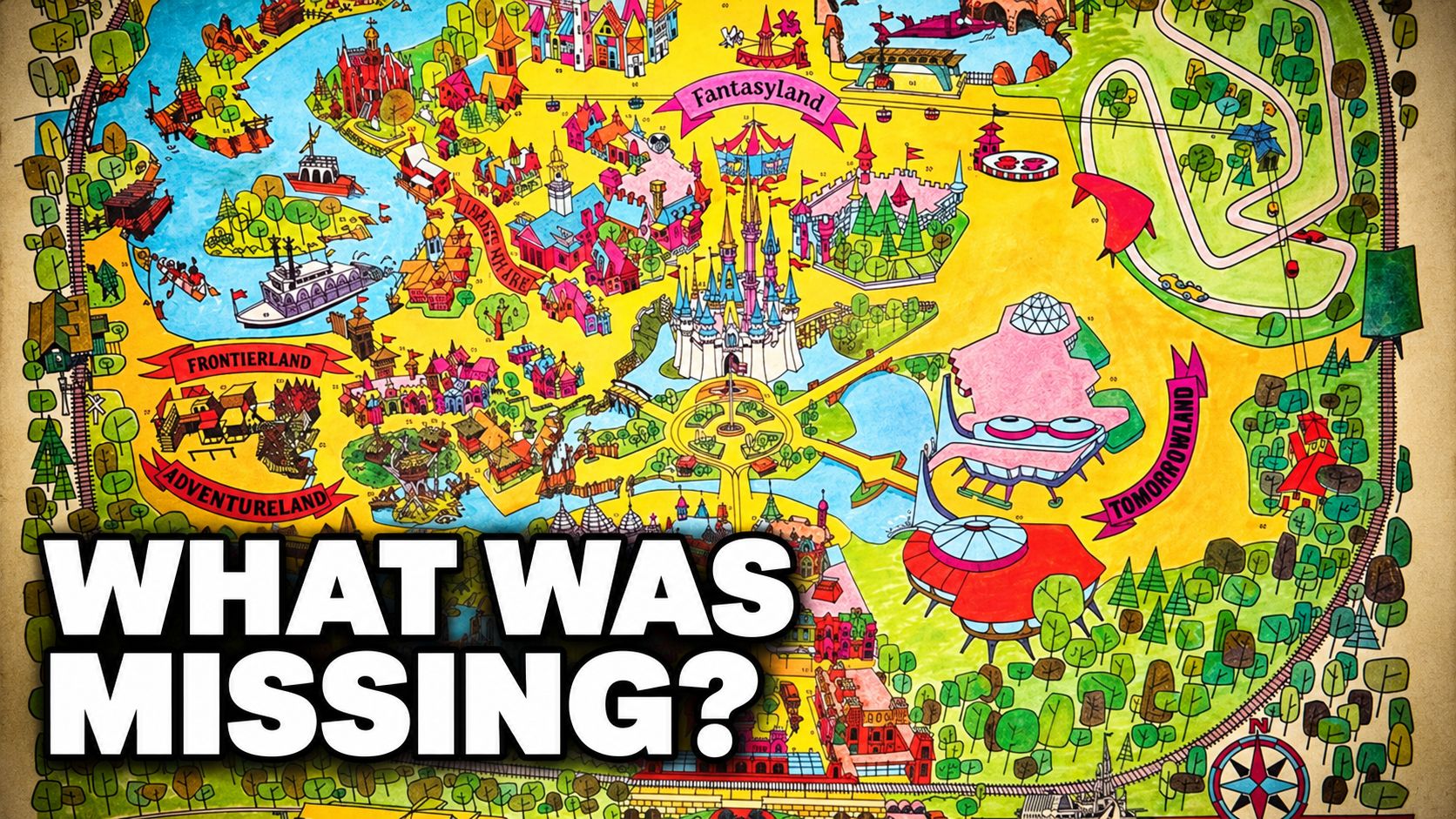
When Walt Disney World opened its gates on October 1, 1971, Magic Kingdom already had many of the attractions we now associate with the earliest years of the resort.
Guests could tour the Haunted Mansion, cruise through the jungle, fly over London with Peter Pan and hear the relentlessly cheerful music of “it’s a small world.”
But if you could somehow travel back to opening day and walk through Magic Kingdom, something would feel strange.
A lot of attractions that seem almost inseparable from the park simply would not be there.
No Pirates of the Caribbean.
No Space Mountain.
No PeopleMover.
No Carousel of Progress.
No Big Thunder Mountain Railroad.
Even Tom Sawyer Island was sitting in the middle of the Rivers of America without actually being open to guests.
That is because the Magic Kingdom of October 1971 was never intended to be a finished museum piece. Walt Disney World opened with enormous amounts of land, ambitious expansion plans and a philosophy that the resort would continue evolving almost immediately.
Some additions had been planned before opening day but were pushed into later construction phases. Others depended on corporate sponsors. One famous attraction arrived because guests kept asking Disney why it was missing. And another grew out of one of the most ambitious Disney attractions that was never built.
Within only nine years, Magic Kingdom had added nearly everything on this list.
Here are 10 Walt Disney World attractions and experiences you may have assumed were there on opening day-but weren’t, along with the stories of how they actually became part of Magic Kingdom.
10 Magic Kingdom Classics That Were Not There on Opening Day
| Attraction | Opened | Status Today |
|---|---|---|
| Pirates of the Caribbean | December 15, 1973 | Operating |
| Columbia Harbour House | 1972 | Operating |
| If You Had Wings | June 5, 1972 | Closed in 1987; site now houses Buzz Lightyear’s Space Ranger Spin |
| Plaza Swan Boats | May 20, 1973 | Closed in 1983 |
| Tom Sawyer Island | May 20, 1973 | Closed in 2025 |
| Space Mountain | January 15, 1975 | Operating |
| Carousel of Progress | January 15, 1975 | Temporarily closed for a major 2026–2027 reimagining |
| WEDway PeopleMover | July 1, 1975 | Operating as Tomorrowland Transit Authority PeopleMover |
| Main Street Electrical Parade | June 11, 1977 | Last Walt Disney World run ended in 2016 |
| Big Thunder Mountain Railroad | September 23, 1980 | Operating; reopened from major refurbishment in May 2026 |
1. Pirates of the Caribbean – 1973
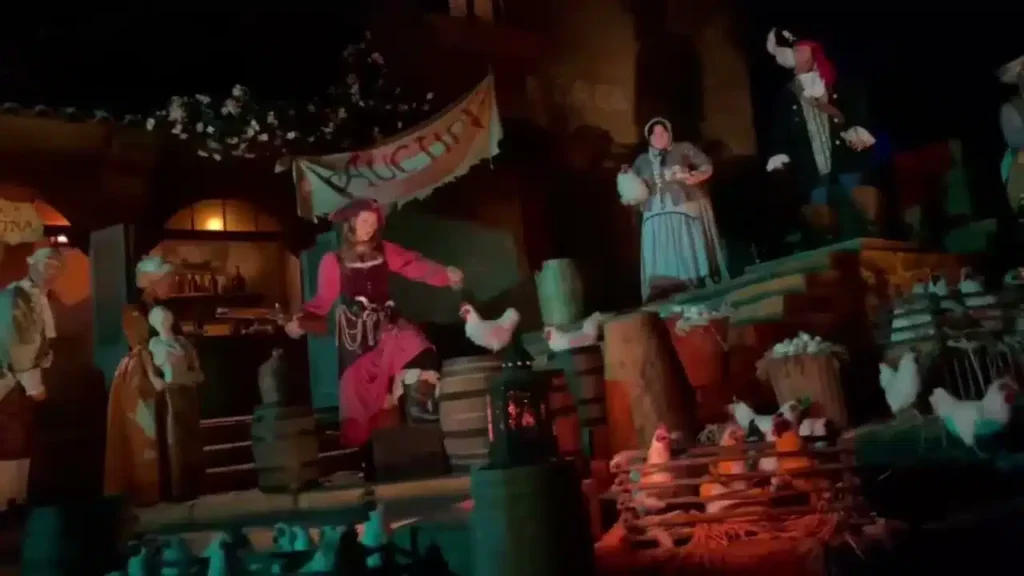
Of everything missing from opening-day Magic Kingdom, Pirates of the Caribbean may be the most surprising.
Disneyland’s Pirates of the Caribbean had opened on March 18, 1967 and quickly established itself as one of Disney’s most elaborate and celebrated attractions. Walt Disney had personally been deeply involved in developing the ride before his death in December 1966.
Yet when Disney began planning its Florida park, Imagineers deliberately decided not to simply copy everything that had worked in California.
The Florida resort was supposed to offer new experiences.
Marc Davis-one of Walt Disney’s legendary Nine Old Men and one of the principal designers behind Disneyland’s Pirates-developed an enormous Western-themed alternative called the Western River Expedition.
The proposed attraction would have been a musical Audio-Animatronic boat journey through a humorous version of the American West, with cowboys, stagecoach robbers, saloons, Native American scenes and plenty of the visual gags Davis was famous for.
Western River Expedition was intended to sit inside an enormous Frontierland complex known as Thunder Mesa. Early concepts also envisioned additional experiences around and through the artificial mountain, including a runaway mine train.
Disney promoted Thunder Mesa in early Walt Disney World materials even though rising construction costs pushed it beyond the October 1971 opening.
Then guests actually arrived.
And they wanted pirates.
Millions of Americans had already seen Walt Disney promote Disneyland’s Pirates of the Caribbean on television. For many families traveling east to the brand-new Walt Disney World, Pirates was not simply a Disneyland attraction-it had become part of what they thought a Disney theme park was supposed to contain.
The absence became noticeable almost immediately.
Imagineer Tony Baxter later recalled how vocal guests became about the missing attraction. Disney listened and quickly shifted gears.
Rather than waiting for Western River Expedition, the company fast-tracked a Florida version of Pirates of the Caribbean.
There was one problem: Adventureland had not been designed with a giant Pirates show building already waiting behind it.
Disney therefore expanded the land with a completely new area, Caribbean Plaza, building the attraction beyond the original Adventureland footprint.
The Florida Pirates would be more compact than Disneyland’s sprawling version, but it retained many of the attraction’s defining elements: Audio-Animatronic pirates, burning Caribbean towns, cannon fire and the unforgettable “Yo Ho (A Pirate’s Life for Me).”
Pirates of the Caribbean opened at Magic Kingdom on December 15, 1973, only a little more than two years after Walt Disney World itself.
Its success also helped change the fate of Western River Expedition. Although Marc Davis continued developing his western attraction for years, the expensive project became increasingly difficult to justify after Disney had already constructed another large boat ride nearby.
Western River Expedition never opened.
One portion of its DNA, however, eventually survived in another attraction farther west in Frontierland.
We’ll get there.
2. Columbia Harbour House – 1972
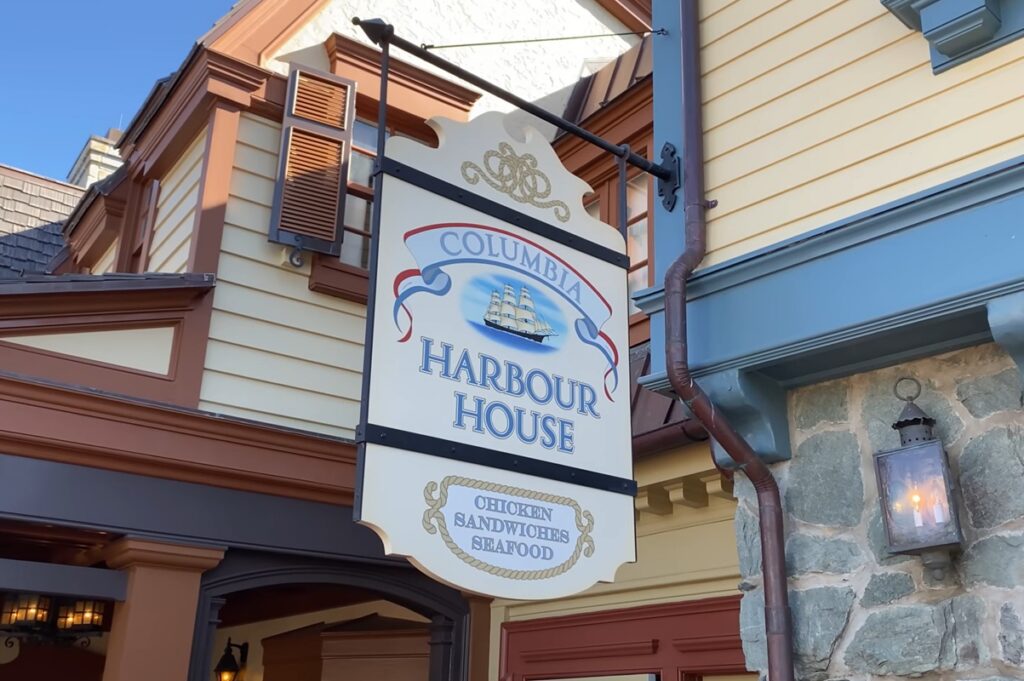
This next entry is not a ride, but Columbia Harbour House feels so firmly embedded in Liberty Square that it is easy to assume it opened with the park.
It did not.
The two-story quick-service restaurant was still being completed when Magic Kingdom opened in October 1971 and did not begin serving guests until 1972.
Early planning materials make its history even more interesting.
On Magic Kingdom blueprints, the location was reportedly identified simply as “Chicken & Fish.” A 1971 souvenir map used another name: Nantucket Harbour House.
The final Columbia Harbour House identity fit perfectly with one of the more subtle pieces of Magic Kingdom design.
The restaurant sits where Liberty Square begins transitioning toward Fantasyland.
Its architecture reflects that geographical storytelling.
The Liberty Square side evokes colonial New England and America’s maritime history, while parts of the building gradually feel more European as guests approach Fantasyland.
Inside, model ships, nautical artwork, wooden paneling and maritime details help sell the illusion of a centuries-old New England inn.
The restaurant was also built for serious capacity.
Its two floors gave Disney a large counter-service operation capable of feeding significant numbers of guests in a section of Magic Kingdom that could become extremely busy.
That function continues today.
More than half a century later, Columbia Harbour House still serves seafood and New England-inspired dishes in essentially the same location, and its upstairs dining rooms remain among the quieter places to sit down inside Magic Kingdom.
It feels like opening-day Disney because the building and its storytelling fit Liberty Square so naturally.
But the first Magic Kingdom guests never ate there.
3. If You Had Wings – 1972
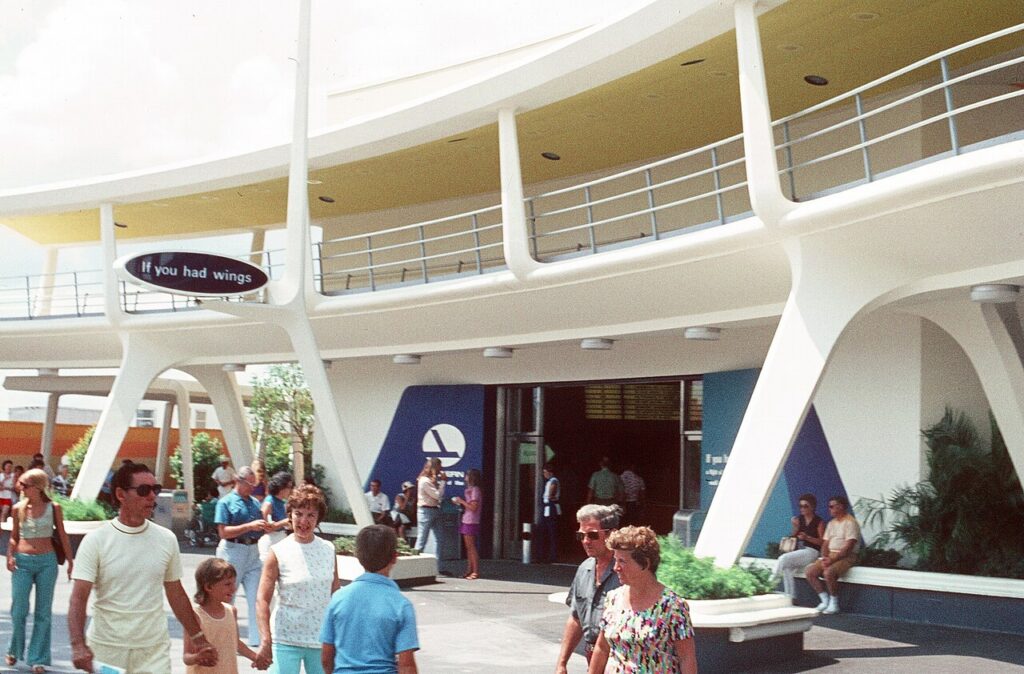
Tomorrowland changed almost immediately after Walt Disney World opened.
One of its first major additions arrived on June 5, 1972: If You Had Wings.
The attraction was sponsored by Eastern Air Lines, which was Walt Disney World’s official airline.
Its purpose was not particularly subtle.
Disney would give guests an entertaining trip through glamorous vacation destinations.
Eastern would remind those same guests that it could fly them there.
Guests boarded Disney’s continuously moving Omnimover vehicles-the same general ride technology associated with Haunted Mansion-and traveled through stylized scenes inspired by destinations served by Eastern.
Mexico, Bermuda, Puerto Rico, the Bahamas and other warm-weather locations appeared through a mix of physical scenery and projected film.
The attraction became an important experiment in combining dimensional sets with extensive motion-picture projection rather than relying almost entirely on Audio-Animatronics.
Disney Legends Claude Coats and X Atencio were involved in its development, while composer Buddy Baker created the memorable music.
Atencio’s lyrics made the sponsor’s message impossible to miss.
If you had wings, the song suggested, you could widen your world.
And, conveniently, Eastern Airlines provided those wings.
It Was Also Free to Ride
One detail that can be difficult for modern Disney guests to appreciate is that Magic Kingdom originally used attraction ticket books.
After paying to enter the park, guests surrendered individual A through E tickets for many rides.
If You Had Wings was different.
Eastern’s sponsorship meant guests could experience it without using an attraction ticket.
That made an air-conditioned Omnimover dark ride particularly attractive to families who had already exhausted the best tickets in their book.
Eastern ended its sponsorship in 1987, and If You Had Wings closed on June 1 of that year.
A modified version called If You Could Fly briefly followed.
Disney then partnered with another airline for a much larger reworking of the space: Delta Dreamflight, which opened in 1989.
Dreamflight later became Take Flight before finally closing in 1998.
The building and Omnimover footprint were reworked yet again.
Today, guests entering Buzz Lightyear’s Space Ranger Spin are entering a Tomorrowland attraction space whose history stretches all the way back to If You Had Wings.
Nothing was there for opening-day guests.
4. Plaza Swan Boats – 1973

Some extinct Disney attractions leave behind an obvious building.
The Plaza Swan Boats left something much easier to overlook: waterways.
The attraction officially opened on May 20, 1973.
Guests boarded elegant vessels topped with swan figures and traveled through the canals surrounding Magic Kingdom’s central Hub.
There was no elaborate storyline.
No Audio-Animatronic villain threatened the boat.
No final drop waited around the corner.
The Magic Kingdom itself was the attraction.
The boats provided unusual views of Cinderella Castle, the Crystal Palace and the Hub before passing through waterways toward Adventureland. The route carried guests beneath bridges and around the area near Swiss Family Treehouse before eventually returning toward the center of the park.
The original fleet included 12 boats, giving Disney a surprisingly substantial water attraction in a location most modern guests think of purely as landscaping.
The vessels were free-floating rather than riding on a conventional submerged track, making their operation more complicated than it might first appear.
Over time, maintenance requirements and limited capacity worked against the attraction.
The Swan Boats eventually became more seasonal, operating primarily during heavier attendance periods.
They disappeared completely in August 1983.
For years afterward, the former Swan Boat loading area remained identifiable near the Hub, even though millions of newer guests had no idea what had once departed from there.
Later Magic Kingdom Hub renovations significantly altered the area and removed more of the surviving infrastructure.
The canals themselves, however, are a reminder that opening-era Disney often treated transportation and scenic movement as attractions in their own right.
5. Tom Sawyer Island – 1973
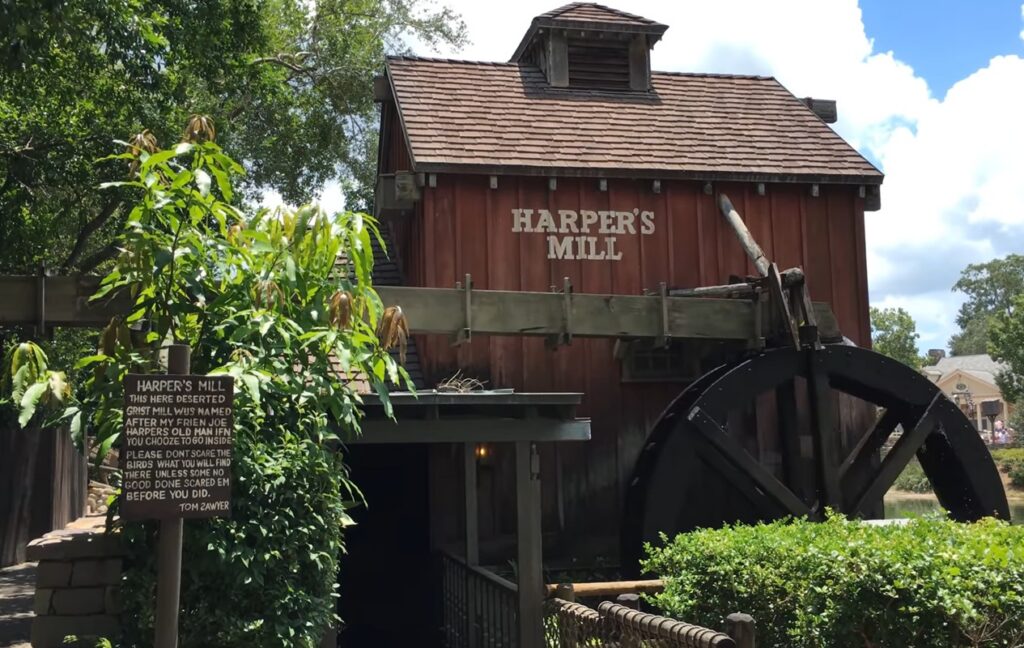
Tom Sawyer Island may create the most convincing opening-day illusion of anything on this list.
After all, the island itself was physically sitting in the Rivers of America when Magic Kingdom opened in 1971.
You simply couldn’t visit it.
Disney continued developing the island after opening day. Construction work was substantial enough that portions of the Rivers of America had to be affected while the attraction took shape.
Tom Sawyer Island finally welcomed guests on May 20, 1973-the same day Disney officially dates the opening of Plaza Swan Boats.
Motorized rafts carried guests from Frontierland across the river into a completely different style of Disney attraction.
There was no track.
There was no fixed ride time.
There was barely a prescribed direction.
Guests were simply turned loose.
Inspired by Mark Twain’s stories about Tom Sawyer and Huckleberry Finn, the Florida island offered caves, trails, bridges and small frontier environments that children could explore largely at their own pace.
Among its best-known features were Harper’s Mill, barrel and suspension bridges and the large frontier fort eventually known as Fort Langhorn.
Aunt Polly’s provided food and refreshments during portions of the island’s long history.
That freedom became increasingly unusual as Disney parks evolved toward highly controlled attraction experiences.
Tom Sawyer Island was somewhere children could run, disappear into a cave, cross a wobbly bridge and decide for themselves what came next.
The Island’s Story Finally Ended in 2025
After more than 52 years, Tom Sawyer Island’s run came to an end.
Its final operating day was July 6, 2025, after which Disney permanently closed the attraction along with the Liberty Square Riverboat and Rivers of America area.
The property is now being transformed as part of the enormous Frontierland expansion that will include Piston Peak National Park, inspired by Disney and Pixar’s Cars.
So while Tom Sawyer Island became such a fixture of vintage Magic Kingdom that it is easy to mentally place it in 1971, it actually missed opening day by nearly 20 months.
6. Space Mountain – 1975
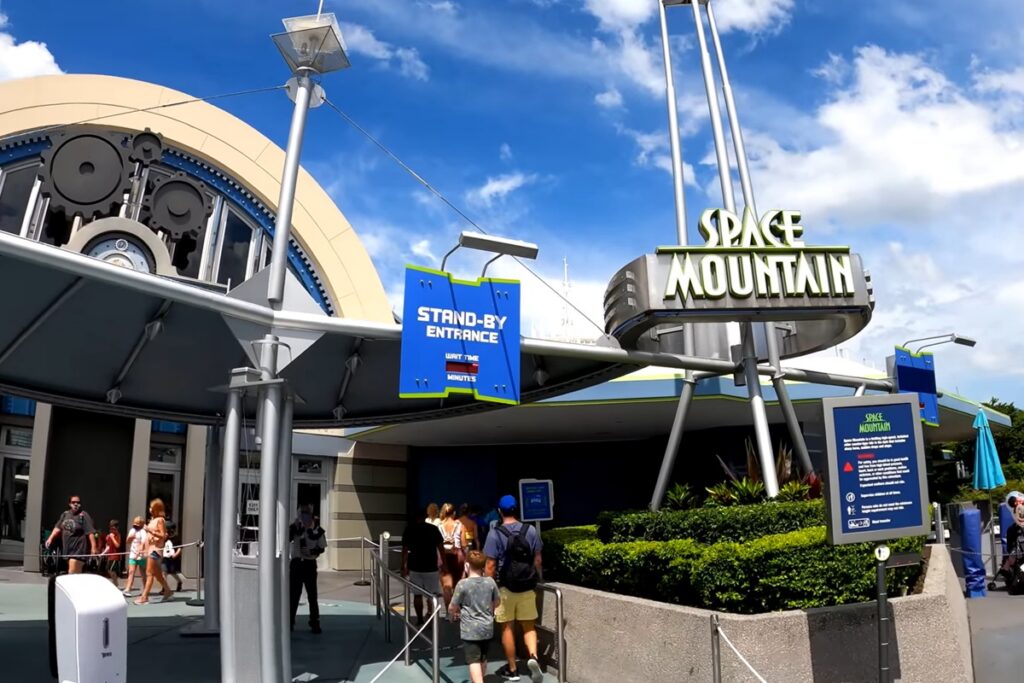
It is difficult to imagine Tomorrowland without Space Mountain.
Its enormous white structure has dominated the northeastern Magic Kingdom skyline for generations.
Yet the first visitors to Walt Disney World saw nothing resembling it.
Walt Disney had explored the possibility of building an indoor space-themed roller coaster for Disneyland during the 1960s.
The concept was sometimes referred to as Space Voyage.
The inspiration made sense.
Disneyland’s Matterhorn Bobsleds had already demonstrated that Disney could combine roller-coaster thrills with a completely themed environment.
But a fully indoor coaster racing through simulated outer space demanded far more sophisticated control technology than was practical at the time.
The project waited.
Florida provided another opportunity.
Magic Kingdom had far more available land than Disneyland, and computer-controlled ride technology was advancing rapidly.
Imagineer John Hench led the design effort, creating the futuristic white conical structure that became almost instantly recognizable.
Construction began in December 1972.
Inside the enormous building, Disney installed two separate coaster tracks-traditionally known as Alpha and Omega-allowing the attraction to handle large numbers of guests.
Instead of elaborate scenery surrounding the trains, darkness became one of the attraction’s greatest effects.
Stars and illuminated space imagery gave riders only limited visual information about where the track was headed next.
The experience felt considerably more extreme than the coaster’s actual statistics suggested.
RCA and the Future of Tomorrowland
Space Mountain was sponsored by RCA, and the company’s presence extended well beyond a logo.
The attraction originally included a post-show exploring future technology and electronics, reinforcing the original Tomorrowland model in which corporations could help Disney present optimistic visions of tomorrow.
Space Mountain officially opened on January 15, 1975.
Disney made sure the dedication matched the scale of the project.
Astronauts attended. Apollo 15 astronaut James Irwin became the first official passenger. Fireworks exploded overhead. Disney released tens of thousands of balloons.
And approximately 2,000 young musicians came together as an enormous marching band.
The event did more than open another ride.
It marked the formal dedication of a greatly expanded Tomorrowland.
The futuristic skyline that generations now associate with Magic Kingdom had finally begun taking shape-more than three years after the park opened.
7. Carousel of Progress – 1975
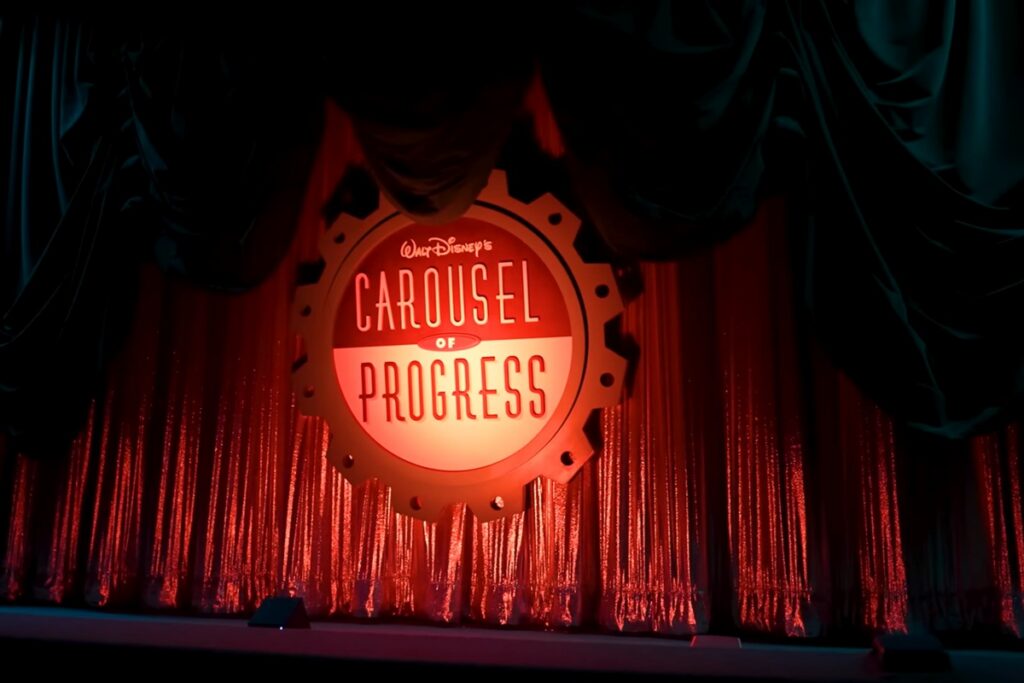
On the same day Space Mountain opened, Magic Kingdom gained an attraction with an entirely different history.
Carousel of Progress was not new in 1975.
It was already a Disney veteran.
Walt Disney personally helped develop the show for General Electric’s Progressland pavilion at the 1964–1965 New York World’s Fair.
Audiences sat inside a revolutionary rotating theater that moved around a stationary series of stages, watching an Audio-Animatronic family experience advances in household technology across multiple generations.
Richard and Robert Sherman wrote “There’s a Great Big Beautiful Tomorrow” for the production.
After the World’s Fair ended, Disney relocated the attraction to Disneyland, where it opened in Tomorrowland on July 2, 1967.
The Disneyland version closed in September 1973.
The show then headed across the country.
A Different Carousel Arrives in Florida
The Florida version opened on January 15, 1975, alongside Space Mountain.
Disney revised the production for its new home.
General Electric’s corporate philosophy had changed since the World’s Fair years, so the Sherman Brothers’ original “Great Big Beautiful Tomorrow” was replaced with another Sherman composition: “The Best Time of Your Life.”
The Florida attraction also received a revised finale.
Meanwhile, part of the massive Progress City model that had once occupied the upper level of Disneyland’s Carousel building made the trip east as well.
A surviving portion can still be seen from another Tomorrowland attraction.
The original song ultimately returned to Carousel of Progress in the 1990s, and the attraction was renamed Walt Disney’s Carousel of Progress in 1994.
And It Is Changing Again
More than 60 years after its World’s Fair debut, the attraction is once again undergoing a major transformation.
Carousel of Progress temporarily closed in July 2026 for a substantial reimagining scheduled to debut in late spring 2027.
Disney is updating the time periods represented by the family while retaining the attraction’s central ideas of progress and optimism.
It is an extraordinary lifespan for a show that existed for more than a decade before it ever reached Walt Disney World.
8. WEDway PeopleMover – 1975
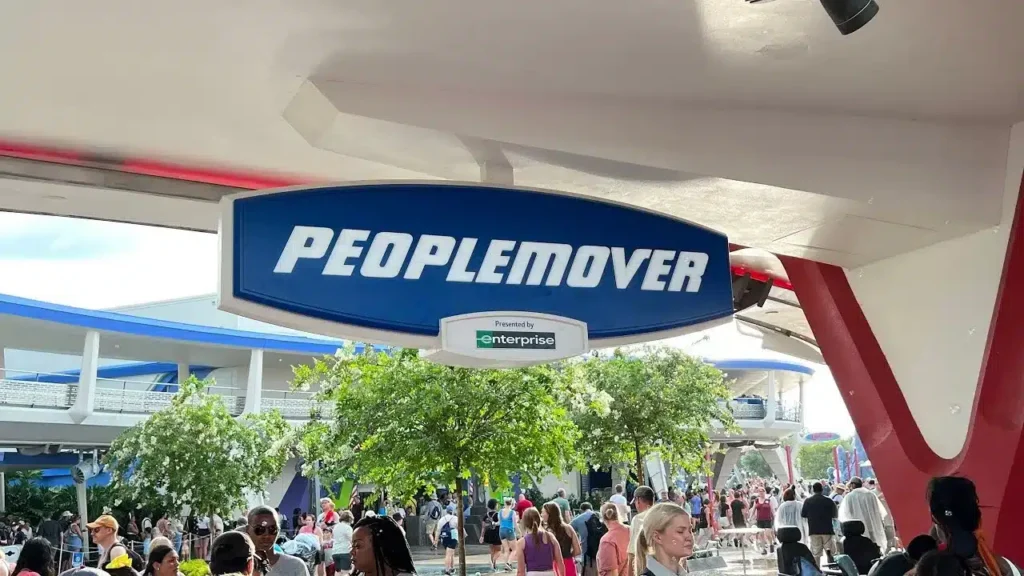
The PeopleMover presents a different kind of opening-day mystery.
Unlike Space Mountain, which simply had not yet been built, pieces of the PeopleMover’s elevated infrastructure were already becoming part of Tomorrowland’s architecture during the early 1970s.
Guests could see a land designed around a future transportation system.
The vehicles simply weren’t running yet.
Disneyland had introduced its PeopleMover in 1967.
Walt saw the concept as more than a theme park ride. Versions of the continuously moving transportation system were central to his plans for the original Experimental Prototype Community of Tomorrow.
The Florida version improved on the Disneyland technology.
Rather than depending on rotating tires positioned along the guideway, the WEDway PeopleMover used linear induction motors to move the vehicles around Tomorrowland.
The system produced a remarkably smooth ride with relatively few moving propulsion components aboard the vehicles themselves.
The Florida guideway also became an integral architectural element of Tomorrowland, weaving through and around buildings while giving guests elevated views of the land.
The attraction finally opened on July 1, 1975.
Along the way, riders could glimpse interiors of other Tomorrowland attractions and see the surviving piece of Walt Disney’s Progress City model.
The attraction became the Tomorrowland Transit Authority in 1994 and eventually took its current name, the Tomorrowland Transit Authority PeopleMover.
It remains one of the strangest success stories at Magic Kingdom.
Walt viewed PeopleMover technology as part of the future of urban transportation.
That mass-transit revolution never arrived in American cities.
Yet generations of Magic Kingdom guests now consider the attraction one of the most relaxing experiences in the entire park.
9. Main Street Electrical Parade – 1977
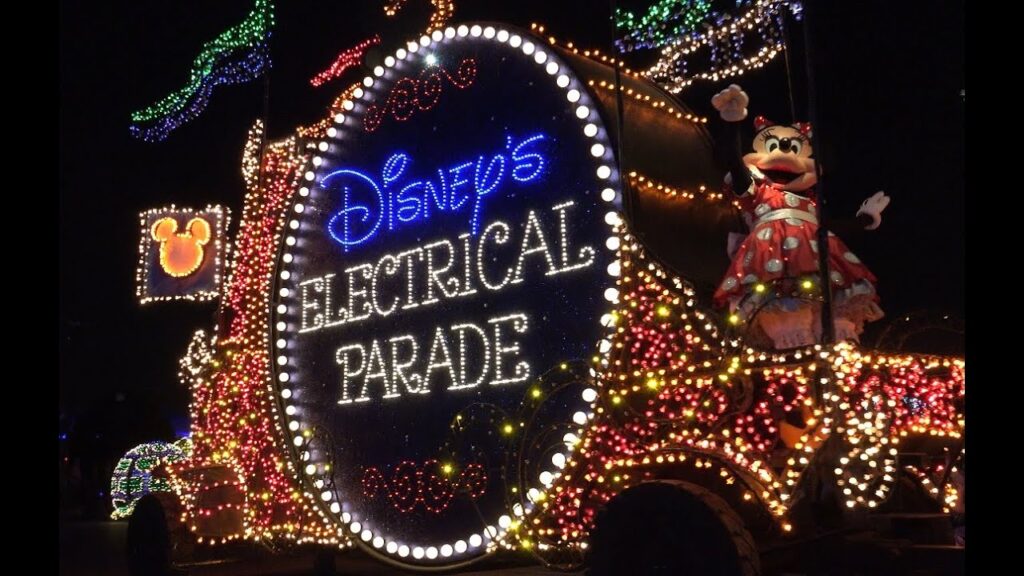
When people picture vintage Walt Disney World at night, it is almost impossible not to hear the electronic pulse of “Baroque Hoedown.”
But opening-day Magic Kingdom had no Main Street Electrical Parade.
The roots of the parade were actually planted at Walt Disney World first.
The Electrical Water Pageant began floating across Bay Lake and Seven Seas Lagoon in October 1971.
Its illuminated figures appeared against the nearly black Florida night while electronic music-including “Baroque Hoedown”-accompanied the procession.
The show became the direct ancestor of Disneyland’s Main Street Electrical Parade, which debuted in California in 1972.
That original version relied heavily on illuminated flat-panel units inspired by the water pageant.
When the concept was substantially redesigned for 1977, the parade evolved.
New three-dimensional floats joined the procession, creating the look most fans now associate with the Main Street Electrical Parade.
The updated version debuted at Magic Kingdom on June 11, 1977.
Pete’s Dragon and That Famous Introduction
The 1977 generation added one of the parade’s most memorable units: the enormous Elliott float from Pete’s Dragon.
Disney audio designer Don Dorsey also helped transform the way the parade began.
He developed a method allowing the synthesized introduction to flow smoothly into the continuous parade music while a heavily processed voice announced the arrival of the “spectacular festival pageant of nighttime magic and imagination.”
That opening became almost as recognizable as the floats themselves.
The parade’s Walt Disney World history became surprisingly complicated from there.
Its original Florida run lasted until 1991, when SpectroMagic replaced it.
The Main Street Electrical Parade later returned to Magic Kingdom from 1999 to 2001 and again from 2010 until October 9, 2016.
Today, Magic Kingdom once again has a nighttime parade with Disney Starlight: Dream the Night Away, which Disney deliberately developed with nods to the Electrical Parade tradition.
But that classic glowing parade that feels so quintessentially 1970s Walt Disney World actually arrived nearly six years after opening day.
10. Big Thunder Mountain Railroad – 1980
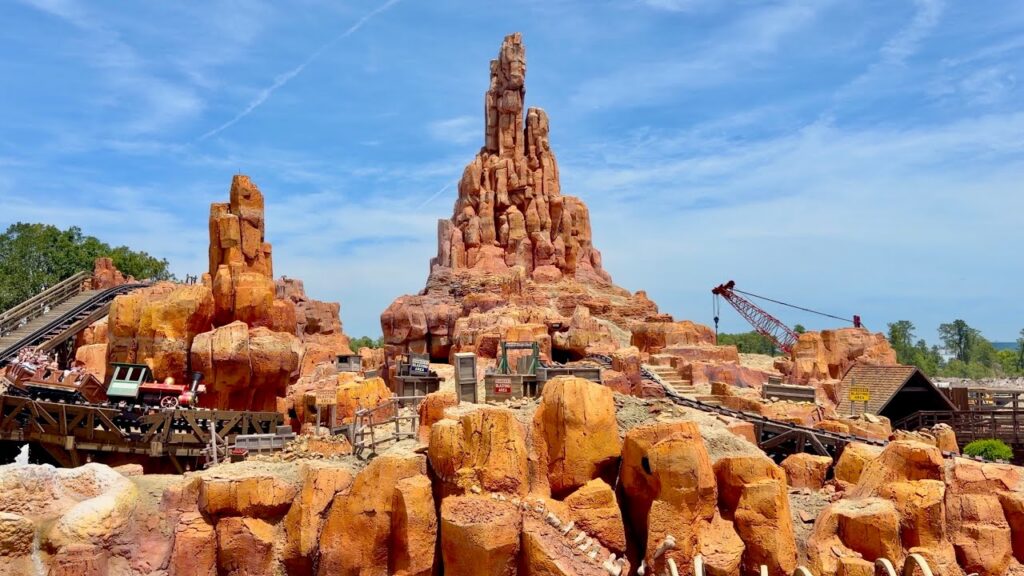
Our final attraction arrived so late that Walt Disney World was already approaching its tenth anniversary.
And its story brings us back to Pirates of the Caribbean.
The western edge of Frontierland had originally been reserved for Marc Davis’s enormous Thunder Mesa complex and Western River Expedition.
One component of that concept involved mine trains racing through the artificial western landscape.
After Disney redirected its attention toward Pirates of the Caribbean, Western River Expedition gradually lost momentum.
But the mine-train idea survived.
Young Imagineer Tony Baxter became fascinated with the concept and helped develop it into a standalone attraction.
The project would become Big Thunder Mountain Railroad.
Disneyland received the first version in 1979.
Florida followed the next year.
Building an Entire Mountain
Creating Big Thunder was an enormous engineering project.
For the Walt Disney World version, Disney constructed a full artificial red-rock landscape around the roller-coaster track.
A detailed model of the attraction was divided into small sections and analyzed so machinery could bend the structural steel into shapes that accurately reproduced the Imagineers’ miniature landscape at full scale.
Disney’s archival records describe staggering quantities of construction material:
- Approximately 6,500 tons of steel beams, rods and mesh
- More than 4,600 tons of cement and sand
- About 90,000 gallons of water used during construction
- Thousands of gallons of paint
Imagineers also searched real ghost towns and abandoned mines for authentic ore carts, gears, buckets and other mining equipment to scatter throughout the attraction.
The result was more than a roller coaster.
It was an enormous environmental story.
Welcome to Tumbleweed
The Florida attraction’s mythology centers on the mining town of Tumbleweed.
A gold rush brought prospectors to Big Thunder, but natural disasters eventually devastated the settlement.
The mine trains somehow continued running without crews-creating the runaway adventure guests experience today.
Big Thunder Mountain Railroad began carrying Magic Kingdom guests on September 23, 1980.
Disney held its formal grand opening on November 8.
In one sense, it became the final descendant of an attraction envisioned before Magic Kingdom ever opened.
Thunder Mesa and Western River Expedition disappeared.
The runaway mine train survived.
Big Thunder’s Story Is Still Evolving
The attraction underwent one of the largest refurbishments in its history in 2025 and 2026.
It reopened on May 3, 2026 with new track, refreshed trains and additional storytelling.
Among the most noticeable additions are glowing underground Rainbow Caverns, a new sequence inspired by early Disney western attractions.
That means an attraction born from an unrealized 1960s concept is still being actively developed more than 45 years after it finally opened.
So What Did Magic Kingdom Actually Look Like on October 1, 1971?
Put these 10 attractions together and the Magic Kingdom that welcomed guests on October 1, 1971 starts looking remarkably different from the “classic” park many of us picture in our memories.
Tomorrowland had no Space Mountain.
It had no PeopleMover.
It had no Carousel of Progress.
It had no If You Had Wings.
The enormous futuristic land generations remember from old vacation photos was still taking shape.
Adventureland had no Pirates of the Caribbean.
Caribbean Plaza itself did not yet exist.
Frontierland had no Big Thunder Mountain Railroad.
Tom Sawyer Island was physically present, but guests could not visit it.
And the glowing Main Street Electrical Parade that became synonymous with vintage Disney World nighttime entertainment would not arrive until 1977.
Even some attractions commonly listed with Walt Disney World’s earliest era missed October 1 by days or months.
20,000 Leagues Under the Sea, for example, did not begin operating until October 14, 1971.
Flight to the Moon did not open in Tomorrowland until December 24, 1971.
That does not mean Walt Disney World opened as some unfinished failure.
Quite the opposite.
Constant expansion was part of the plan.
Disney had purchased an enormous amount of Florida land precisely so the resort would have room to change in ways Disneyland never could.
Early visitors were watching that philosophy happen in real time.
Magic Kingdom Was Built Piece by Piece
What is remarkable is not simply that these attractions opened later.
It is how completely they rewrote our mental image of early Walt Disney World.
Pirates of the Caribbean arrived because Disney underestimated just how strongly guests associated pirates with the Disney park experience.
If You Had Wings demonstrated how corporate sponsorship could produce completely new attractions months after opening.
Space Mountain and the PeopleMover transformed the scale and skyline of Tomorrowland.
Carousel of Progress carried a piece of Walt Disney’s World’s Fair legacy across the country.
Big Thunder Mountain Railroad emerged from the remains of a gigantic western attraction Disney never managed to build.
And something as simple as Tom Sawyer Island showed that even parts of the physical landscape visible on opening day could still be works in progress.
By 1980, less than nine years after the resort opened, nearly every experience on this list had become part of Magic Kingdom.
They fit so well that later generations naturally began assuming they had always been there.
But the classic Magic Kingdom was not created in one enormous burst on October 1, 1971.
It was assembled piece by piece.
And Disney has been changing it ever since.
Which attraction surprised you the most? Is there one you would have sworn was there when Walt Disney World opened? Let me know in the comments, and check out the video below for the complete story.