
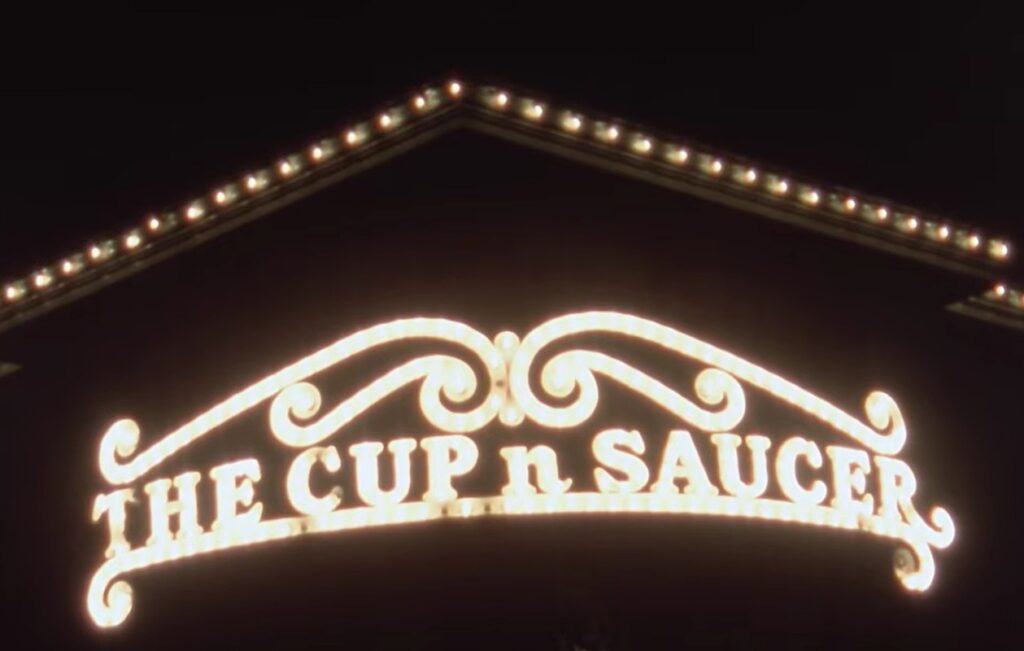
The Cup ’n Saucer brought a china shop’s particular pleasures to Main Street, U.S.A.: delicate objects, decorative gifts, and purchases intended for a special place at home. Part of Magic Kingdom’s original 1971 shopping lineup, it occupied the east side of Main Street and offered an assortment that suited the land’s prosperous turn-of-the-century setting. Its name was straightforward, memorable, and entirely appropriate for a street designed around recognizable neighborhood businesses.
Despite the suggestion of afternoon tea, the Cup ’n Saucer was a retail shop. Early park guides identified it as the Cup ’n Saucer China Shop, with merchandise described as china, gifts, and decorative ornaments. That description establishes its role clearly. Visitors came to browse tableware and ornamental pieces, adding another kind of shopping to a street that also offered candy, flowers, watches, toys, and magic tricks.
The assortment included fine china and gifts associated with makers such as Lladró and Hummel. Those names gave the shop an appeal extending beyond conventional vacation souvenirs. A collectible figurine or decorative piece could interest someone who enjoyed ceramics in their own right, while also becoming a reminder of a Walt Disney World visit. The purchase’s connection to Disney could come from where it was chosen as much as from the object’s design.
That approach was characteristic of Main Street’s early retail variety. The park’s shops supported the impression of a town whose residents might buy flowers, select a clock, send a greeting card, or choose something for the dining room. The Cup ’n Saucer contributed the last of those everyday possibilities. Its specialty made sense within the setting and gave guests a reason to investigate an individual business.
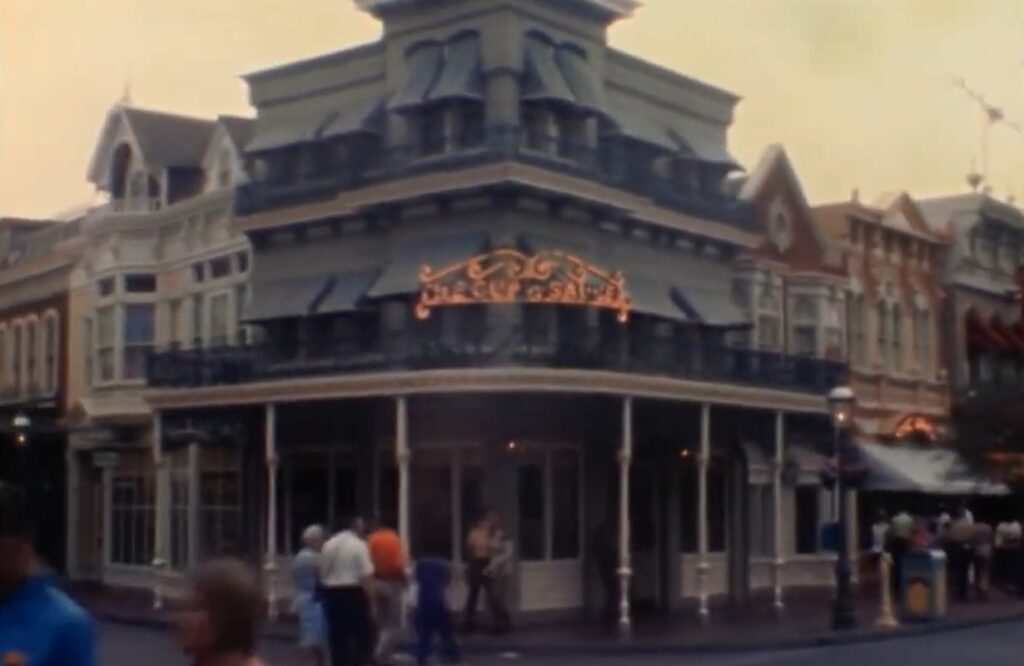
Its location placed it within a broader collection of decorative-gift shops on Main Street’s east side. Nearby Wonderland of Wax specialized in candles and wax creations, while Crystal Arts offered glasswork and engraving. Together, these businesses gave shoppers several distinct interpretations of a keepsake for the home. The interest lay in materials, workmanship, and personal taste as well as in the connection to the park.
A china shop also encouraged a particular pace. Comparing a decorative ornament or choosing a gift asks for closer attention than picking up a snack on the way to an attraction. The Cup ’n Saucer provided that opportunity within the park’s entrance land. Its merchandise offered an invitation to spend part of the visit looking at individual objects rather than moving immediately toward the next ride.
The shop’s separate identity ended during Main Street’s retail changes in 1986. On May 5 of that year, Uptown Jewelers took over the Cup ’n Saucer, bringing its merchandise tradition into a broader shopping operation. The same transition also brought the former New Century Clock Shop’s timepiece business under the Uptown Jewelers name.
The change did not immediately remove fine china and collectible ceramics from this part of Main Street. By 1988, the expanded Uptown Jewelers assortment still included china, Lladró figurines, and Wedgwood stoneware alongside jewelry and clocks. The Cup ’n Saucer name had disappeared, but related merchandise continued to give visitors reasons to browse.
Its history captures a specific aspect of early Magic Kingdom: a shopping street with room for businesses devoted to relatively narrow specialties. For nearly fifteen years, the Cup ’n Saucer made fine china and decorative gifts part of a theme park day. It helped establish Main Street as a place where choosing something for home could be an experience of its own.