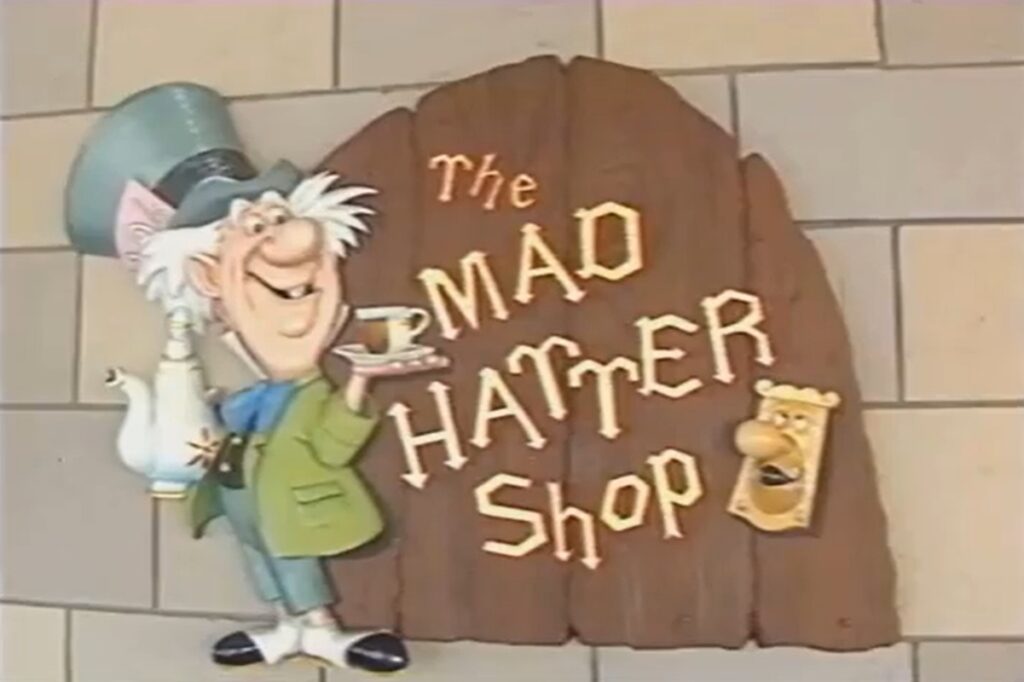
The Mad Hatter shop gave early Fantasyland visitors a souvenir they could wear straight out the door. Open from Magic Kingdom’s debut in 1971, it specialized in themed and character hats, with monogramming available to make a purchase personal. Its name supplied an immediate connection to Disney storytelling: a hat shop named for Wonderland’s most recognizable hatter needed little explanation.
The store occupied the Fantasyland location that later became Fantasy Faire, beside the theater now associated with Mickey’s PhilharMagic. During the Mad Hatter years, that neighboring theater went through several identities, beginning with the Mickey Mouse Revue and later presenting Magic Journeys and Legend of the Lion King. The shop remained part of this corner of Fantasyland through those changes, serving guests exploring the attractions around Cinderella Castle.
Its merchandise focus was clear enough to appear succinctly in the 1973 Walt Disney World guidebook: themed hats, character hats, and monogramming. That combination made the store both a place to choose something playful and a destination for a personalized keepsake. Adding a name gave an otherwise familiar purchase an individual connection to its owner, turning a piece of park merchandise into something selected and finished specifically for them.
Headwear also offered a particularly immediate form of participation. A decorative object might wait until the family returned home to be displayed; a hat could become part of the vacation while it was still happening. Wearing the purchase through Fantasyland extended the shopping experience beyond the store, allowing it to appear in photographs and accompany its owner on the next attraction. The appeal was as much about joining the day’s make-believe as bringing something home.
The Mad Hatter name suited that experience. Disney’s 1951 animated film Alice in Wonderland made the character’s oversized hat an unmistakable part of his appearance. Applying his name to a headwear shop connected the merchandise with a familiar personality while leaving room for hats inspired by other characters. The business had a specific specialty within Fantasyland’s broader collection of shops.
That variety is evident in the park’s early retail lineup. The Tinkerbell Toy Shop concentrated on children’s toys, while The AristoCats offered gifts and souvenirs. Nearby Merlin’s Magic Shop supplied tricks, puzzles, and demonstrations. The Mad Hatter contributed another distinct category, giving visitors a reason to seek out an individual shop according to what they wanted to browse or purchase.
The store’s separate identity ended when Fantasy Faire opened in its place on May 19, 1995. During the run of Legend of the Lion King, the successor shop carried merchandise associated with that production. Another substantial change followed in 2003, when Mickey’s PhilharMagic opened next door and Fantasy Faire received a musical theme connected to the new attraction.
Those later decorations belong to the Fantasy Faire chapter of the location’s history. The Mad Hatter’s story centers on the earlier hat-shopping experience, when its name and merchandise gave this small Fantasyland business its purpose. It also formed part of a wider Disney tradition: Mad Hatter shops operated at Disneyland, and the name appeared at Tokyo Disneyland when that park opened in 1983.
For nearly twenty-four years, Magic Kingdom’s version offered a straightforward pleasure amid Fantasyland’s larger adventures. Guests could choose a hat, have it personalized, and carry on exploring with a souvenir already becoming part of their memories. That simple combination of character, choice, and personal attention gave the Mad Hatter shop a lasting place in the park’s retail history.