
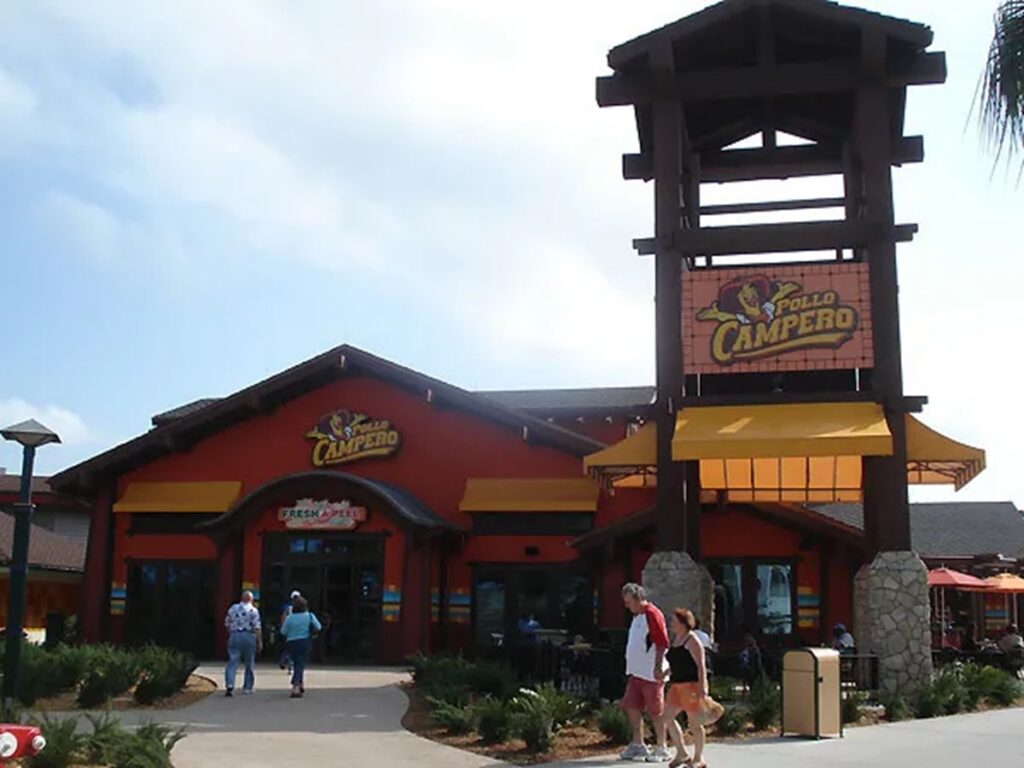
Pollo Campero was a Latin American counter-service restaurant located in the Marketplace section of Downtown Disney at Walt Disney World, now known as Disney Springs. Opening on November 15, 2010, the restaurant specialized in Guatemalan-inspired fried and grilled chicken, accompanied by traditional sides such as yuca fries, sweet plantains, rice, and beans. It occupied the former Downtown Disney McDonald’s building and shared the renovated facility with Fresh A-Peel, later renamed Bodie’s All American, and the specialty bakery BabyCakes NYC. Pollo Campero operated for approximately three years and four months before closing permanently on March 19, 2014, as part of the Disney Springs redevelopment. The entire restaurant building was demolished before the end of that month.
Pollo Campero was distinctive because it introduced a major international restaurant chain to Walt Disney World at a time when Latin American quick-service cuisine was considerably less common at the resort.
Rather than relying on the familiar hamburgers, chicken nuggets, and French fries associated with conventional American fast food, Pollo Campero offered seasoned chicken, regional side dishes, and beverages reflecting its Central American heritage.
The restaurant’s unusual combination of menu offerings, comparatively affordable prices, and shared dining space made it one of the more interesting additions to Downtown Disney during the early 2010s.
From McDonald’s to Pollo Campero
The building occupied by Pollo Campero originally housed one of Walt Disney World’s largest and most recognizable McDonald’s restaurants.
The McDonald’s opened in December 1997 during a major period of expansion at Downtown Disney.
Its appearance was particularly distinctive.
The building incorporated oversized Happy Meal-themed decorations, colorful exterior elements, and a prominent clock tower.
It was designed to appeal to families visiting the Marketplace, and its playful exterior made it easy to recognize among the surrounding shops.
The restaurant was also commercially successful.
During the early 2000s, McDonald’s executives identified the Downtown Disney establishment as one of the company’s highest-performing locations.
However, Disney’s longstanding promotional relationship with McDonald’s eventually ended.
By 2010, McDonald’s-branded food locations were being removed from Walt Disney World.
The Marketplace restaurant closed on April 30, 2010.
Disney announced that the building would be renovated to accommodate a new restaurant concept featuring Pollo Campero and a separate dining operation specializing in fresh, nutritious foods.
At the time of the initial announcement, the second restaurant had not yet received its final name.
It eventually became Fresh A-Peel.
The conversion represented a substantial change in the building’s culinary identity.
Rather than replacing McDonald’s with another conventional American fast-food restaurant, the project introduced a Latin American chicken chain alongside a new fast-casual concept emphasizing salads, wraps, and other freshly prepared dishes.
The renovated space also accommodated BabyCakes NYC, a bakery specializing in vegan and gluten-free desserts.
This created a shared dining facility with three separate culinary identities.
The Pollo Campero brand
Pollo Campero originated in Guatemala in 1971.
The company developed a reputation for its distinctive fried chicken, prepared using a proprietary blend of seasonings.
Its menu later expanded to include grilled chicken, side dishes, sandwiches, and other items inspired by Latin American cuisine.
The restaurant became particularly popular in Central America before expanding into additional international markets.
Its first United States location opened in Los Angeles in 2002.
By the time the Downtown Disney restaurant opened in November 2010, Pollo Campero operated hundreds of restaurants internationally, including approximately 50 in the United States.
The Disney location was developed through Levy Campero, a franchise operation associated with restaurateur Larry Levy.
Levy was already familiar with Walt Disney World through his company’s involvement with several restaurants, including Fulton’s Crab House and Portobello at Downtown Disney.
This existing relationship provided an important connection between the international chicken chain and Disney’s dining operations.
The project was also intended to introduce Pollo Campero to vacationers from throughout the United States and other countries.
For many visitors, the Downtown Disney restaurant represented their first opportunity to try the chain.
Pollo Campero’s cuisine was especially distinctive because its chicken preparations relied on flavors different from those commonly associated with American fast-food fried chicken.
The restaurant emphasized Latin seasonings, citrus flavors, and traditional accompaniments.
Opening in November 2010
Pollo Campero began welcoming guests during a soft opening on November 12, 2010.
The timing coincided with the Festival of the Masters, an annual arts event that attracted additional visitors to Downtown Disney.
The restaurant officially opened on November 15.
The opening introduced Pollo Campero, Fresh A-Peel, and BabyCakes NYC simultaneously.
The renovated building retained much of the footprint of the former McDonald’s, but its appearance was substantially different.
The oversized McDonald’s decorations had been removed.
The former clock tower was transformed into a sign tower displaying the new restaurant identities.
Inside, the dining facility was reorganized around separate ordering counters.
Pollo Campero and Fresh A-Peel occupied the principal food-service area, with their names and menus prominently displayed above the counters.
BabyCakes NYC maintained a separate bakery counter.
The arrangement resembled a small food court, although the businesses shared portions of the building’s service and seating infrastructure.
Guests could purchase meals from different concepts and eat together in the common dining areas.
This was particularly appealing to families whose members had different preferences.
One guest could order Latin-style chicken, another could select a burger or salad, and someone with particular dietary restrictions could purchase a dessert from BabyCakes.
Fried and grilled chicken
Chicken was the centerpiece of the Pollo Campero menu.
Two principal preparations were available: Signature Fried Chicken and Citrus Grilled Chicken.
The fried chicken was marinated before being coated with seasoned flour.
It was then pressure-cooked using a preparation method intended to produce a crisp exterior while retaining moisture.
The resulting chicken was promoted for its distinctive Latin American seasoning.
The grilled chicken offered a different experience.
Its marinade incorporated citrus flavors, including lime and orange, along with peppers, herbs, and spices.
The citrus seasoning was intended to penetrate the meat rather than remain exclusively on the surface.
Guests could order individual portions or larger family meals.
A contemporary opening-period menu offered a two-piece Signature Fried Chicken meal or a quarter portion of Citrus Grilled Chicken.
Chicken strips were another option.
The individual meal included a choice of entrée, a side dish, and warm corn tortillas.
The original price was $6.99.
This represented a relatively affordable meal at Downtown Disney, particularly when compared with the surrounding table-service restaurants.
The menu also allowed guests to add extra chicken or sides.
An additional individual entrée cost $4.49, while an additional side was priced at $2.49.
These options provided flexibility for visitors who wanted a larger meal without purchasing a complete second entrée.
Family meals
Pollo Campero also emphasized family-style dining.
Its Build Your Feast option was designed to serve approximately three or four people.
The meal included a larger chicken entrée, a family-sized side dish, and warm corn tortillas.
Guests could choose an eight-piece Signature Fried Chicken meal, twelve chicken strips, or a whole Citrus Grilled Chicken.
The opening-period price was $16.99.
Additional family-sized sides cost $4.49, while extra family chicken entrées could be added for $12.49.
The family meals were one of the restaurant’s strongest practical attractions.
Instead of purchasing separate meals for every member of a group, customers could share a larger chicken order with sides.
The approach reflected the brand’s emphasis on communal dining.
It also suited the needs of vacationing families who wanted a relatively inexpensive meal while exploring Downtown Disney.
The presence of warm corn tortillas distinguished the family meals from conventional American fried-chicken combinations.
The tortillas allowed diners to combine chicken with rice, beans, salsa, and other accompaniments according to their preferences.
Traditional Latin American side dishes
The side dishes were among the restaurant’s most distinctive offerings.
Yuca fries provided an alternative to conventional French fries.
Yuca, also known as cassava, is a starchy root vegetable used extensively in Latin American and Caribbean cooking.
When fried, it develops a crisp exterior and a dense, tender interior.
Its flavor and texture differ from those of potatoes, making it a particularly interesting option for visitors unfamiliar with the ingredient.
Sweet plantains were another signature accompaniment.
Plantains are related to bananas but are generally prepared as a cooked ingredient rather than eaten raw.
When ripe plantains are fried, their natural sugars caramelize, producing a sweet flavor that complements savory dishes.
Pollo Campero’s menu also included black beans with white rice.
Other selections included Campero Rice, Campero Beans, coleslaw, conventional French fries, and chips with salsa.
These accompaniments gave the restaurant a broader selection than might be expected from a conventional chicken counter.
Visitors could assemble a meal emphasizing traditional Latin flavors or choose familiar American sides.
The flexibility was one of the concept’s defining characteristics.
The salsa bar
One of the most memorable features of the Downtown Disney Pollo Campero was its self-service salsa bar.
Guests could select from several varieties of salsa and fresh toppings.
Documented choices included pico de gallo, green tomatillo salsa, roasted chipotle salsa, chopped onions with cilantro, and jalapeños.
The salsa bar allowed customers to adjust the flavor and heat of their meals.
A guest who preferred mild food could choose a simple fresh topping, while someone seeking more spice could add jalapeños or chipotle salsa.
The station also encouraged diners to customize their chicken, rice, beans, and tortillas.
Its presence distinguished Pollo Campero from many conventional Walt Disney World counter-service restaurants.
A firsthand opening-period review specifically documented the variety available at the salsa bar.
Another photographic account showed the station as a prominent feature of the shared dining area.
For guests who remember the restaurant, the salsa bar was often as distinctive as the chicken itself.
Breakfast at Pollo Campero
Pollo Campero was not exclusively a lunch and dinner restaurant.
It also served breakfast.
The original breakfast menu included several burritos.
The Burrito Ranchero combined egg and black beans and cost $2.49.
Egg and Chorizo and Egg and Bacon Burritos were available for $2.79.
The restaurant also served Cubano-style breakfast sandwiches.
The Cubano Bacon and Egg Sandwich and Cubano Chorizo and Egg Sandwich were priced at $3.69.
A larger breakfast platter included scrambled eggs, bacon, plantains, and refried beans.
It cost $5.99.
These offerings demonstrated the restaurant’s Latin American influence beyond its chicken menu.
Plantains, beans, and chorizo provided alternatives to the more conventional American breakfast combinations found elsewhere at the resort.
Breakfast sides included refried beans, sweet plantains, and bacon.
A children’s breakfast option featured a cheese quesadilla with bacon.
Desserts such as flan and tres leches cake were also listed on the breakfast menu.
The availability of breakfast gave the restaurant an additional practical purpose, particularly for visitors arriving at Downtown Disney earlier in the day.
Desserts and beverages
Pollo Campero offered several desserts associated with Latin American cuisine.
Flan was one of the principal selections.
The custard dessert is commonly prepared with caramel sauce and is widely enjoyed throughout Latin America.
Tres leches cake was another offering.
The cake takes its name from the three types of milk traditionally used to soak the sponge cake.
These desserts complemented the restaurant’s savory menu and distinguished it from conventional American quick-service chicken establishments.
The beverage selection also reflected the brand’s origins.
Horchata was available.
The sweet beverage is prepared in different ways throughout Latin America, commonly using rice or other grains, spices, and sweeteners.
Tamarindo was another offering.
The drink is made using tamarind, a fruit with a distinctive sweet-and-sour flavor.
The restaurant also served familiar beverages such as soft drinks, iced tea, coffee, and lemonade.
Smoothies and frozen beverages were available within the shared dining complex.
Adult beverages included beer and sangria.
Photographs from the opening period document Famosa Lager from Guatemala, providing another connection to Pollo Campero’s Central American origins.
The combination of traditional Latin drinks and familiar American beverages was consistent with the restaurant’s broader approach.
Guests could try something unusual or choose a product they already knew.
Fresh A-Peel and BabyCakes NYC
One of Pollo Campero’s most unusual characteristics was its relationship with the other businesses occupying the building.
Fresh A-Peel was developed specifically for the Downtown Disney project.
Created through a partnership involving Pollo Campero and restaurateur Larry Levy, it emphasized fresh ingredients and made-to-order meals.
Its menu included salads, wraps, burgers, sandwiches, smoothies, and healthier snacks.
The concept was intended to complement Pollo Campero rather than compete directly with its chicken offerings.
Guests who did not want fried or grilled chicken could choose a meal from Fresh A-Peel.
In November 2012, the business was renamed Bodie’s All American.
The rebranding emphasized a more familiar American restaurant identity, but many of the original menu offerings remained.
Pollo Campero continued operating beside it.
BabyCakes NYC was the third business within the facility.
The bakery specialized in vegan and gluten-free baked goods.
Its products included cupcakes, cookies, donuts, and other desserts prepared without several ingredients commonly used in conventional baking.
The bakery appealed particularly to visitors seeking alternatives to traditional desserts.
Its presence broadened the selection available within the building.
The three businesses were distinct operations, but the shared arrangement gave customers access to a much wider variety of foods than a single restaurant would ordinarily offer.
Dining room and outdoor patio
The renovated building featured a contemporary dining room that differed substantially from the former McDonald’s interior.
Tables were arranged within a shared seating area.
Guests could purchase meals from the different counters and sit together.
The interior design was relatively modern and functional.
It did not feature the elaborate character-themed decorations previously associated with the McDonald’s restaurant.
Instead, the emphasis was on providing a comfortable shared space for several dining concepts.
Outdoor seating was also available.
A patio provided tables where guests could eat while enjoying the surrounding Marketplace atmosphere.
An outdoor beverage counter offered additional refreshments.
The patio was particularly appealing during pleasant weather.
Its setting allowed guests to remain connected to the activity of Downtown Disney while enjoying their meals.
Unlike the full-service restaurants nearby, Pollo Campero did not require advance dining reservations.
Guests ordered at the counter and carried their food to the seating area.
This made it a convenient stop for shoppers and families who wanted a meal without committing to an elaborate restaurant experience.
The final years
Pollo Campero continued operating throughout 2011, 2012, and 2013.
Its menu remained centered on fried and grilled chicken, Latin-inspired sides, and family meals.
The restaurant developed a following among guests who appreciated its chicken seasoning, plantains, yuca fries, and salsa bar.
However, it also faced substantial competition.
Downtown Disney offered numerous dining options, including Earl of Sandwich, Wolfgang Puck Express, Rainforest Café, T-REX, and several full-service restaurants.
Pollo Campero’s appeal was based primarily on affordability, convenience, and its distinctive menu rather than elaborate theming.
The restaurant’s location was also affected by Disney’s plans for a major redevelopment.
In March 2013, Disney announced that Downtown Disney would become Disney Springs.
The project would introduce new restaurants, shops, parking garages, pedestrian walkways, and waterfront improvements.
The Marketplace remained part of the development, but several existing buildings were selected for removal.
The former McDonald’s building occupied by Pollo Campero, Bodie’s All American, and BabyCakes NYC was among them.
In early March 2014, the restaurants’ permanent closure was confirmed.
All three establishments would serve their final guests on March 19, 2014.
The decision was associated with the Disney Springs construction project rather than a simple restaurant rebranding.
The building itself was scheduled for demolition.
Permanent closure in March 2014
Pollo Campero served its final customers at Downtown Disney on March 19, 2014.
The closure ended approximately three years and four months of operation.
Bodie’s All American and BabyCakes NYC closed the same day.
Construction walls were subsequently installed around the property.
By the end of March, the former restaurant building had been demolished.
The demolition removed the shared dining room, original McDonald’s structure, sign tower, and outdoor patio.
Pollo Campero did not reopen at another location within Walt Disney World.
Bodie’s All American also disappeared.
BabyCakes NYC maintained a relationship with the resort through its specialty baked products and later returned to Disney Springs in a new location.
The bakery reopened as Erin McKenna’s Bakery NYC at The Landing in February 2015.
That business was a continuation of the bakery concept rather than a successor to Pollo Campero.
The chicken restaurant itself permanently disappeared from Walt Disney World’s dining lineup.
What replaced Pollo Campero?
The former restaurant site was incorporated into the Disney Springs Marketplace redevelopment.
Unlike some extinct restaurants whose buildings were renovated for new tenants, Pollo Campero was completely demolished.
Its former footprint became part of the pedestrian circulation area connecting the Marketplace’s retail destinations.
Historical site comparisons identify the location with the walkway between the LEGO Store and the area later occupied by UNIQLO.
No single new restaurant directly replaced Pollo Campero.
This is an important distinction.
Although Disney Springs subsequently introduced numerous new dining establishments, none occupied the unchanged former Pollo Campero restaurant space.
The entire building was removed to accommodate the broader redevelopment.
The closure therefore marked the end of the location’s food-service history extending back to the opening of the McDonald’s restaurant in December 1997.
As of November 2026, Pollo Campero remains permanently closed at Walt Disney World.
The international Pollo Campero restaurant chain continues operating elsewhere, but the Downtown Disney location has not returned.
Historical significance
Pollo Campero is noteworthy because it represented a relatively unusual international quick-service dining concept at Walt Disney World.
Its arrival introduced many visitors to Guatemalan-inspired fried and grilled chicken.
The availability of yuca fries, sweet plantains, rice, beans, horchata, and tamarindo distinguished the restaurant from conventional American fast-food chains.
The salsa bar provided another memorable feature, allowing guests to customize their meals with a variety of Latin-inspired toppings.
Pollo Campero was also significant because of the unusual combination of restaurants sharing the building.
The partnership with Fresh A-Peel created a broader menu emphasizing both indulgent and healthier food.
BabyCakes NYC added specialty vegan and gluten-free desserts.
Together, the three businesses provided a variety of dining options within one shared facility.
The project also demonstrated how Disney was changing its approach to Downtown Disney dining.
The original McDonald’s had been a familiar American fast-food establishment supported by a major corporate partnership.
Its replacement introduced a restaurant chain with international roots alongside newer specialty concepts.
The experiment was relatively short-lived, however, because the larger Disney Springs redevelopment required removal of the building.
Pollo Campero’s closure was therefore part of a substantial transformation of the Marketplace rather than simply the disappearance of an individual restaurant.
For guests who visited Downtown Disney between 2010 and 2014, Pollo Campero provided a distinctive alternative to the surrounding dining options.
Its citrus-grilled chicken, seasoned fried chicken, sweet plantains, yuca fries, and customizable salsa bar helped establish an identity that was different from the more familiar restaurants elsewhere in the shopping district.
The family meals also provided a convenient way for groups to share food at a comparatively affordable price.
Although the restaurant operated for only a little more than three years, it remains an interesting part of Walt Disney World’s dining history.
Its location represented the transition from the McDonald’s era of Downtown Disney to the more varied collection of restaurants that would eventually characterize Disney Springs.
Pollo Campero opened on November 15, 2010, and closed permanently on March 19, 2014.
The building was demolished before the end of that month.
Today, no physical restaurant structure remains, but Pollo Campero’s brief history provides an important snapshot of Downtown Disney immediately before its transformation into Disney Springs.