
Teppanyaki Dining Room, also known as Teppanyaki Dining Rooms or Mitsukoshi Teppanyaki, was an original table-service restaurant in the Japan pavilion at EPCOT Center. Opened on October 1, 1982, the restaurant introduced guests to Japanese teppanyaki cooking, in which chefs prepared beef, chicken, seafood, and vegetables on large iron griddles directly in front of diners. Located on the second floor of the Mitsukoshi restaurant complex, Teppanyaki Dining Room combined a traditional Japanese cooking technique with an entertaining communal dining experience. The restaurant operated under its original name until a major refurbishment in 2007, when it was redesigned and renamed Teppan Edo.
Unlike many extinct Walt Disney World restaurants, Teppanyaki Dining Room did not disappear because its underlying concept had become obsolete. Its 2007 successor retained the essential elements that made the original restaurant popular, including tableside cooking, shared seating around large grills, and chefs who incorporated elements of performance into meal preparation. The changes primarily involved the restaurant’s physical appearance, dining environment, and menu presentation.
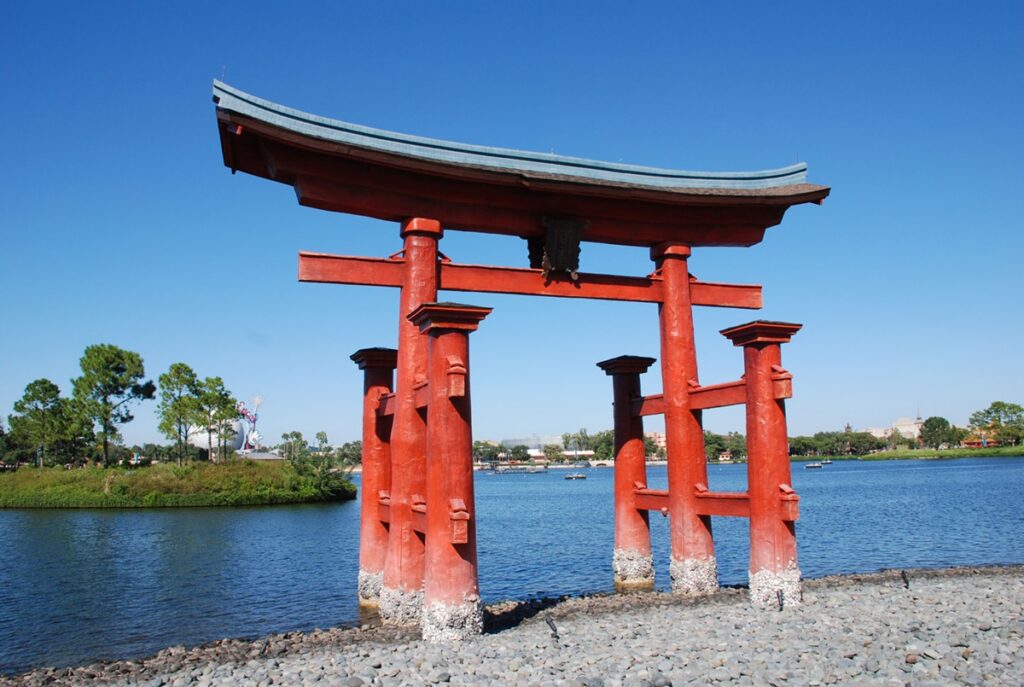
The Japan pavilion opened with EPCOT Center on October 1, 1982, as one of World Showcase’s original nine countries. Its design incorporated architectural and landscape elements inspired by different regions and periods of Japanese history, including the five-story pagoda, the torii gate overlooking World Showcase Lagoon, the traditional gardens, and the large Mitsukoshi commercial complex.
The pavilion was unusual in the extent to which a major Japanese company participated in its retail and dining operations. Mitsukoshi, a historic Japanese department-store business whose origins date to the seventeenth century, operated the pavilion’s principal merchandise and restaurant facilities.
The Mitsukoshi Department Store occupied the ground floor of the main commercial building, offering Japanese merchandise ranging from clothing and household products to traditional crafts, decorative objects, and toys.
Above the store, the Mitsukoshi Restaurant complex offered several dining experiences designed to introduce visitors to different aspects of Japanese cuisine.
The original arrangement included Teppanyaki Dining Room, Tempura Kiku, and Matsu No Ma Lounge.
These facilities shared the same general restaurant complex but served different purposes.
Tempura Kiku specialized in seafood, vegetables, and meats prepared in a light batter and deep-fried. Matsu No Ma Lounge offered a more relaxed environment for drinks and lighter Japanese fare.
Teppanyaki Dining Room was the most theatrical of the three, offering guests an opportunity to watch their meals being prepared at their tables.
The restaurant was situated on the building’s second floor, in an area sometimes identified as the Hall of Ceremonies. Guests reached the dining rooms by proceeding upstairs from the pavilion’s main shopping and courtyard areas.
Its elevated position distinguished it from Yakitori House, the pavilion’s original counter-service restaurant, which was located in the surrounding Japanese gardens.
The centerpiece of Teppanyaki Dining Room was the teppan grill.
Teppanyaki takes its name from the Japanese words “teppan,” meaning iron plate, and “yaki,” referring to grilling or cooking over heat.
The cooking technique uses a flat metal surface rather than the open flame or grate associated with conventional Western barbecue.
At Teppanyaki Dining Room, diners sat around a large rectangular cooking surface while a chef prepared their meals directly in front of them.
Several unrelated parties could be seated at the same grill, creating a communal dining experience.
This arrangement was one of the restaurant’s defining characteristics. Guests did not necessarily receive individual tables separated from neighboring diners. Instead, the seating encouraged interaction between families and other visitors gathered around the same cooking station.
The chef performed the central role in the experience.
Rather than preparing the entire meal in a separate kitchen, the chef chopped vegetables, cooked meats and seafood, and assembled the meal on the grill while guests watched.
The cooking process became part of the entertainment.
The experience was particularly appealing to families with children, who could observe the chef’s techniques and watch the ingredients change throughout preparation.
Although the restaurant emphasized cooking skills and presentation, its food remained the central attraction.
The menu featured combinations of beef, chicken, shrimp, and other seafood, accompanied by vegetables and traditional Japanese-style side dishes.
Guests could select different combinations of proteins according to their preferences, with the chef preparing the individual ingredients on the same large cooking surface.
The format allowed the restaurant to offer a relatively focused menu while accommodating diners with different tastes.
Beef and chicken provided familiar alternatives for American guests, while shrimp and seafood introduced additional flavors associated with Japanese cooking.
The vegetable preparations also allowed guests to observe the speed and precision involved in teppanyaki cooking.
One advantage of the format was the opportunity to see the food being prepared. Unlike a conventional restaurant, where most cooking takes place out of sight, Teppanyaki Dining Room made the preparation process visible.
That transparency was particularly appropriate for EPCOT Center’s original philosophy.
World Showcase was intended to introduce visitors to international cultures through direct experiences involving architecture, music, film, merchandise, and food.
Teppanyaki Dining Room allowed guests to observe a Japanese cooking technique rather than simply ordering a Japanese meal from a menu.
The chefs also contributed to the restaurant’s atmosphere through their interaction with diners.
The theatrical style of Japanese steakhouse cooking had already become familiar in the United States by the time EPCOT Center opened, particularly through the growth of teppanyaki-style restaurant chains during the 1960s and 1970s.
However, incorporating that experience into a Japanese pavilion operated by Mitsukoshi gave the EPCOT restaurant a distinct setting and cultural context.
It also helped distinguish the restaurant from other World Showcase dining establishments.
Restaurants such as San Angel Inn, Biergarten, and L’Originale Alfredo di Roma Ristorante used architecture, décor, or entertainment to create distinctive international dining environments.
Teppanyaki Dining Room placed the cooking process itself at the center of the experience.
The original restaurant’s interior reflected the Japanese-inspired architecture of the surrounding complex.
Rather than recreating a single historical building, the dining rooms formed part of a larger pavilion combining traditional architectural references with facilities designed to accommodate modern restaurant operations.
The grill tables required specialized ventilation, cooking equipment, and seating arrangements.
These practical requirements influenced the layout of the dining rooms, which were organized around multiple cooking stations.
Historical photographs from the late 1990s confirm that the original restaurant retained its communal grill-table format throughout its operating life.
The arrangement created a dining experience in which guests could see both their own food being prepared and the activity at neighboring tables.
The restaurant was particularly suitable for visitors looking for something more substantial than a quick-service meal but less formal than a traditional fine-dining establishment.
Its menu was centered on relatively straightforward grilled dishes, while the chefs’ performance provided an additional element of entertainment.
The result was a dining experience that combined food preparation, hospitality, and social interaction.
Throughout the 1980s, Teppanyaki Dining Room remained a major component of the Japan pavilion’s restaurant lineup.
Its continued operation was particularly noteworthy during a period when EPCOT Center was expanding rapidly.
Horizons opened in 1983, The Living Seas followed in 1986, and Wonders of Life debuted in 1989. Meanwhile, World Showcase added Morocco in 1984 and Norway in 1988.
Despite these changes, the original Mitsukoshi dining facilities remained largely intact.
Teppanyaki Dining Room continued offering its familiar tableside cooking experience while the surrounding pavilion developed additional shopping and cultural offerings.
During the 1990s, the restaurant remained a recognizable World Showcase dining destination.
Historical photographs from this period document the original dining room and the meals served at the grill tables.
The restaurant’s appeal depended less on frequent menu changes or new entertainment offerings than on the consistency of the underlying experience.
Guests could return years after an earlier visit and find the same basic arrangement: several parties seated around a large grill, a chef preparing meals in front of them, and a menu centered on Japanese-style grilled meats, seafood, and vegetables.
The restaurant’s continuity also reflected the relatively stable nature of the Japan pavilion during EPCOT’s first two decades.
While Future World underwent substantial changes during the 1990s, including the replacement of CommuniCore with Innoventions and the closure of several original attractions, the Mitsukoshi restaurant complex continued operating with its original identities.
Teppanyaki Dining Room survived these changes without a major rebranding.
By the early 2000s, however, the restaurant was approaching twenty-five years of operation.
Disney and Mitsukoshi began preparing a substantial modernization of the pavilion’s upper-level dining facilities.
The project involved more than a cosmetic refurbishment.
The existing restaurant complex would be reorganized into two principal dining establishments, with updated interiors and revised menus.
Teppanyaki Dining Room would retain its distinctive grill-table cooking experience under a new name, while the neighboring Tempura Kiku and Matsu No Ma Lounge areas would be redeveloped into a modern Japanese restaurant.
The work began during 2007.
Contemporary reports identify the Mitsukoshi Teppanyaki restaurant as closed for refurbishment during the summer of that year.
The originally projected reopening date was August 21, 2007, but construction delays forced Disney to revise its schedule.
By late July, guests holding reservations for August and September were receiving information that the restaurant’s reopening had been postponed.
Contemporary reports later identified September 15 as another anticipated reopening date.
That target also changed.
By September 2007, revised planning information identified October 15 as the anticipated opening date for the remodeled restaurant complex.
The sequence is important because several historical references associate the opening of Teppan Edo with different dates during 2007.
Those dates often reflect announced or projected reopening schedules rather than confirmed first days of operation.
Disney’s official historical encyclopedia confirms 2007 as the year Teppanyaki Dining Room became Teppan Edo, but it does not provide a specific day for the transition.
The restaurant’s exact final operating day under the Teppanyaki Dining Room name has also not been conclusively established.
For historical purposes, 2007 is therefore the verified closing and rebranding year. More precise dates require contemporary documentation distinguishing actual guest operations from projected construction schedules.
The remodeled restaurant reopened as Teppan Edo.
The name combined the restaurant’s established teppanyaki identity with a reference to Japan’s Edo period, the historical era extending from 1603 to 1868.
The Edo period was characterized by the rule of the Tokugawa shogunate and the growth of Japanese cities, commerce, arts, and cultural traditions.
The redesigned restaurant incorporated decorative elements inspired by this period.
The interior featured Japanese-inspired architectural detailing, decorative wall panels, and artwork depicting traditional subjects such as samurai.
The new appearance created a more refined and historically styled environment than the original restaurant’s late twentieth-century interior.
However, the most important element of the dining experience remained unchanged.
Guests continued sitting around large teppan grills while chefs prepared meals in front of them.
The restaurant maintained the communal seating arrangement that had distinguished its predecessor since 1982.
The redesigned facility also retained its upstairs location within the Mitsukoshi restaurant complex.
The original building was not demolished. Instead, the restaurant was refurbished within the existing second-floor dining area.
This distinguishes Teppanyaki Dining Room from extinct Walt Disney World restaurants whose original buildings have disappeared or whose spaces were converted to entirely unrelated functions.
In this case, the same general space continued serving the same type of cuisine.
Teppan Edo’s menu included steak, chicken, seafood, vegetables, and combination entrées.
Guests continued watching chefs prepare their meals on the grill, with vegetables, noodles, and other accompaniments served alongside the main proteins.
The cooking presentations also continued.
Chefs incorporated familiar teppanyaki entertainment techniques, including rapid knife work, coordinated cooking movements, and playful arrangements of ingredients on the grill.
One of the restaurant’s best-known presentations became the onion volcano, created by stacking onion rings into a cone and producing steam from the center.
Although this technique is now strongly associated with Teppan Edo, it is important not to assume that every modern performance detail was part of the original 1982 dining experience.
The underlying tableside cooking format is documented from opening day, but individual tricks and presentation styles may have changed over time.
The neighboring restaurant also received a new identity during the 2007 project.
Tempura Kiku and Matsu No Ma Lounge were combined and transformed into Tokyo Dining.
That restaurant opened on October 19, 2007, with a menu emphasizing sushi, sashimi, tempura, and other Japanese dishes.
The renovation therefore established two complementary dining concepts on the upper level of the Mitsukoshi complex.
Teppan Edo concentrated on grilled dishes and tableside entertainment, while Tokyo Dining provided a broader Japanese restaurant experience.
This arrangement preserved the specialized culinary approach of the original Mitsukoshi facilities while introducing updated interiors and menus.
Tokyo Dining later closed on November 19, 2022, and its space reopened as Shiki-Sai: Sushi Izakaya in August 2023.
Teppan Edo, however, retained its 2007 identity.
The restaurant continued operating through the 2010s, remaining one of EPCOT’s most established table-service dining experiences.
Its format also helped preserve a distinctive tradition within World Showcase.
While other restaurants incorporated new characters, entertainment concepts, or substantial changes to their menus, Teppan Edo continued offering essentially the same cooking technique that had defined Teppanyaki Dining Room.
That continuity extended through EPCOT’s major transformation beginning in the late 2010s.
Disney replaced the original Future World organization with the neighborhoods of World Celebration, World Discovery, and World Nature, while World Showcase retained its established country pavilions.
The Japan pavilion continued operating without a comparable redevelopment of its original architectural layout.
Walt Disney World’s temporary closure in March 2020 interrupted operations across EPCOT, including its table-service restaurants.
The Japan pavilion’s dining establishments subsequently resumed operations as the resort reopened and gradually restored its dining offerings.
Teppan Edo remained part of the permanent restaurant lineup.
As of October 2026, Teppan Edo continues operating in its longtime second-floor location above the Mitsukoshi Department Store.
Disney’s official dining website identifies it as a Japanese table-service restaurant specializing in teppanyaki cooking.
The restaurant continues serving steak, chicken, seafood, and vegetable entrées, with udon noodles and steamed rice among the traditional accompaniments.
Additional offerings include edamame, sushi rolls, and Japanese beverages.
Guests can select Japanese beer, wine, hot or cold sake, and specialty sake cocktails.
Tables are designed to accommodate up to eight guests, and unrelated parties may be seated together around the same cooking surface.
Advance dining reservations are highly recommended.
Disney’s published operating hours generally list lunch from noon until 3:55 p.m. and dinner from 4 p.m. until 9 p.m., although schedules may change.
The current dining rooms feature decorative elements inspired by Japan’s Edo period, including wall artwork and traditional motifs.
The restaurant remains operated within the longstanding Mitsukoshi dining environment.
The continued operation of Teppan Edo means that Teppanyaki Dining Room’s original concept has survived for more than four decades.
Although the name disappeared in 2007, the fundamental experience has remained recognizable since EPCOT Center’s opening day.
The historical progression is therefore relatively straightforward.
Teppanyaki Dining Room opened on October 1, 1982, as part of the Mitsukoshi Restaurant complex.
It operated under its original name until closing for refurbishment in 2007.
The renovated restaurant reopened as Teppan Edo later that year, retaining the central teppanyaki cooking experience while introducing a new interior design and menu presentation.
As of 2026, Teppan Edo remains the direct successor to the original restaurant.
There was no earlier restaurant occupying the space before Teppanyaki Dining Room because the facility was constructed as part of EPCOT Center’s original Japan pavilion.
Unlike Tempura Kiku, whose space underwent a more significant change in dining concept, Teppanyaki Dining Room retained its essential purpose after the 2007 renovation.
That makes its history particularly interesting.
Many original EPCOT Center restaurants have been replaced by entirely different operations, converted to merchandise locations, or demolished as part of major redevelopment projects.
Teppanyaki Dining Room belongs to a smaller group whose original culinary concepts have remained largely intact despite changes in name and interior appearance.
Its success also illustrates how World Showcase restaurants contributed to EPCOT Center’s cultural mission.
When the park opened in 1982, many visitors had limited experience with Japanese dining beyond the Japanese-American restaurants available in their hometowns.
Teppanyaki Dining Room presented an approachable way to encounter Japanese cooking methods through a meal that was both familiar and entertaining.
Guests could select recognizable ingredients such as beef, chicken, and shrimp while observing the distinctive preparation techniques of teppanyaki.
The shared seating arrangement also introduced a social element that differed from conventional American restaurant service.
Families could dine alongside other visitors, watch the same chef, and participate in a common experience.
That combination of food, performance, and communal dining made Teppanyaki Dining Room one of the original Japan pavilion’s defining restaurants.
Its successor continues to offer the same basic experience.
For visitors who remember EPCOT Center’s earliest years, Teppanyaki Dining Room represents an important connection between the park’s original vision of international cultural exchange and the dining experiences still available in World Showcase.
While its name and décor changed in 2007, the restaurant’s original concept survived, making Teppan Edo a particularly direct continuation of an opening-day EPCOT Center dining tradition.