
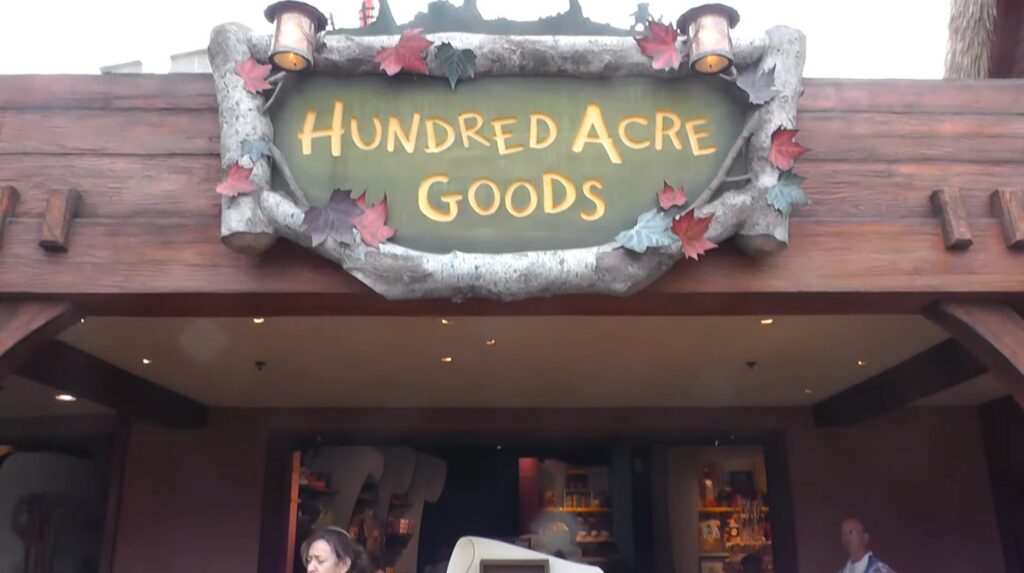
Hundred Acre Goods is a Winnie the Pooh-themed merchandise shop in Fantasyland at Magic Kingdom, positioned directly beside The Many Adventures of Winnie the Pooh and designed as an extension of the attraction’s storybook version of the Hundred Acre Wood. Although it is a relatively small retail location compared with major Magic Kingdom stores such as the Emporium, Hundred Acre Goods stands out because of the degree to which it is integrated with its neighboring attraction. Rather than feeling like a generic gift shop that happens to sell Pooh merchandise, the store continues the visual language and atmosphere established by the ride and its queue.
The current shop opened on November 15, 2010, replacing Pooh’s Thotful Shop, the gift shop that had accompanied The Many Adventures of Winnie the Pooh since the attraction’s early years. The change came during a period of major investment in Fantasyland, when Disney was preparing the large New Fantasyland expansion and simultaneously improving several existing areas around the land. The Winnie the Pooh corner of Fantasyland received one of the most noticeable makeovers.
The Many Adventures of Winnie the Pooh had opened in 1999 in the former home of Mr. Toad’s Wild Ride, but its original exterior and queue retained much of the relatively simple architectural character of the older Fantasyland. By 2010, Disney was moving toward a much more immersive style of placemaking. The Pooh attraction received an elaborate interactive queue themed as the Hundred Acre Wood, complete with Rabbit’s garden, Eeyore’s shelter, oversized storybook elements, honey-themed interactive effects, and the large tree representing Pooh’s home.
The adjoining shop was updated at the same time. Pooh’s Thotful Shop was renamed Hundred Acre Goods, while its exterior was given a more rustic appearance intended to blend naturally with the newly redesigned attraction entrance. Wood beams, stonework, lanterns, rough-hewn textures, foliage, and a hand-painted-looking sign replaced the more conventional Fantasyland storefront treatment. The overall effect suggests a little woodland trading post that might plausibly exist somewhere in Christopher Robin’s Hundred Acre Wood.
The name is an obvious play on the Hundred Acre Wood, the fictional setting of A.A. Milne’s Winnie-the-Pooh stories. Disney’s version of the environment draws extensively from the visual vocabulary established by illustrator E.H. Shepard and subsequently adapted through Disney animation: handwritten lettering, watercolor-like imagery, oversized book pages, irregular woodland structures, and the charming sense that the characters inhabit a world created from a child’s storybook.
That storybook idea continues inside Hundred Acre Goods. Decorative pages and illustrations help connect the shop with the attraction, creating the impression that guests have not completely exited the tale when their ride ends. This is particularly effective because The Many Adventures of Winnie the Pooh itself treats the physical book as part of the environment. Riders repeatedly pass through enormous illustrated pages as scenes from the story unfold around them, and Hundred Acre Goods carries that visual motif into the retail space.
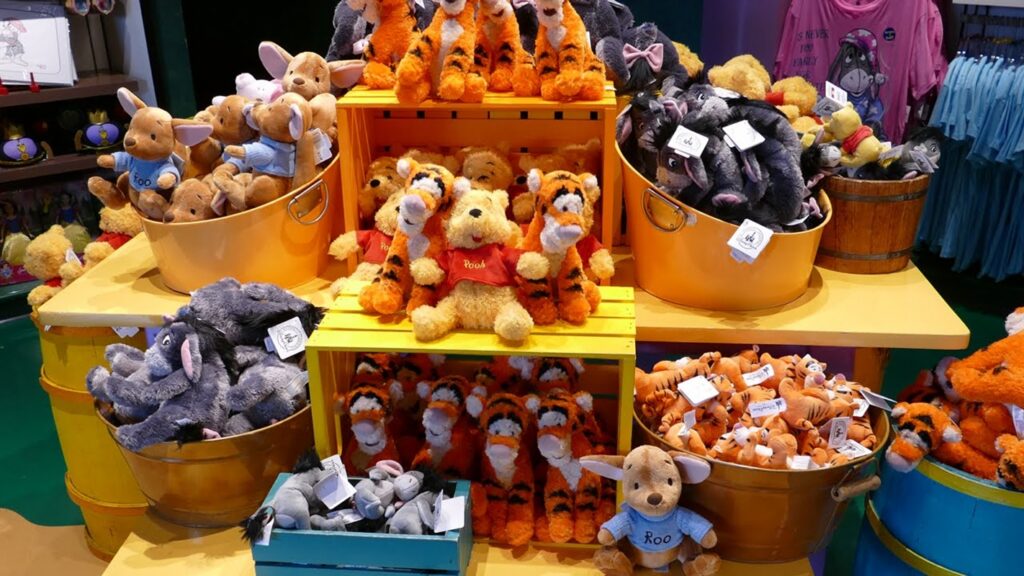
The merchandise naturally focuses on Winnie the Pooh and his friends, making Hundred Acre Goods one of the most concentrated Pooh shopping locations at Walt Disney World. Pooh plush toys are a perennial fixture, joined by merchandise featuring Tigger, Piglet, Eeyore, and other residents of the Hundred Acre Wood. Depending on current collections, guests may also find apparel, accessories, mugs, home goods, toys, pins, stationery, bags, collectibles, and seasonal merchandise.
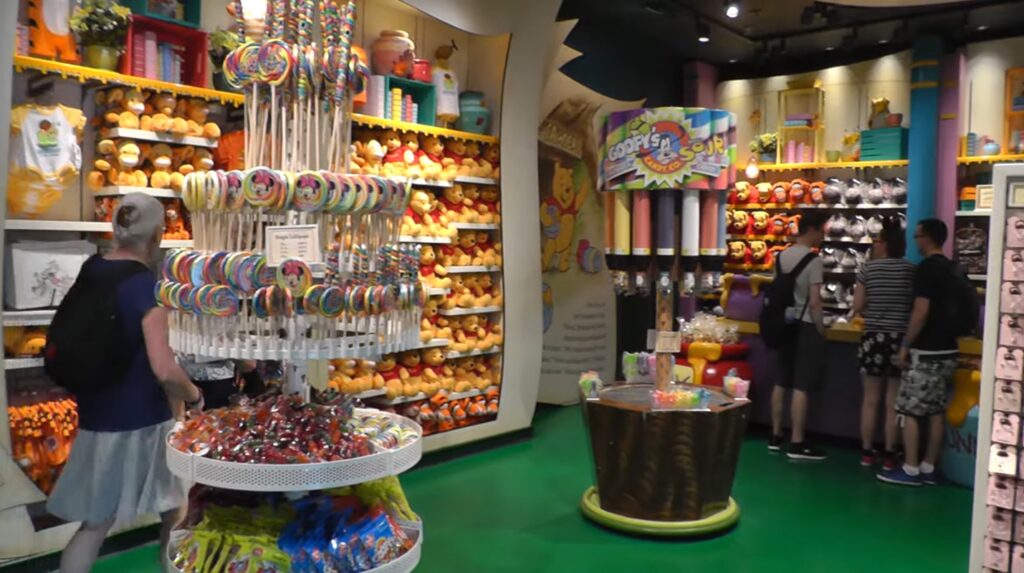
That specialized identity is increasingly noteworthy at Walt Disney World. Many park stores carry overlapping selections of general Disney merchandise, but Hundred Acre Goods retains a clear connection to the attraction beside it. A guest leaving a Pooh experience and wanting a Pooh plush, shirt, keepsake, or gift does not have to search through a large multipurpose shop elsewhere in Magic Kingdom.
The store has also benefited from the unusual durability of Winnie the Pooh as a Disney merchandise property. Pooh occupies a somewhat different position from many Disney characters. He appeals strongly to young children, but decades of films, television productions, books, merchandise, and theme-park appearances have also made him deeply nostalgic for adults. Eeyore and Tigger have substantial followings of their own, allowing the shop to offer merchandise that reaches well beyond the preschool demographic.
Hundred Acre Goods is particularly effective when considered together with the entire Pooh complex surrounding it. The Many Adventures of Winnie the Pooh sends guests through scenes inspired principally by Disney’s classic Pooh films, including the blustery day, Tigger’s bouncing antics, Pooh’s surreal Heffalumps and Woozles dream, the flood, and the eventual celebration when Pooh finally gets his honey. Outside, the interactive queue physically places guests within Rabbit’s garden and other recognizable locations from the stories. Nearby, The Thotful Spot provides an opportunity to meet Winnie the Pooh and Tigger. Hundred Acre Goods essentially acts as the retail component of this small Pooh-themed enclave within Fantasyland.
There is also a layer of Magic Kingdom history beneath the cheerful Hundred Acre Wood theming. The attraction itself occupies the former home of Mr. Toad’s Wild Ride, one of Magic Kingdom’s opening-day Fantasyland dark rides. Mr. Toad closed in September 1998, and The Many Adventures of Winnie the Pooh opened the following year. The replacement was controversial among longtime Disney fans, making this particular section of Fantasyland one of the clearest examples of the park’s shift from its 1971 attraction lineup toward character properties with broader contemporary recognition.
The 2010 transformation represented another stage in that evolution. Disney did not replace the Pooh attraction; instead, it substantially upgraded the environment around it. The introduction of Hundred Acre Goods, the interactive queue, woodland landscaping, and more elaborate scenic work anticipated the immersive design philosophy that would define New Fantasyland when areas devoted to Beauty and the Beast, The Little Mermaid, and the Seven Dwarfs opened nearby during the following years.
The store’s predecessor, Pooh’s Thotful Shop, is therefore important to understanding Hundred Acre Goods. The basic retail purpose changed very little—the location continued selling merchandise devoted to Pooh and his friends—but the presentation became much more tightly integrated with the attraction. Contemporary reports from the 2010 refurbishment noted that the interior remained broadly familiar while the exterior and thematic treatment were significantly improved. Even elements that had once belonged to the attraction’s earlier presentation were repurposed within the refreshed environment.
In that respect, Hundred Acre Goods is a good example of how Disney can transform a fairly ordinary attraction gift shop through contextual theming. There is no elaborate interactive experience inside, and the shop itself does not require much time to explore. Its effectiveness comes instead from continuity. Guests move from the Hundred Acre Wood of the queue, through the animated adventures of Pooh and his friends, and into a store that still looks and feels connected to the same world.
Today, Hundred Acre Goods remains an operating Fantasyland shop and Disney continues to describe it specifically as a destination for merchandise featuring Pooh and his friends. Its location beside one of Magic Kingdom’s most family-friendly dark rides makes it especially popular with parents of younger children, but its appeal extends equally to longtime Winnie the Pooh fans looking for merchandise that may be less prominently represented elsewhere in the park.
For a relatively modest retail location, Hundred Acre Goods also represents an interesting piece of modern Fantasyland history. It bridges the 1999 arrival of The Many Adventures of Winnie the Pooh with the sweeping Fantasyland changes of the early 2010s, preserves the retail role of Pooh’s Thotful Shop, and demonstrates Disney’s gradual transition toward making even attraction exits and merchandise locations feel like part of the story. The result is not one of Magic Kingdom’s largest or most elaborate shops, but it is one of the park’s more thematically cohesive—a small corner of the Hundred Acre Wood where the adventure continues just a little longer after guests step out of their Hunny Pot.