
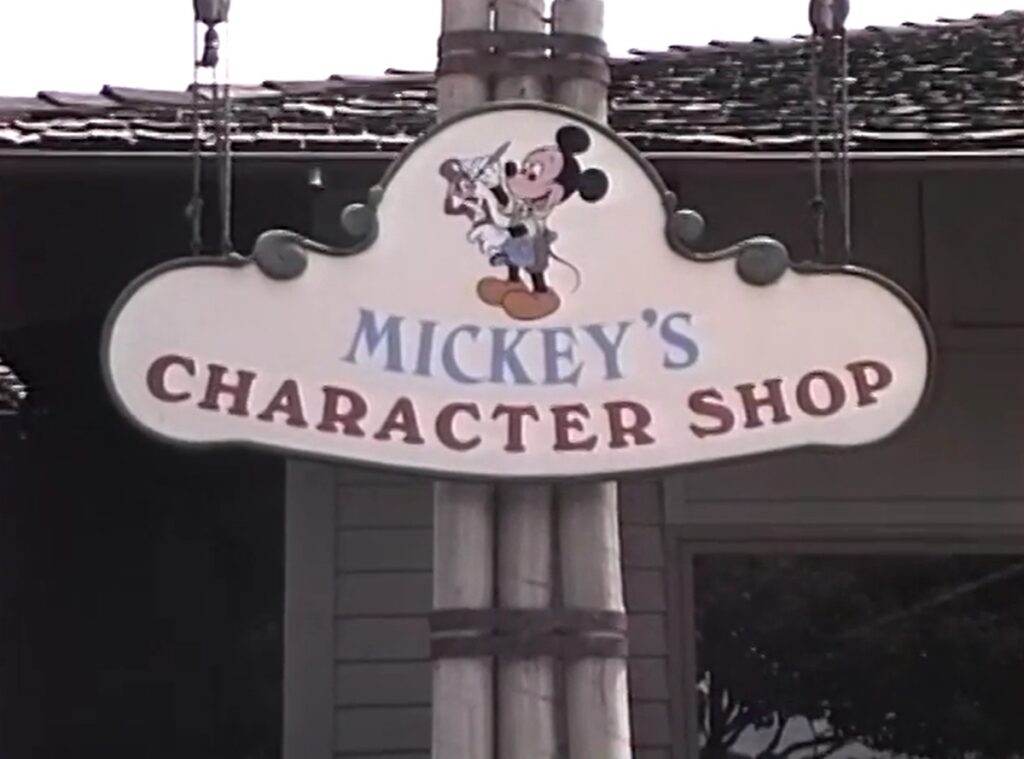
Mickey’s Character Shop gave Disney fans a destination of their own in the shopping village that eventually became Disney Springs. Opened on October 25, 1985, the store brought together character toys, gifts, and souvenirs in a setting with plenty of personality. Its signature sight was overhead: a fanciful flying machine carrying Disney characters above a display of plush toys. For a business devoted to selling familiar faces, it was an appropriately playful centerpiece.
Understanding the shop’s appeal requires a look at the surrounding village. The district began in 1975 as Lake Buena Vista Shopping Village, a collection of shops and restaurants originally intended to serve planned residential communities on Disney property. Its early offerings included businesses devoted to books, bath products, glassware, and other specialty goods. Disney character merchandise was part of the mix, but the original village was considerably different from the expansive souvenir-shopping destination that developed in later decades.
Mickey’s Character Shop occupied the former Port of Entry store, which had featured merchandise from around the world. The change gave the location a much clearer Disney identity. Here, visitors could browse stuffed characters, toys, novelties, and gifts without entering a theme park. That role made the shop a useful stop during a resort stay, especially for families setting aside time to shop outside the pace of an attraction-filled day.
The interior’s most distinctive feature ensured that looking up could be as rewarding as looking through the merchandise. A large balloon-style airship floated above the plush display, with Mickey and his companions aboard. Its storybook appearance turned the center of the store into a scene, giving the characters something to do beyond appearing on packaging. Below it, the generous collection of plush reinforced the sense that this was a place built around the characters themselves.
That combination of merchandise and theatrical decoration anticipated the approach later associated with World of Disney. The flying machine gave Mickey’s Character Shop a recognizable visual identity, while the character selection supplied its practical purpose. A child could be drawn toward the display overhead and then become absorbed in choosing a stuffed companion beneath it. The presentation made shopping part of the entertainment.
One especially unusual offering added a technological flourish: personalized T-shirts airbrushed by a robotic arm. Alongside the familiar appeal of plush toys and souvenirs, this provided a different kind of shopping experience, with the production process becoming something worth watching. It also gave the store a detail that distinguished it from a conventional character merchandise counter.
Mickey’s Character Shop operated through a period of substantial change for the village. During its lifetime, the surrounding district continued evolving toward a larger shopping, dining, and entertainment destination. The shop closed on October 2, 1996. World of Disney opened the following day, introducing a 50,000-square-foot merchandise location and taking Disney souvenir shopping in the district to a considerably larger scale.
World of Disney succeeded Mickey’s Character Shop as the major character-shopping destination, but it occupied a different location. The former shop’s space subsequently accommodated other retail uses, including a relocated Team Mickey’s Athletic Club. That distinction helps place the store accurately within the area’s changing geography.
Mickey’s Character Shop represents a particular stage in that evolution: a substantial Disney merchandise store within a village still defined by its smaller specialty businesses. Its character-filled airship, abundant plush, and unusual personalization offering gave it an identity beyond the goods it sold. Those details explain why a store that operated for just under eleven years remains a memorable part of Walt Disney World’s shopping history.