
Could Walt Disney World actually leave Florida?
It sounds like an absurd question. Walt Disney World has been part of Central Florida since 1971, and over the past half century the resort has grown into something far larger than a collection of theme parks.
It is now an enormous interconnected destination spanning nearly 30,000 acres, with four theme parks, two water parks, nearly 29,000 hotel rooms, Disney Springs, golf courses, a sports complex, transportation systems, utilities, warehouses, offices, entertainment facilities, animal-care operations, and an enormous backstage infrastructure most guests never see.
Yet during the political and legal dispute between The Walt Disney Company and the State of Florida that began in 2022, one question began appearing surprisingly often:
Could Disney simply pack up Walt Disney World and move it somewhere else?
When this article was originally published in 2023, that was a much more topical question than it is today.
Disney and the Central Florida Tourism Oversight District subsequently settled their state-court litigation in March 2024, and in June 2024 the two sides reached a 15-year development agreement designed around billions of dollars of additional investment at Walt Disney World.
By 2026, Disney is actively building and planning one of the largest collections of expansions in the resort’s history.
So there is currently no indication that Disney intends to relocate Walt Disney World.
But the underlying question is still fascinating.
Could it theoretically happen? What exactly would “moving Disney World” mean? How much would have to be rebuilt? What could actually be transported? And why would replacing the resort somewhere else be so extraordinarily difficult?
Let’s break it down.
Last updated: August 29, 2026. This article is an independent analysis and is not affiliated with or endorsed by The Walt Disney Company.
Short Answer: Could Disney World Move?
Legally, Disney could eventually decide to close or sell its Florida operations and build a new resort somewhere else.
But that would not really be “moving Walt Disney World.”
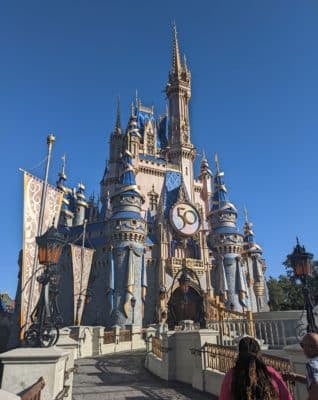
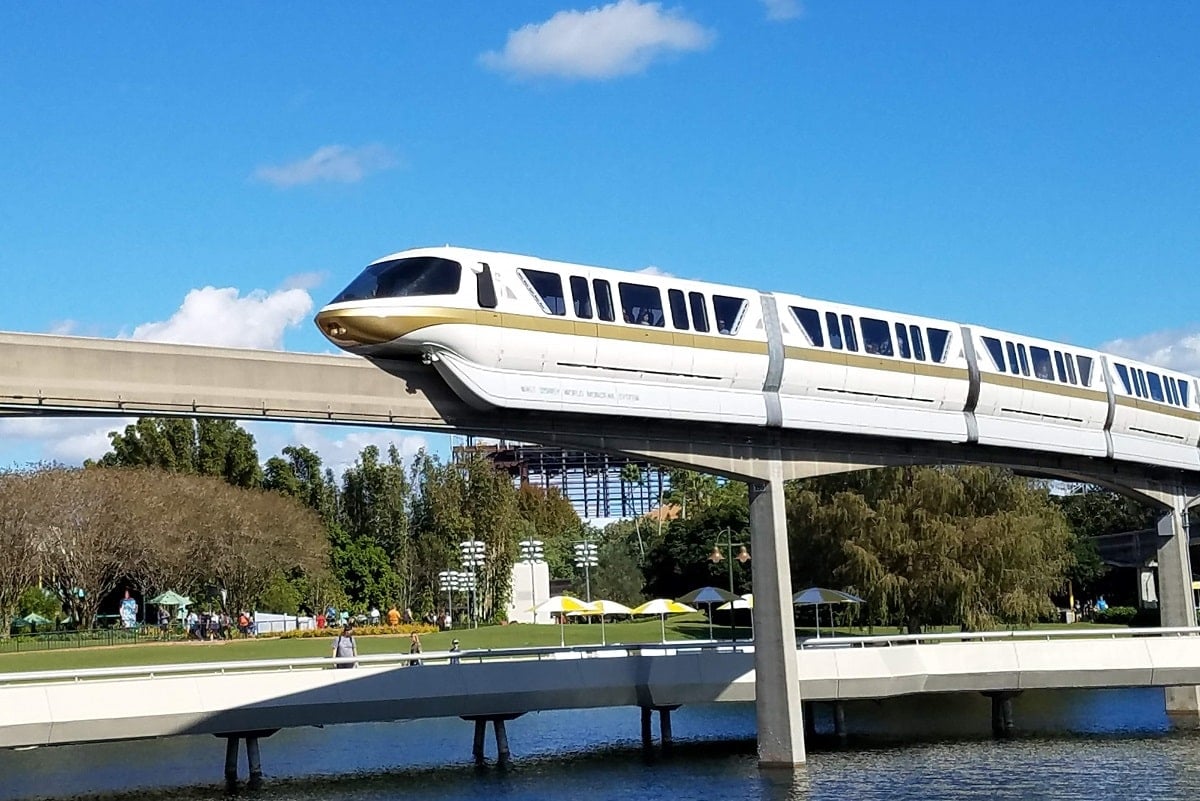
Cinderella Castle could not simply be loaded onto a truck. Spaceship Earth could not be rolled down Interstate 4. Expedition Everest, the Contemporary Resort, the monorail beams, World Showcase Lagoon, Seven Seas Lagoon, and thousands of other permanent structures are integral parts of the land on which they were built.
A true relocation would therefore mean something very different:
Disney would need to build an entirely new resort somewhere else while eventually closing, selling, redeveloping, or abandoning much of the existing Walt Disney World property.
That would effectively mean constructing a second Walt Disney World from scratch.
And that is where the idea becomes extraordinarily difficult.
Why Were People Asking This Question in the First Place?
The question entered mainstream discussion during a high-profile dispute between Disney and Florida state officials that began after Disney publicly opposed Florida’s 2022 Parental Rights in Education law.
The disagreement subsequently expanded into a battle over the special governmental district surrounding Walt Disney World.
The district had been known since 1967 as the Reedy Creek Improvement District. Florida later changed its governance structure and renamed it the Central Florida Tourism Oversight District.
Disney challenged portions of those changes in state and federal court, while the district pursued its own litigation involving Disney’s development agreements.
That period produced widespread speculation about whether Disney might reduce investment in Florida or even leave the state entirely.
What Changed After 2023?
The situation looks very different in 2026.
Disney and the Central Florida Tourism Oversight District reached a settlement in March 2024 that ended their state-court litigation.
In June 2024, the two sides approved a new 15-year development agreement.
The agreement anticipates substantial continued Walt Disney World investment, including at least $8 billion during the first decade and as much as $17 billion over a longer development period.
It also creates planning capacity for substantial future expansion, potentially including another major theme park, thousands of additional hotel rooms, and more retail and entertainment development.
None of that means Disney must build everything permitted by the agreement.
But it makes one thing clear: the company’s current Walt Disney World strategy is based around continued expansion in Florida, not relocation away from it.
Just How Big Is Walt Disney World?
One of the problems with the idea of moving Disney World is that people understandably think first about the four theme parks.
The theme parks are only part of the resort.
Disney describes modern Walt Disney World as covering nearly 30,000 acres in Central Florida—an area roughly comparable to the land area of San Francisco and nearly twice the size of Manhattan.
The resort currently includes:
- Magic Kingdom
- EPCOT
- Disney’s Hollywood Studios
- Disney’s Animal Kingdom
- Disney’s Blizzard Beach
- Disney’s Typhoon Lagoon
- Disney Springs
- More than 25 Disney Resort hotels
- Nearly 29,000 hotel rooms across the resort
- Disney’s Fort Wilderness Resort & Campground
- ESPN Wide World of Sports Complex
- Four golf courses
- Hundreds of restaurants, shops, lounges, and entertainment locations
- Thousands of acres of backstage, conservation, utility, transportation, maintenance, warehouse, office, and support areas
There are also roads, bridges, waterways, parking lots, bus facilities, monorail infrastructure, Skyliner stations, boat docks, employee areas, distribution centers, horticulture facilities, animal-care buildings, and numerous other operational spaces invisible to most visitors.
Moving the four parks would therefore represent only part of the problem.
The First Problem: Finding Another 30,000 Acres
Walt Disney’s original Florida land acquisition is the stuff of Disney legend.
During the 1960s, Disney used a collection of companies to quietly acquire enormous amounts of inexpensive rural property southwest of Orlando before sellers realized who the ultimate buyer was.
Replicating that strategy today would be enormously more difficult.
A replacement Disney World would require a gigantic amount of reasonably contiguous land.
Disney would also need a site with:
- Highway access
- Access to a major airport
- Suitable water availability
- Electrical infrastructure
- Wastewater capacity
- A sufficiently large regional workforce
- A climate capable of supporting year-round tourism
- Land suitable for major construction
- Room for future expansion
- A regulatory environment capable of supporting decades of development
Buying tens of thousands of acres near an existing metropolitan area would be tremendously expensive.
Buying less-developed land farther away would create a different problem: Disney would have to help create much of the transportation, utility, housing, and commercial ecosystem necessary to support the resort.
Disney Would Have to Build Much More Than Theme Parks
One of Walt Disney World’s least appreciated advantages is its infrastructure.
The Central Florida Tourism Oversight District maintains extensive utility systems serving the resort, including:
- Electric generation and distribution
- Potable water production and distribution
- Wastewater collection and treatment
- Reclaimed-water systems
- Natural gas distribution
- Solid-waste and recycling systems
- Chilled-water systems
- High-temperature hot-water systems
The resort also contains an enormous road network and specialized transportation infrastructure connecting destinations that operate much like a small city.
Rebuilding Walt Disney World elsewhere would require replacing or recreating much of this ecosystem.
Magic Kingdom Alone Would Be an Enormous Project
Take Magic Kingdom as one example.
It is not simply Cinderella Castle surrounded by rides.
The park includes the Utilidor service system beneath much of the guest area, extensive backstage buildings, parade storage and maintenance facilities, waterways, bridges, kitchens, utilities, attraction show buildings, maintenance areas, employee facilities, transportation infrastructure, and decades of modifications layered onto the original 1971 park.
Even building a new Magic Kingdom-inspired park elsewhere would be an undertaking measured in years and billions of dollars.
Then Disney would still need to repeat the process three more times for EPCOT, Hollywood Studios, and Animal Kingdom.
Could Disney Actually Move Cinderella Castle?
No—not in any practical sense.
Cinderella Castle is a permanent reinforced structure connected to the park’s foundations and infrastructure.
The same is true of Spaceship Earth, Tower of Terror, Expedition Everest, Haunted Mansion, Pirates of the Caribbean, and nearly every major Walt Disney World attraction.
If Disney ever built replacements elsewhere, Imagineering would almost certainly construct new versions.
What Could Be Moved?
Individual components could theoretically be salvaged and reused, including:
- Ride vehicles
- Audio-Animatronics figures
- Props and set pieces
- Costumes
- Furniture
- Restaurant equipment
- Computers and control equipment
- Artwork
- Merchandise fixtures
- Some mechanical equipment
Disney has reused attraction components before.
But there is a point where dismantling, transporting, restoring, and reinstalling a large structure costs more than simply designing a new one.
Most of Walt Disney World would therefore stay exactly where it is.
Animal Kingdom Creates an Entirely Different Challenge
Disney’s Animal Kingdom adds complexities that do not exist at an ordinary theme park.
The park contains a large collection of living animals supported by:
- Veterinary facilities
- Specialized habitats
- Food preparation areas
- Animal-care teams
- Quarantine facilities
- Climate-control systems
- Breeding and conservation programs
Relocating individual animals is certainly possible and happens routinely in accredited zoological institutions.
Relocating an entire animal park would be something completely different.
Each species would require appropriate transportation, permits, veterinary planning, destination habitats, and animal-care infrastructure.
A theoretical replacement Animal Kingdom could therefore not simply open on the same day the Florida version closed.
The Workforce May Be an Even Bigger Problem Than the Buildings
Walt Disney World employs approximately 80,000 Cast Members in Central Florida.
That workforce includes far more than ride operators and character performers.
Disney employs:
- Engineers
- Electricians
- Plumbers
- Carpenters
- Chefs
- Animal-care professionals
- Horticulturists
- Hotel employees
- Bus drivers
- Entertainment technicians
- Costumers
- Security personnel
- Maintenance crews
- Human-resources teams
- IT specialists
- Marketing staff
- Finance professionals
- Construction professionals
- Thousands of other specialized roles
Many Cast Members have worked for Disney for decades.
A new destination in another state could not assume that tens of thousands of experienced employees would relocate.
Disney would have to recruit, hire, train, and house an enormous new workforce while trying to preserve the service culture and specialized institutional knowledge built over more than 50 years in Florida.
Central Florida’s Tourism Ecosystem Matters
Disney did not merely build a resort in Central Florida.
Central Florida gradually built an enormous tourism economy around Disney.
Orlando now has:
- A major international airport handling enormous tourist volume
- One of the world’s largest hotel markets
- Extensive rental-car infrastructure
- Thousands of restaurants
- Vacation-home communities
- Convention facilities
- Theme park suppliers and contractors
- A huge hospitality workforce
- Highways specifically accustomed to mass tourism
- Universal Orlando, SeaWorld Orlando, and hundreds of other attractions
A replacement Disney World would need either another tourism market with comparable capacity or decades to help create one.
This is one of Florida’s greatest advantages that cannot simply be purchased as a parcel of land.
How Much Would Moving Disney World Cost?
There is no credible public estimate for rebuilding the modern Walt Disney World Resort somewhere else.
Any precise number would be guesswork.
What we can say confidently is that the figure would be staggering.
The original Florida project cost roughly $400 million by the time Walt Disney World opened in 1971—but that resort contained only Magic Kingdom, the Contemporary Resort, Polynesian Village Resort, Fort Wilderness, transportation infrastructure, golf courses, and supporting facilities.
Modern Walt Disney World contains more than five decades of additional capital investment.
Consider just what would need to be replicated:
| Category | What Would Be Needed |
|---|---|
| Land | Tens of thousands of acres |
| Theme Parks | Four major parks with dozens of attractions |
| Hotels | Nearly 29,000 rooms plus recreation and convention facilities |
| Transportation | Roads, buses, parking, boats, and potentially rail systems |
| Utilities | Electricity, potable water, wastewater, reclaimed water, gas, cooling and waste systems |
| Entertainment District | A Disney Springs-scale shopping and dining district |
| Backstage Operations | Warehouses, maintenance, kitchens, offices, costume facilities and support buildings |
| Workforce | Tens of thousands of trained employees |
Simply expanding the existing Walt Disney World—with all of this infrastructure already in place—is contemplated at up to roughly $17 billion under Disney’s current development agreement.
Building a replacement for the entire resort would therefore almost certainly cost many tens of billions of dollars and could plausibly cost substantially more.
The actual figure cannot responsibly be calculated without a specific location, design, land price, and scope.
It Would Probably Take Decades
The original Walt Disney World project was publicly announced in 1965 and opened in October 1971.
And that was for a resort dramatically smaller than modern Walt Disney World.
Disney would not necessarily need to close Florida while building somewhere else.
In fact, that would be financially irrational.
A more plausible hypothetical scenario would involve Walt Disney World continuing to operate while Disney spent perhaps a decade or more building a new destination elsewhere in phases.
A replacement might begin with one theme park and several hotels, then gradually add additional parks and infrastructure over many years.
At that point, however, it would no longer really be a relocated Walt Disney World.
It would be another Disney resort destination.
The Regulatory Challenge Would Be Enormous
A project approaching Walt Disney World’s scale would trigger years of regulatory review.
Depending on the location, Disney could need approvals involving:
- Land use and zoning
- Wetlands
- Water withdrawals
- Wastewater
- Road construction
- Traffic mitigation
- Environmental impacts
- Wildlife
- Power generation
- Building codes
- Emergency services
- Local and state taxation
Walt Disney World has spent more than half a century building the governmental, utility, and infrastructure relationships that support the existing resort.
A new site would begin without that history.
What About the Reedy Creek District?
The original Reedy Creek Improvement District was created by the Florida Legislature in 1967 to provide municipal-style services necessary for Walt Disney World’s development.
Its governance was restructured in 2023, and the district is now known as the Central Florida Tourism Oversight District.
The district encompasses roughly 24,000 acres and continues to provide major infrastructure and utility services throughout the Walt Disney World area.
Disney owns a substantial majority of the property inside the district.
A replacement resort elsewhere would need a completely different arrangement.
Another state could theoretically create its own special district or negotiate other development incentives, but there is no guarantee that Disney could reproduce the exact legal and infrastructure framework developed in Central Florida.
The Economic Impact on Florida Would Be Enormous
There is no question that Walt Disney World’s departure would be a major economic event for Florida.
An Oxford Economics study commissioned by Disney examining fiscal year 2022 estimated that Disney’s Florida operations generated approximately $40 billion in statewide economic activity and supported roughly 263,000 direct and indirect jobs.
The study also estimated approximately $6.6 billion in tax revenue.
Disney itself currently employs about 80,000 Cast Members in Central Florida.
The effects would extend well beyond Disney employees.
Hotels, restaurants, transportation companies, construction firms, tourism businesses, suppliers, vacation rentals, and countless other businesses throughout Central Florida depend to varying degrees on the tourism economy Disney helped create.
Would Leaving Florida Make Financial Sense for Disney?
This is ultimately the most important question.
Disney does not need to move Walt Disney World to invest elsewhere.
The company already operates major resort destinations in:
- California
- Florida
- France
- Japan through its licensing relationship with Oriental Land Company
- Hong Kong
- Shanghai
If Disney identified a compelling opportunity for another major domestic destination, it could theoretically build one without destroying the Florida resort that already generates enormous revenue.
That would almost certainly make more economic sense than spending tens of billions to duplicate existing Florida assets while simultaneously destroying the value of those assets.
Disney World does not have to leave Florida for Disney to grow somewhere else.
What Disney Is Actually Doing in Florida in 2026
If the question is whether Disney currently appears to be preparing for a Florida exit, the answer is clear:
No.
Walt Disney World is currently undergoing one of its largest expansion cycles ever.
Projects announced or underway include:
- Piston Peak National Park at Magic Kingdom
- Villains Land at Magic Kingdom
- A major reimagining of Walt Disney’s Carousel of Progress
- A major Spaceship Earth reimagining
- A new Figment and Dreamfinder attraction at EPCOT
- Tropical Americas at Disney’s Animal Kingdom
- Antonio’s Fiesta de Encanto
- Indiana Jones and the Myth of the Jade Serpent
- Monstropolis at Disney’s Hollywood Studios
- Disney’s Lakeshore Lodge
- Numerous hotel, restaurant, infrastructure, and transportation projects
Disney itself described its August 2026 announcements as the largest slate of expansion projects in Walt Disney World’s history.
That is not the behavior of a company preparing to abandon Central Florida.
Could Florida Ever Become Unattractive Enough for Disney to Leave?
Anything is theoretically possible over a sufficiently long period of time.
Companies change. Governments change. Tourism patterns change. Climate conditions change. Technology changes.
But the threshold would have to be extraordinarily high.
Disney’s decision would not simply be:
Is another state more attractive than Florida?
The real question would be:
Is another location so much more attractive that it justifies walking away from more than five decades of infrastructure, investment, brand equity, tourism demand, workforce experience, and operational efficiency?
Those are very different questions.
Could Disney Build Another Disney World Somewhere Else?
Yes.
That is much more realistic than moving the existing one.
If Disney someday decided the United States could support another destination-scale resort, it could acquire land and build an entirely new property.
It might share attractions or intellectual property with Walt Disney World, just as Disney’s existing global resorts do.
But it would have its own infrastructure, identity, hotels, attraction mix, and development history.
Disney has provided no indication as of August 2026 that such a project is planned.
Could Disney World Move? FAQ
Could Disney legally move Walt Disney World out of Florida?
Disney could choose to close or sell assets in Florida and invest in a new resort elsewhere, subject to its contracts, regulatory obligations, and other legal commitments. But Walt Disney World could not literally be picked up and moved; Disney would have to build a largely new resort in another location.
Is Disney planning to move Walt Disney World out of Florida?
No. As of August 2026, Disney has announced no plan to relocate Walt Disney World. Its current actions point in the opposite direction, with major new lands and attractions under construction and a long-term development agreement supporting billions of dollars in additional Florida investment.
How big is Walt Disney World?
Disney describes Walt Disney World as spanning nearly 30,000 acres in Central Florida. The resort includes four theme parks, two water parks, nearly 29,000 hotel rooms, Disney Springs, a sports complex, golf courses, and extensive backstage and infrastructure areas.
Could Disney move Cinderella Castle and its rides to another state?
Most major Disney World buildings and attractions are permanent structures and would not realistically be moved intact. Disney could reuse selected ride vehicles, Audio-Animatronics figures, props, equipment, and other components, but a replacement resort would require extensive new construction.
How much would it cost to rebuild Walt Disney World somewhere else?
There is no credible public estimate for recreating the modern Walt Disney World Resort. A replacement would require land, four theme parks, hotels, roads, utilities, transportation systems, and support facilities, so the cost would be measured in many tens of billions of dollars and could be substantially higher.
What happened to Disney’s dispute with Florida over the Reedy Creek district?
The former Reedy Creek Improvement District was renamed the Central Florida Tourism Oversight District and its governance was changed by Florida. Disney and the district settled their state-court litigation in March 2024, and in June 2024 the district approved a 15-year development agreement supporting major continued investment at Walt Disney World.
So, Could Disney World Really Move?
In the strictest theoretical sense, yes.
The Walt Disney Company is not permanently required to operate Walt Disney World in Florida forever.
But describing the alternative as “moving Disney World” dramatically understates what would actually have to happen.
Disney would need to acquire an enormous new property, obtain years of regulatory approvals, construct utilities and roads, build theme parks and hotels, recruit tens of thousands of employees, establish a new tourism ecosystem, and spend many tens of billions of dollars recreating assets that already exist and generate revenue in Florida.
Most of the existing resort could not physically move at all.
And unlike the situation that inspired this article in 2023, Disney’s current strategy is not pointing toward an exit.
Disney and the district surrounding Walt Disney World now have a long-term development agreement, Disney is preparing billions of dollars in additional investment, and the parks are undergoing one of the biggest waves of expansion in their history.
So could Disney someday build another enormous resort somewhere else?
Absolutely.
Could Walt Disney World itself pack its bags and leave Florida?
Practically speaking, that remains about as close to impossible as a business decision can get.
