
Walk through Walt Disney World long enough and you will eventually encounter a strange kind of Disney history: attractions that are gone, but not entirely gone.
Sometimes the signs disappear while the building remains. Sometimes a restaurant that once served thousands of guests becomes a seasonal operation or special-event venue. Sometimes the ride is removed but its theater, lagoon, queue, loading area or entire pavilion simply survives around it.
And occasionally, Disney leaves behind something even larger—an entire island, a purpose-built amphitheater or a massive attraction pavilion that spends years without anything approaching the guest capacity it once provided.
That is increasingly difficult to ignore at a Walt Disney World Resort that is currently spending billions of dollars creating new capacity elsewhere.
Magic Kingdom is building Piston Peak National Park and Villains Land. Disney’s Animal Kingdom is replacing DinoLand U.S.A. with Tropical Americas. Hollywood Studios is transforming major portions of the park. EPCOT has announced another reimagining of Spaceship Earth and a new Journey Into Imagination experience featuring Figment and Dreamfinder.
Disney is clearly willing to undertake enormous construction projects when it believes the opportunity is worthwhile.
Which makes the unused and underused spaces already sitting inside Walt Disney World even more interesting.
These are not hypothetical expansion pads hidden behind the berm. Many already contain buildings, kitchens, theaters, utility connections, guest walkways and other infrastructure. Some occupy prominent locations inside the busiest theme parks on Earth.
So what actually happens to a Disney attraction after the lights go out for good—and why can some of these spaces remain without a meaningful permanent replacement for decades?
Here is a closer look at some of Walt Disney World’s most fascinating forgotten and underused spaces, along with the attractions, restaurants and ambitious plans that once brought them to life.
Stitch’s Great Escape: More Than 50 Years of Tomorrowland History Behind One Facade
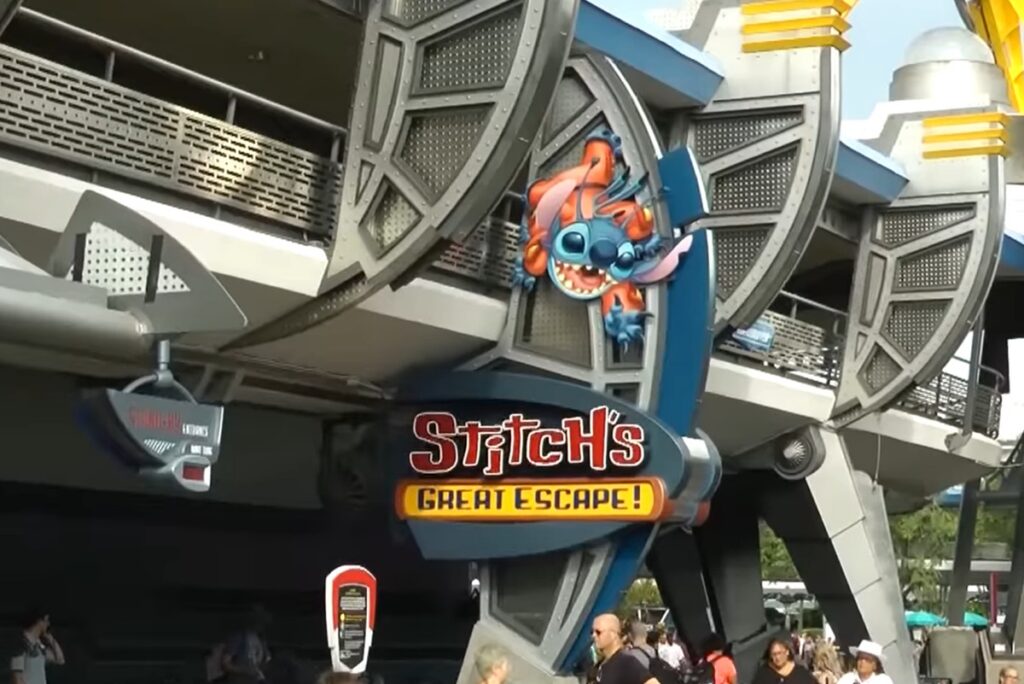
Few dormant Walt Disney World spaces have as much history packed inside them as the former Stitch’s Great Escape building.
The structure dates all the way back to Magic Kingdom’s first year.
Flight to the Moon opened in Tomorrowland in late 1971, placing guests inside a circular theater for a simulated journey into space. The attraction had been conceived during an era when traveling to the Moon still represented the future, but real-world history overtook Disney remarkably quickly. Humans had already landed on the Moon before Walt Disney World itself opened.
Disney responded by updating the attraction.
On June 7, 1975, Flight to the Moon became Mission to Mars. The basic theater concept remained, but guests now traveled toward the Red Planet instead.
Mission to Mars survived until October 4, 1993.
Disney then used the same general footprint for something dramatically more ambitious.
The ExtraTERRORestrial Alien Encounter opened on June 20, 1995 as part of Magic Kingdom’s major “New Tomorrowland” transformation.
It was unlike almost anything else Disney had created.
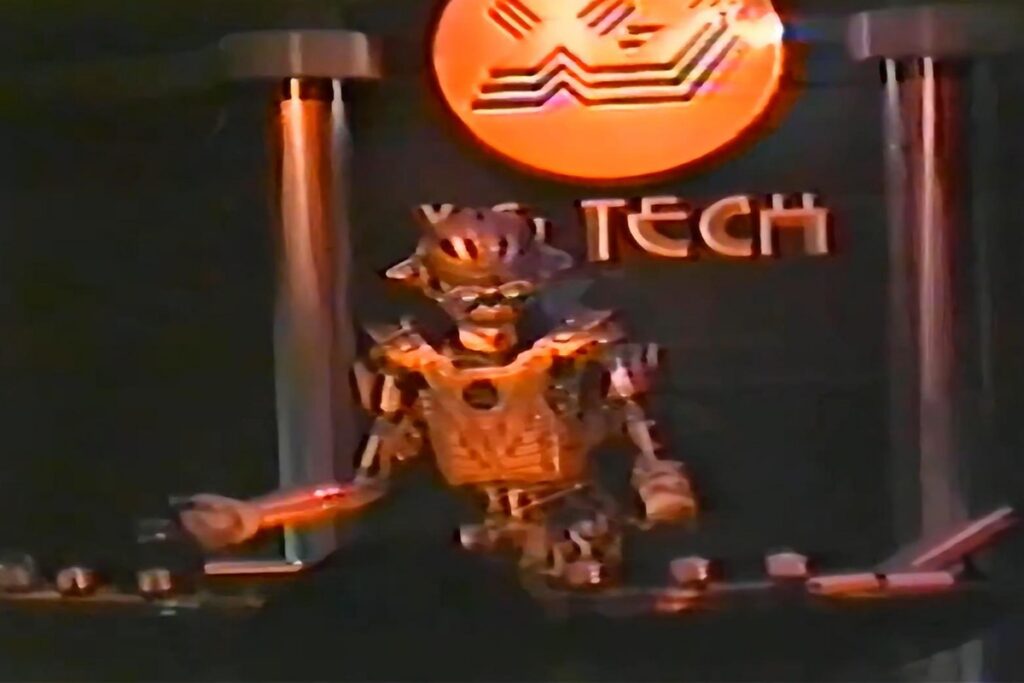
Guests entered the Tomorrowland Interplanetary Convention Center, where the fictional corporation X-S Tech was demonstrating teleportation technology. The experiment inevitably went wrong, leaving guests restrained in darkness with a terrifying extraterrestrial creature apparently loose inside the theater.
Alien Encounter built a devoted following, but its deliberately frightening tone was unusual for Magic Kingdom.
Disney closed the attraction on October 11, 2003 and reworked the theater around a much more recognizable character.
Stitch’s Great Escape opened November 16, 2004, reusing much of Alien Encounter’s circular-theater concept, restraint system and basic infrastructure while replacing the horror-heavy X-S Tech story with Experiment 626.
The replacement lasted longer than Alien Encounter, but its popularity gradually declined.
Disney moved Stitch’s Great Escape to seasonal operation in 2016. The attraction last operated on January 6, 2018, although Disney continued describing it as temporarily or seasonally unavailable for more than two years.
In July 2020, Disney finally confirmed that Stitch’s Great Escape was permanently closed.
That means this single Tomorrowland footprint successfully hosted guest attractions for portions of five decades—from Flight to the Moon through Mission to Mars, Alien Encounter and Stitch.
Today it hosts none.
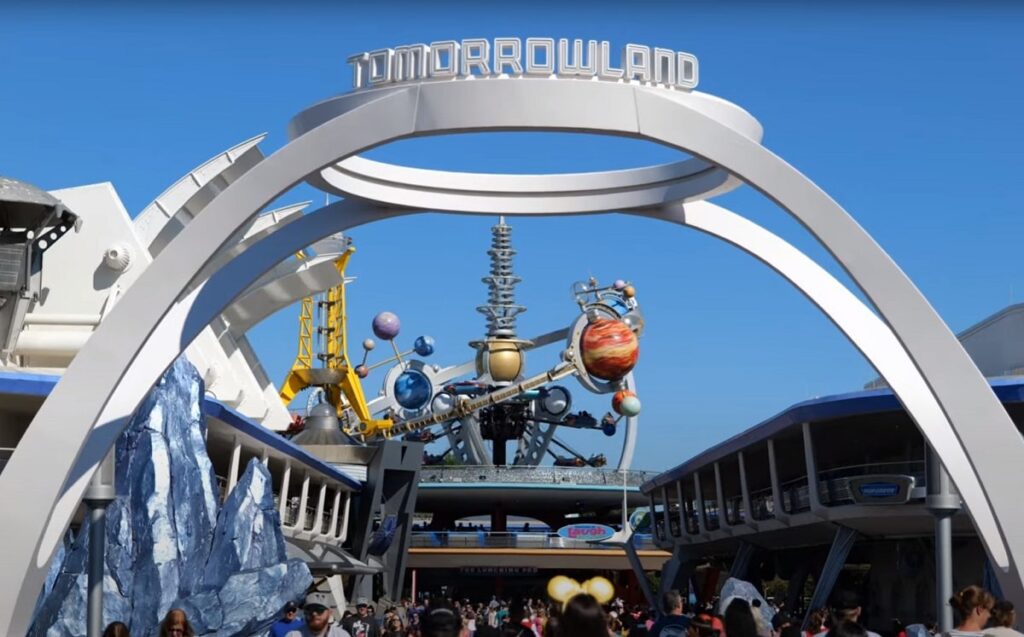
The building sits immediately along one of Tomorrowland’s busiest corridors, surrounded by Monsters, Inc. Laugh Floor, Rockettower Plaza, the PeopleMover, Space Mountain and the pathway toward TRON Lightcycle / Run.
For a space with such a long history of moving thousands of guests through purpose-built theaters, its current lack of a permanent attraction is particularly conspicuous.
Tortuga Tavern: A Prime Adventureland Restaurant That Barely Operates
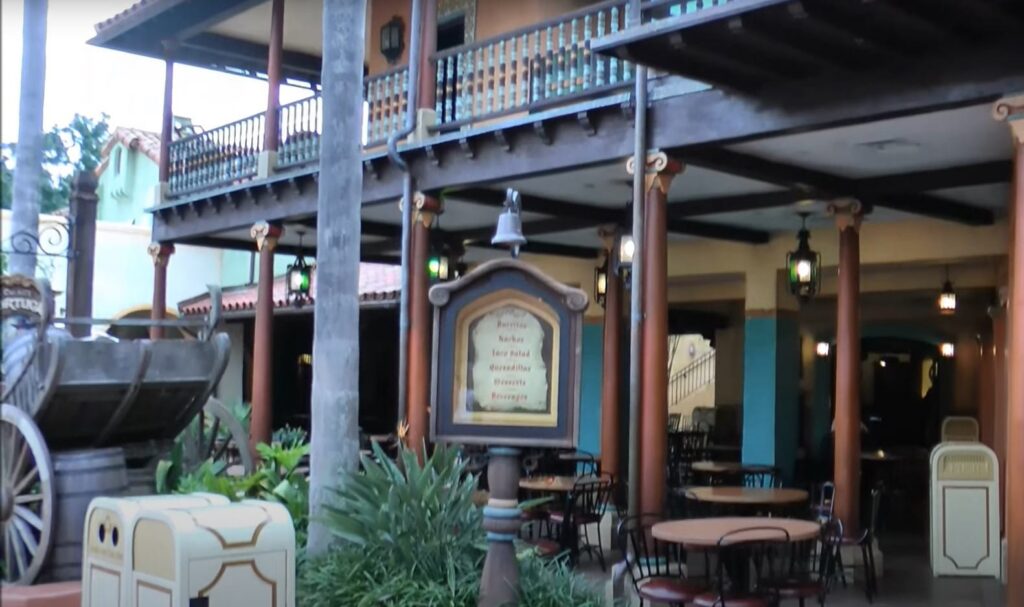
Tortuga Tavern is not an abandoned restaurant.
But it may be one of Magic Kingdom’s clearest examples of valuable capacity sitting unused for long stretches of the year.
The location dates to the early history of Caribbean Plaza, the Adventureland expansion built around Pirates of the Caribbean.
Pirates opened at Magic Kingdom in December 1973, and the nearby restaurant followed in 1974 as El Pirata y el Perico Restaurante—Spanish for “The Pirate and the Parrot.”
For decades, it served Mexican-inspired quick-service food in one of Adventureland’s most heavily themed settings.
Even then, however, the restaurant developed a reputation for inconsistent operating schedules. By the 2000s it was frequently activated primarily during peak attendance periods.
Disney renamed the location Tortuga Tavern in February 2011, tying it more directly to the Pirates of the Caribbean film franchise while retaining the existing building.
The menu has changed repeatedly since then, ranging from burritos and taco salads to barbecue and other seasonal offerings.
The problem has remained the same.
The restaurant is currently categorized by Disney as seasonal and does not maintain normal daily operating hours.
That would be less remarkable if Tortuga Tavern were tucked away in an obscure corner of the resort.
It is not.
The building sits directly across from one of the most popular attractions in Magic Kingdom, surrounded by the heavy foot traffic moving between Pirates of the Caribbean, Jungle Cruise, Frontierland and Adventureland.
At a park where crowded quick-service restaurants routinely handle enormous lunch and dinner demand, a built-out restaurant occupying that location but remaining dark for long periods is difficult to describe as anything other than underused capacity.
Tomorrowland Terrace: From Everyday Restaurant to Occasional Premium Venue
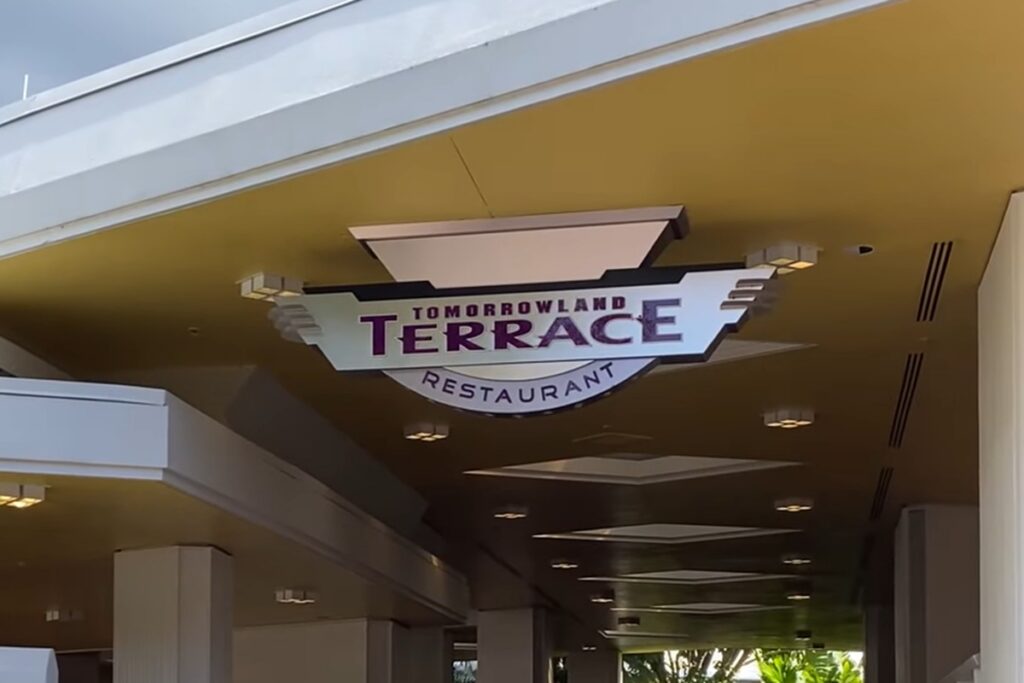
The history of Tomorrowland Terrace is slightly confusing because Magic Kingdom has actually used the name for two different restaurant spaces.
The original Tomorrowland Terrace opened with Magic Kingdom in 1971 in the building that is now Cosmic Ray’s Starlight Café.
That restaurant included a stage capable of rising from below the floor and became a major Tomorrowland entertainment venue. Live musicians and performers appeared there for years before the restaurant closed in 1994 and was transformed into Cosmic Ray’s as part of New Tomorrowland.
The current Tomorrowland Terrace occupies a different location near the entrance to Tomorrowland and the central Hub.
That space began as Plaza Pavilion in the early 1970s and spent decades serving straightforward theme park food from an extremely useful location between Main Street, U.S.A. and Tomorrowland.
Disney transformed Plaza Pavilion into the Tomorrowland Terrace Noodle Station in 2004, offering an Asian-inspired quick-service menu.
The “Noodle Station” name eventually disappeared, and the restaurant once again became simply Tomorrowland Terrace.
But daily operations became increasingly inconsistent.
Today Disney states that ordinary quick-service dining is temporarily unavailable and that Tomorrowland Terrace is used for Magic Kingdom fireworks dessert parties.
That certainly produces revenue.
But it also means a large restaurant occupying a spectacular location immediately beside the Hub is no longer functioning as an everyday dining venue.
Thousands of guests walk past the space every day while nearby quick-service restaurants absorb the park’s regular meal demand.
For a venue that spent decades feeding ordinary Magic Kingdom visitors, its conversion into an occasional premium-event location represents a substantial reduction in how much usable park capacity the space provides.
Heritage House: An Opening-Day Shop That Quietly Disappeared
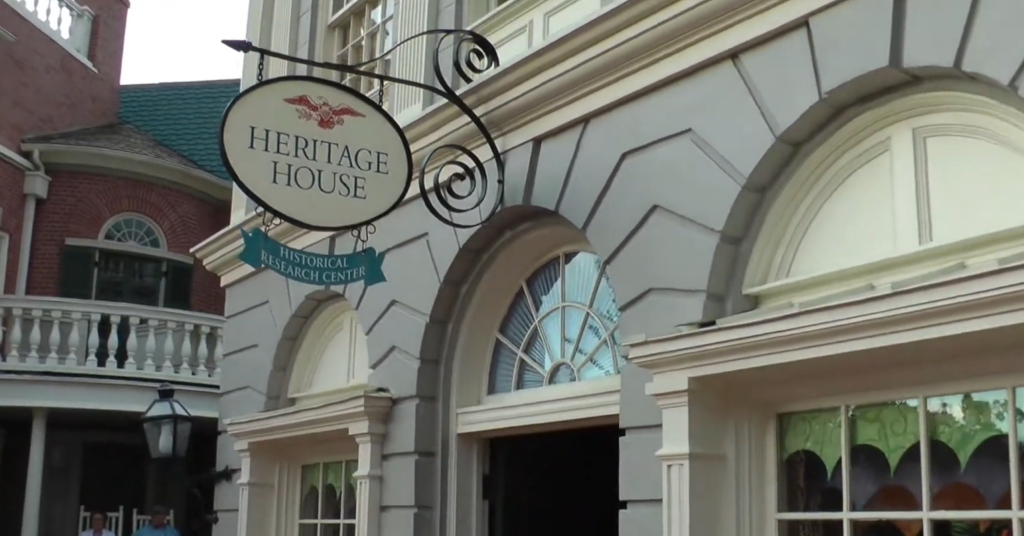
Heritage House occupied a prominent spot in Liberty Square beside The Hall of Presidents for more than four decades.
The shop opened in 1971 and fit naturally into Liberty Square’s original educational identity.
Rather than selling the same general Disney merchandise found throughout the park, Heritage House specialized in items connected with American history.
Guests could find historical memorabilia, patriotic merchandise and even genealogy-related services associated with family names and coats of arms.
It was the kind of highly specific retail experience that helped early Magic Kingdom lands feel distinct from one another.
Heritage House permanently closed as a shop on January 4, 2014.
The building was repurposed during the rollout of MyMagic+ and became a service center where guests could receive assistance with systems such as FastPass+, MagicBands and My Disney Experience.
Its later guest-service uses may be practical, but they also illustrate how Disney can remove an immersive, land-specific experience without creating an equivalent replacement.
Liberty Square lost a shop that had helped reinforce its historical theme since Walt Disney World’s first year.
The building survived.
The attraction of actually going inside Heritage House did not.
Plaza Swan Boats: An Attraction Removed From the Very Center of Magic Kingdom
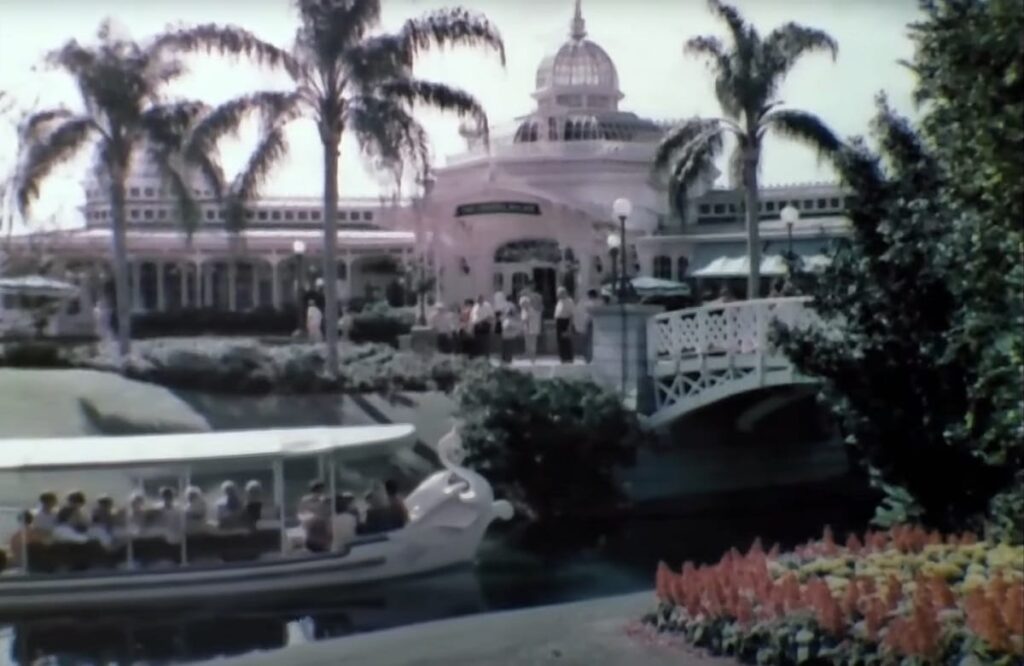
The waterways surrounding Cinderella Castle were once more than scenery.
Plaza Swan Boats officially opened on May 20, 1973.
The attraction used elegant boats decorated with swan figures to carry guests around Magic Kingdom’s central Hub and through waterways extending toward Adventureland and the Swiss Family Treehouse.
The original fleet included a dozen boats, and the attraction was significant enough to require a dedicated loading area near the Hub.
It was a gentle ride rather than a technological showpiece, but it gave the water surrounding Cinderella Castle an actual operational purpose.
The Swan Boats gradually moved toward seasonal operation and permanently disappeared in August 1983.
For decades afterward, their infrastructure remained visible.
The former loading area near the castle became associated with the Rose Garden, allowing generations of guests who never rode the Swan Boats to unknowingly stand in a piece of extinct-attraction history.
Magic Kingdom’s large Hub redevelopment in 2014 finally removed the remaining dock structure and altered portions of the old waterway.
The Swan Boats are therefore different from Stitch or Wonders of Life because there is no large abandoned ride building waiting to reopen.
Instead, they represent something Magic Kingdom once had and never replaced: an actual attraction occupying the waterways around the geographic center of the park.

EPCOT: The Park With the Most Unused Potential
If Magic Kingdom contains forgotten rooms and restaurants, EPCOT takes the idea to another level.
The park was built around enormous pavilions designed to absorb thousands of guests at a time.
When one of those pavilions loses its attractions, the amount of unused capacity can be enormous.
That is what makes EPCOT’s dormant spaces particularly frustrating.
Wonders of Life: An Entire Future World Pavilion Without an Attraction
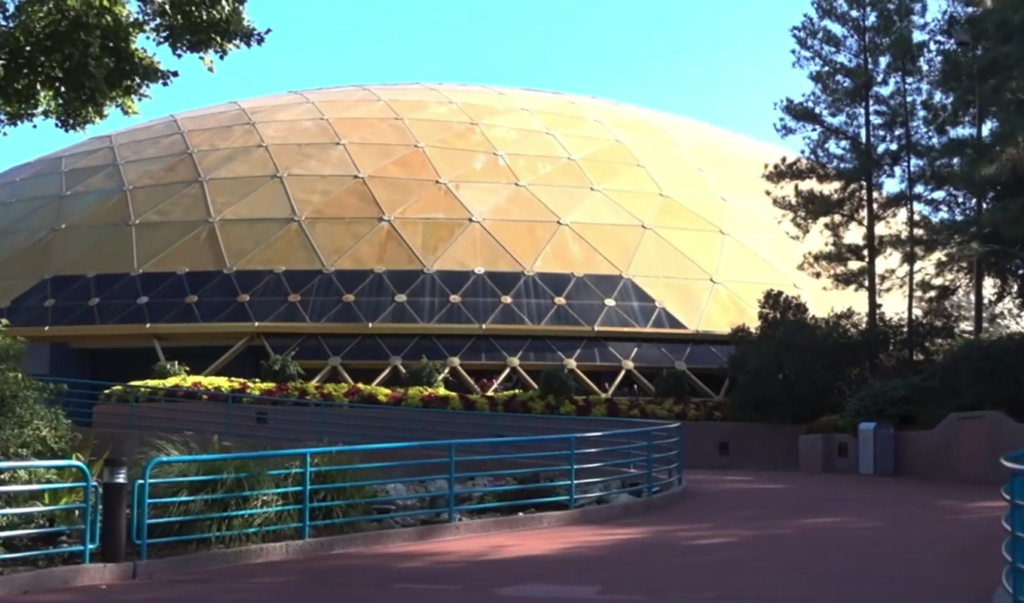
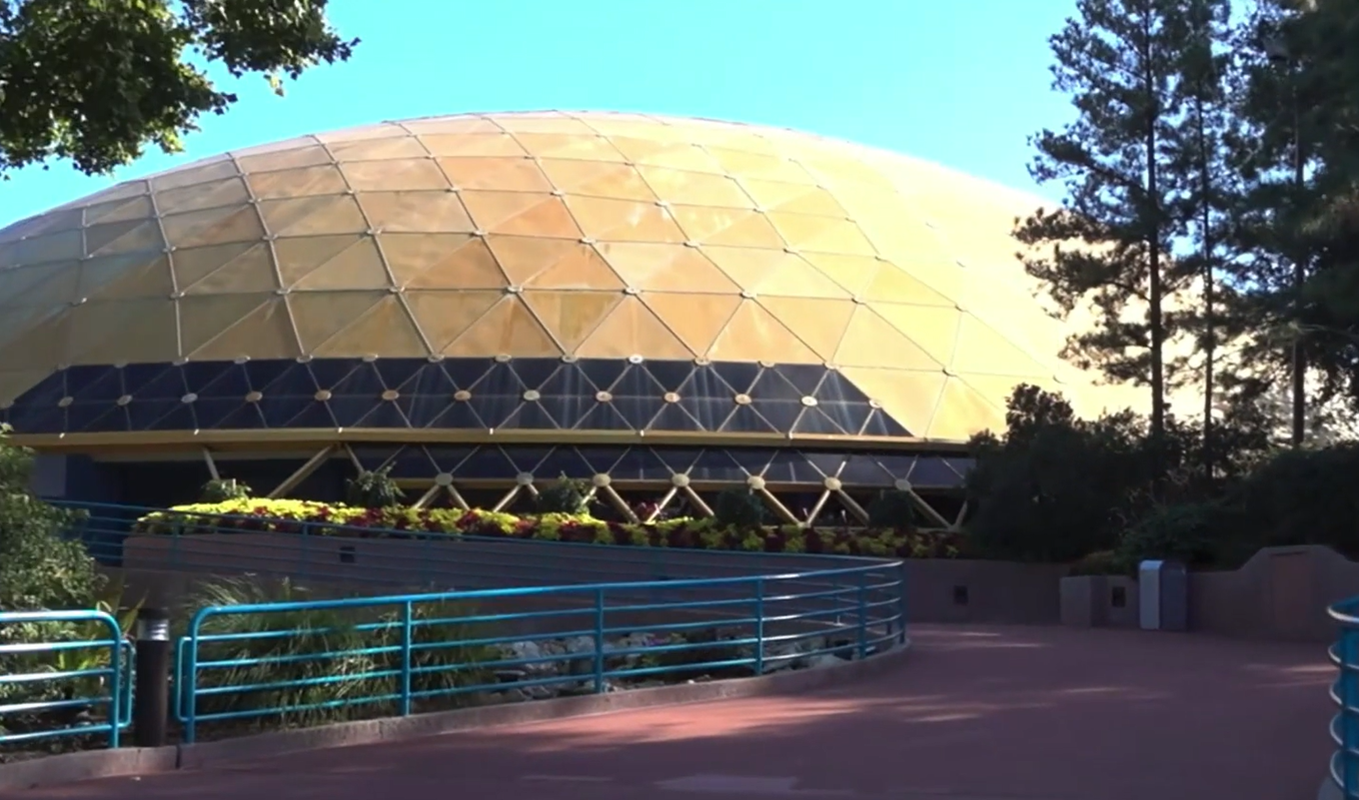
Wonders of Life opened on October 19, 1989.
Sponsored by Metropolitan Life Insurance Company, the enormous gold-domed pavilion explored health, fitness and the human body.
Its headline attraction was Body Wars, Disney’s first motion-simulator ride.
Using the same general simulator technology later associated with Star Tours, Body Wars “miniaturized” riders and sent them on a chaotic journey through the human bloodstream.
The pavilion’s other major attraction, Cranium Command, placed audiences inside the control center of a 12-year-old boy’s brain.
The show combined an Audio-Animatronic character named Buzzy with film performances featuring an unusually impressive comedy cast that included Dana Carvey, Kevin Nealon, Charles Grodin, George Wendt and Bobcat Goldthwait.
Wonders of Life also included The Making of Me, fitness demonstrations, interactive exhibits and other experiences.
It was a full-scale Future World pavilion—not one attraction, but an entire collection of them.
MetLife’s sponsorship ended in 2000, and the pavilion gradually slipped into seasonal operation.
Body Wars and Cranium Command last operated on January 1, 2007.
Disney then spent years using the shell of Wonders of Life as a festival center.
Guests attending the EPCOT International Food & Wine Festival or Flower & Garden Festival could once again enter the building, but the pavilion was no longer functioning remotely like the major attraction complex it had been built to house.
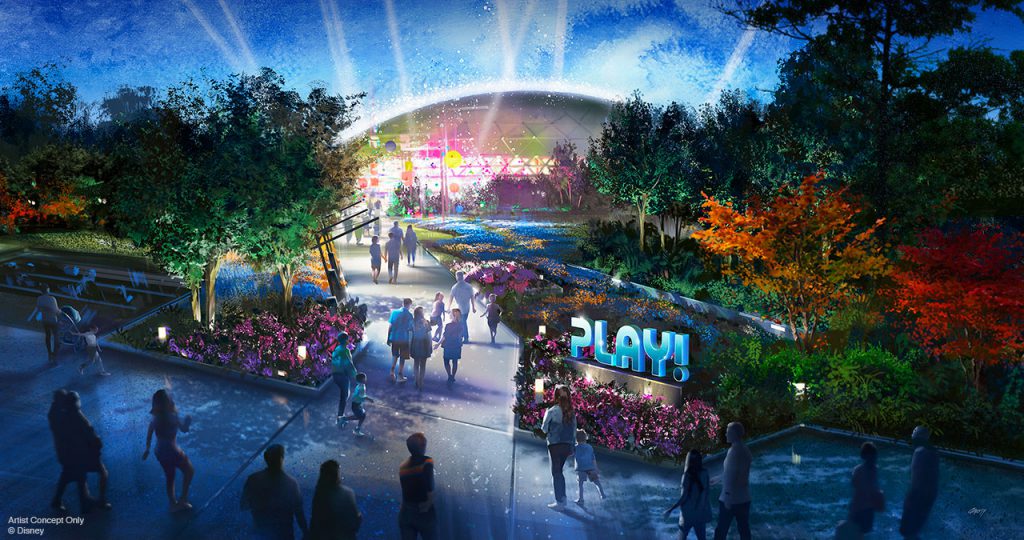
PLAY! Was Supposed to Finally Give the Pavilion a Future
In February 2019, Disney announced plans to completely reinvent the former Wonders of Life building.
The project eventually became known as the PLAY! Pavilion.
Concept art depicted an interactive digital city filled with games, characters and futuristic experiences.
Disney promoted PLAY! heavily as part of EPCOT’s enormous transformation and initially planned for it to arrive in time for Walt Disney World’s 50th anniversary.
Then the pandemic interrupted construction throughout the resort.
PLAY! never opened.
The project gradually disappeared from Disney’s EPCOT plans, and even the pavilion’s PLAY! logo flag at EPCOT’s entrance was finally removed in 2026.
Nearly two decades after Body Wars and Cranium Command closed, one of EPCOT’s largest existing attraction buildings still has no permanent replacement attraction.
At a park where Disney is simultaneously investing huge sums in new experiences, the continued dormancy of an existing pavilion this large is one of Walt Disney World’s most glaring examples of wasted space.
The Odyssey: An Opening-Day Restaurant Without a Permanent Everyday Purpose

The Odyssey opened with EPCOT Center on October 1, 1982.
The distinctive hexagonal restaurant sits on the water between Future World and World Showcase, connected to the surrounding park by bridges and walkways.
It was originally a conventional fast-food restaurant serving ordinary EPCOT guests every day.
That role ended on July 30, 1994.
Disney subsequently used the building for banquets, private events and special functions.
Over the years, Odyssey became almost a symbol of EPCOT’s willingness to retain a sizable building without giving it a permanent everyday attraction or restaurant.
Its most prominent modern use arrived in 2019 when it became home to Walt Disney Imagineering Presents the EPCOT Experience.
The elaborate preview center used a giant three-dimensional model, projection mapping and a 360-degree presentation to show guests what EPCOT was supposed to become during its multi-year redevelopment.
The EPCOT Experience closed in 2022.
Odyssey has continued to cycle through festival food concepts and temporary uses.
Those events prevent the building from being literally abandoned, but they do not change the larger point.
A substantial opening-day restaurant occupying a valuable waterfront location has gone more than 30 years without returning to a permanent daily role comparable to the one it was designed to fill.
Equatorial Africa: The World Showcase Pavilion That Never Arrived
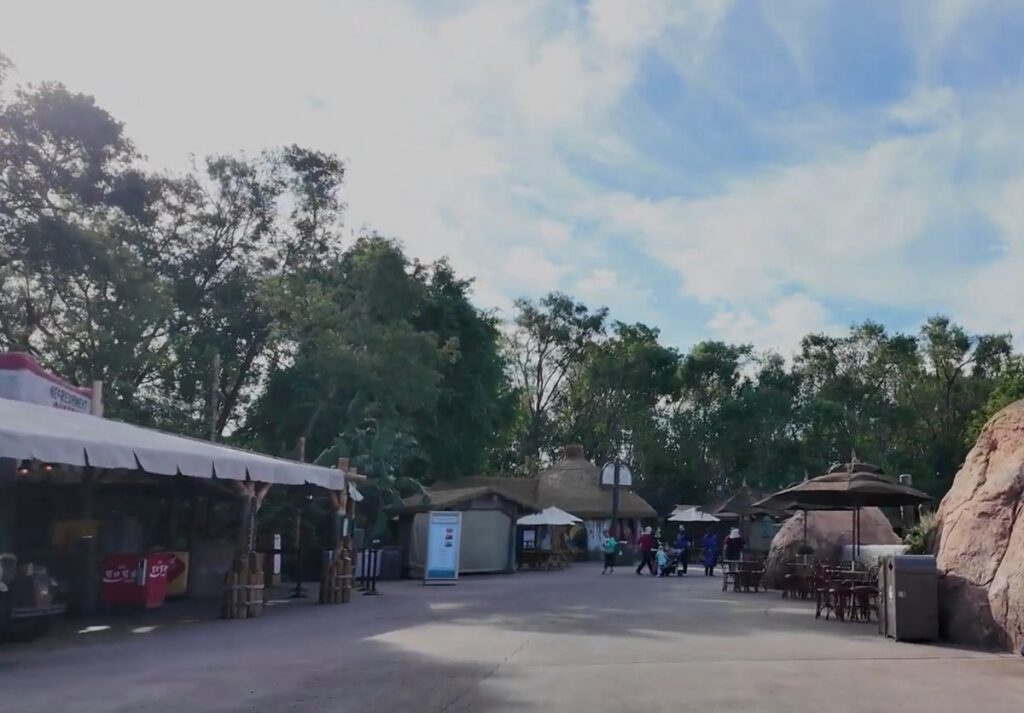
The area between China and Germany tells a slightly different story.
This is not primarily the site of an attraction that closed.
It is the site of an EPCOT pavilion that Disney announced and never built.
Equatorial Africa was announced in 1982 as a future World Showcase addition.
Disney Legend Ken Anderson worked on concepts for the pavilion, while author Alex Haley—best known for Roots—was involved with the project.
One planned attraction was a film called Africa Rediscovered, which Haley would have hosted.
The broader pavilion was intended to showcase the cultures, landscapes and peoples of equatorial Africa rather than represent one individual country.
The project ultimately never moved forward.
That leaves a noticeable break in World Showcase.
Guests walking between the enormous China and Germany pavilions pass a far less developed area currently associated with Refreshment Outpost and festival food and beverage operations.
Those uses are functional.
But compared with what surrounds them, the difference in scale is enormous.
China contains architecture, restaurants, retail, gardens and a Circle-Vision attraction. Germany contains an elaborate village, shops, dining and entertainment.
Between them is land once intended to support an entire World Showcase pavilion.
More than four decades after EPCOT opened, that contrast remains one of the clearest reminders that World Showcase was designed with room for much more than Disney ultimately built.
The Original ImageWorks: One of Old EPCOT’s Greatest Spaces Is Still Upstairs
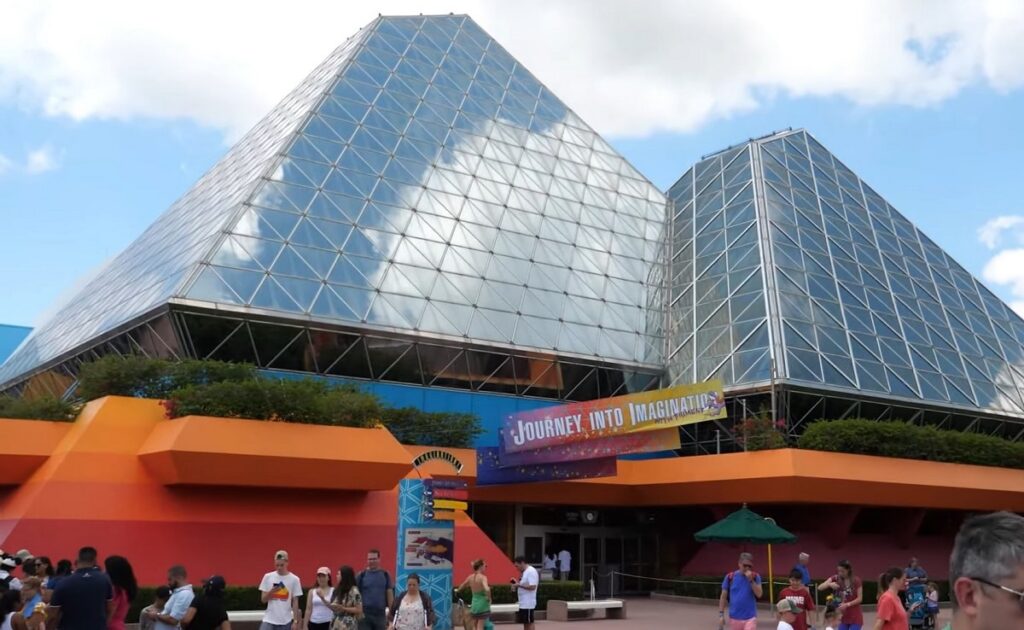
Few forgotten EPCOT spaces generate more nostalgia than the original ImageWorks.
When the Imagination pavilion opened on October 1, 1982, its dramatic glass pyramids contained a large second-floor interactive playground devoted to creativity.
The original Journey Into Imagination ride followed in March 1983, introducing Dreamfinder and Figment.
At the end of the attraction, guests traveled upstairs into ImageWorks.
This was not simply a gift shop at the exit of a ride.
ImageWorks was effectively another attraction.
Guests could experiment with music, color, light and early digital technology through experiences including:
- The Rainbow Corridor
- Stepping Tones
- Electronic Philharmonic
- Dreamfinder’s School of Drama
- Interactive image and color effects
The Rainbow Corridor became especially iconic, surrounding guests with illuminated colored tubes that responded as they moved through the space.
ImageWorks closed in October 1998 during the transformation of the pavilion.
When the reworked Imagination pavilion opened the following year, the guest-accessible interactive area had moved downstairs and became ImageWorks – The Kodak “What If?” Labs.
The original second floor never reopened to ordinary EPCOT guests.
Parts of the upper level have found occasional or restricted uses over the years, including Disney Vacation Club lounge space.
But that is not the same thing as restoring one of EPCOT’s most memorable public areas.
The glass pyramids remain.
The second floor remains.
And the overwhelming majority of EPCOT guests still never get to experience the building the way guests did during the park’s first 16 years.
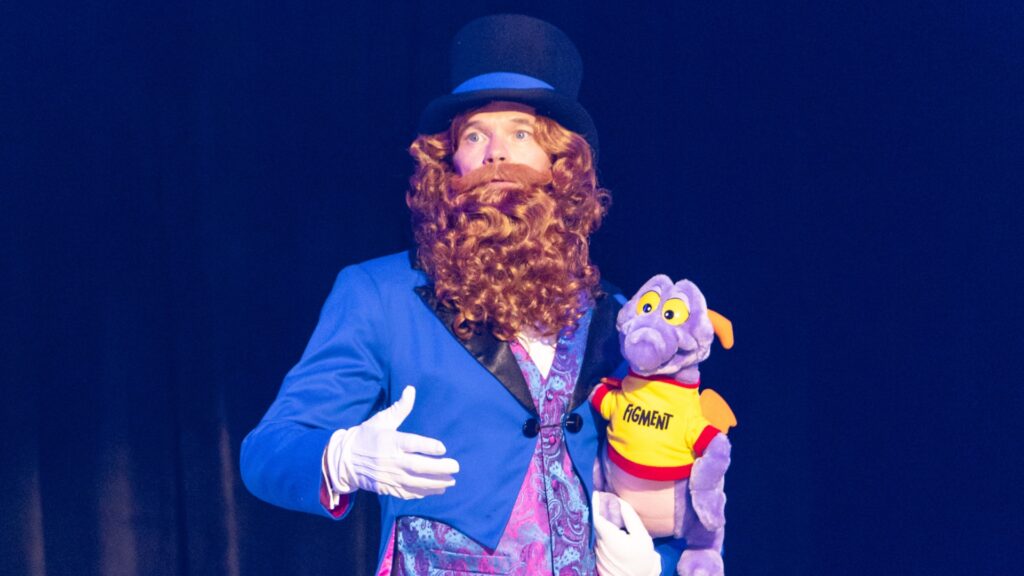
Dreamfinder’s Return Makes the Upstairs Space Even More Interesting
Disney’s newest announcement has suddenly put the entire pavilion back in the spotlight.
At D23 in 2026, Disney confirmed that Dreamfinder will reunite with Figment in a new Journey Into Imagination experience.
Disney has not revealed the complete layout of the project.
There is no promise that the original upstairs ImageWorks will reopen.
But the announcement makes the existence of all that underused space above the current attraction impossible not to think about.
Few Disney World locations offer such an obvious opportunity to reconnect modern guests with something the pavilion was originally built to do.
Rivers of Light: A Massive Amphitheater Waiting for Another Show
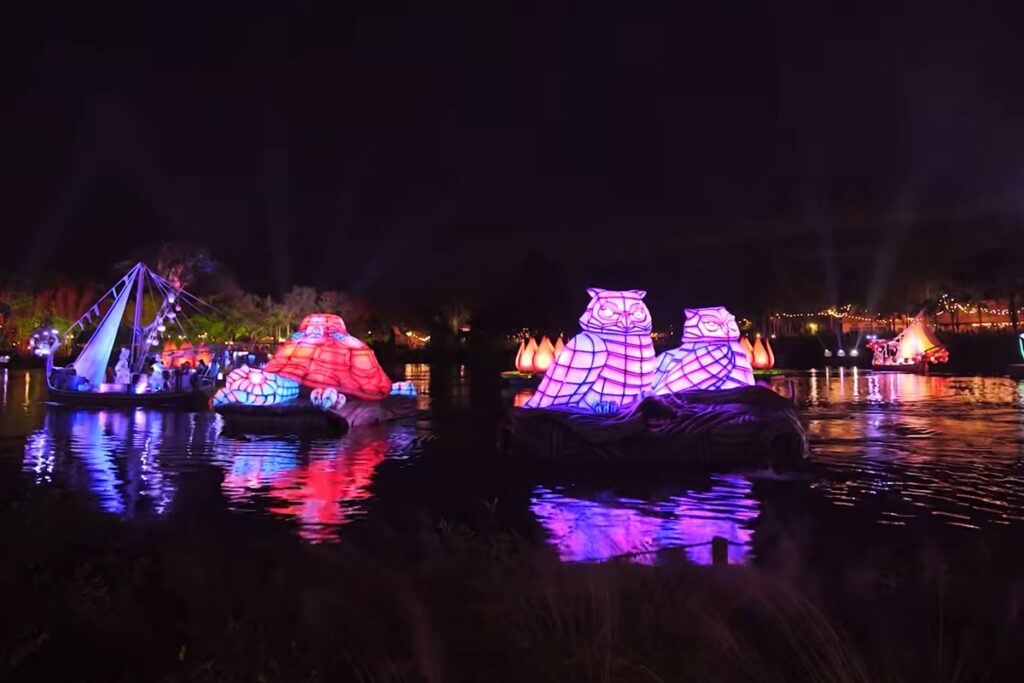
Rivers of Light represents a different kind of wasted capacity.
Disney did not simply create a show.
It built a substantial permanent venue around Discovery River to support one.
The project was part of Disney’s larger effort to transform Animal Kingdom from a park that traditionally closed relatively early into a full nighttime destination.
A large amphitheater was constructed between Discovery Island, Asia and DinoLand U.S.A., giving thousands of guests dedicated seating overlooking the lagoon.
Rivers of Light was originally expected to debut in 2016 but encountered significant technical delays.
The show finally opened on February 17, 2017.
Its centerpiece was an elaborate collection of floating lanterns, fountains, projections and animal imagery presented without traditional fireworks, respecting Animal Kingdom’s living animal population.
Disney revised the production in 2019 as Rivers of Light: We Are One, incorporating familiar Disney and Disneynature imagery.
The change did not save it.
Rivers of Light permanently closed in 2020.
The amphitheater remained.
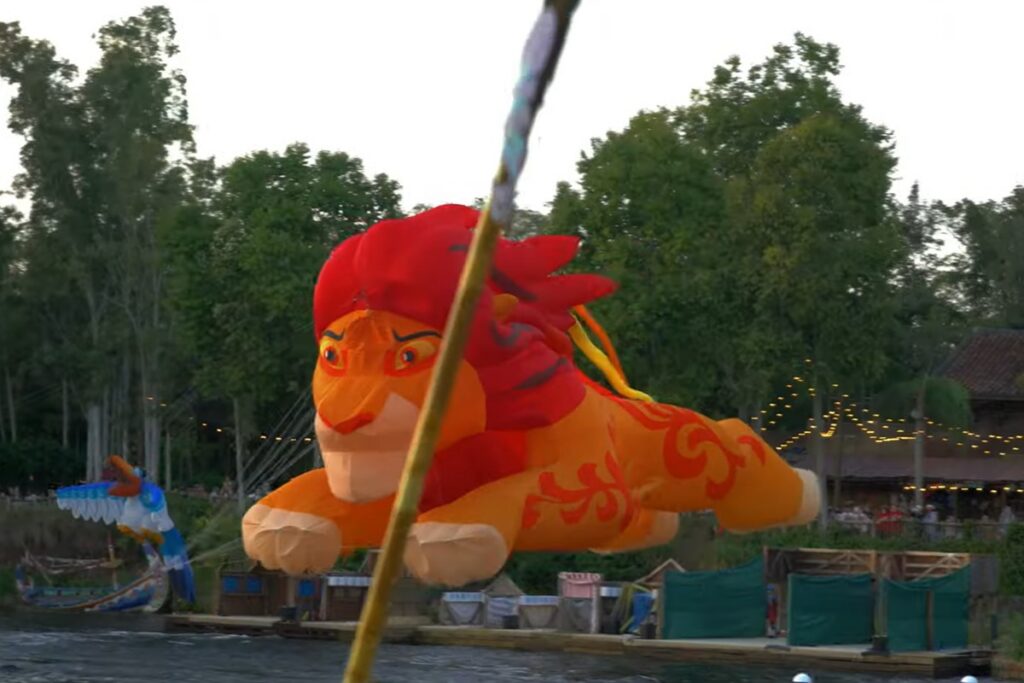
Disney attempted another use beginning October 1, 2021 with Disney KiteTails.
The daytime production used large character kites towed over Discovery River and took advantage of the existing viewing area.
It lasted only about a year, ending in September 2022.
Since then, Animal Kingdom has had thousands of purpose-built show seats surrounding a lagoon but no permanent large-scale production to put in front of them.
This is not an obscure backstage building.
It is visible infrastructure occupying a major portion of the park.
At a theme park that could benefit enormously from additional attractions and reasons for guests to remain into the evening, the continued lack of a lasting replacement for Rivers of Light stands out.
Discovery River Boats: Animal Kingdom’s First Failed Attraction
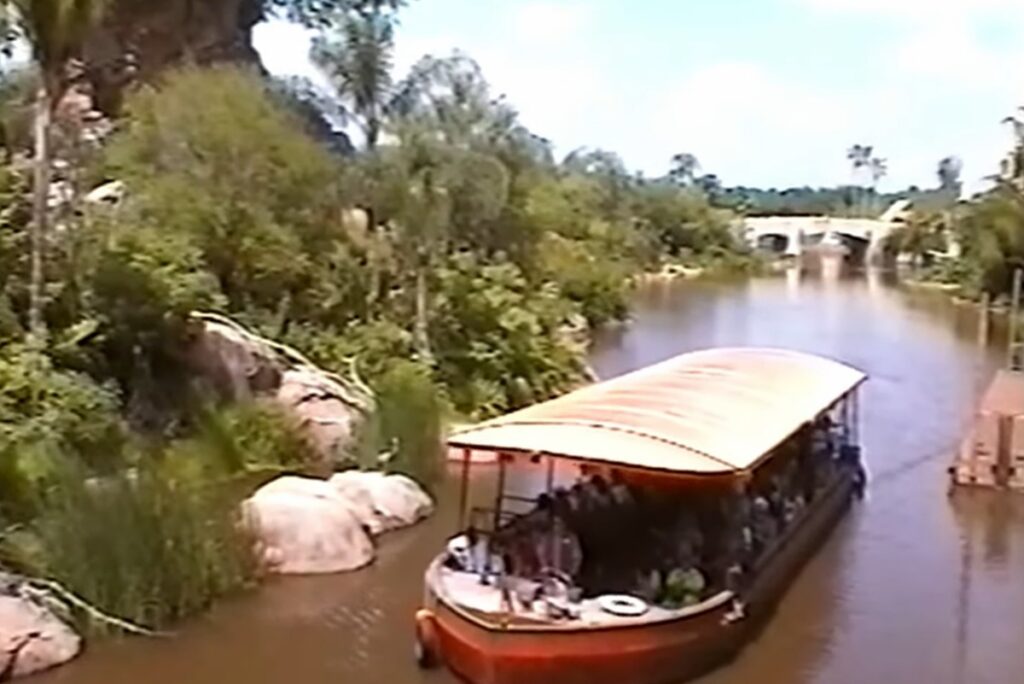
Discovery River itself once supported another attraction that disappeared extraordinarily quickly.
Discovery River Boats opened with Disney’s Animal Kingdom on April 22, 1998.
The boats were intended to move guests along the river surrounding Discovery Island while also giving them a scenic introduction to the park.
The concept had potential.
Animal Kingdom is large, and a water-transportation system could have provided both practical transportation and another attraction.
The problem was that guests treated the boats as an attraction and waited accordingly.
Lines could become extremely long for a relatively short cruise that offered few major scenes unavailable elsewhere.
There were some intriguing touches.
Guests passed geysers, an Iguanodon and a dragon cave near Camp Minnie-Mickey—one of the early remnants of the mythical-creature ideas once planned for the never-built Beastly Kingdom.
Disney repeatedly tried to fix the concept.
Discovery River Boats became Discovery River Taxis in late 1998, emphasizing transportation rather than entertainment.
In 1999, another revision turned the experience into the Radio Disney River Cruise.
None lasted.
The boats permanently disappeared in August 1999, roughly 16 months after Animal Kingdom opened.
More than a quarter century later, Discovery River remains one of Animal Kingdom’s defining geographic features.
Disney has used it for character flotillas, Rivers of Light and KiteTails, but the waterway has never again become a meaningful transportation system or permanent attraction.
It is an enormous piece of existing park infrastructure whose potential has never been fully recaptured.
Discovery Island: An Entire Disney Attraction Sitting Across the Water
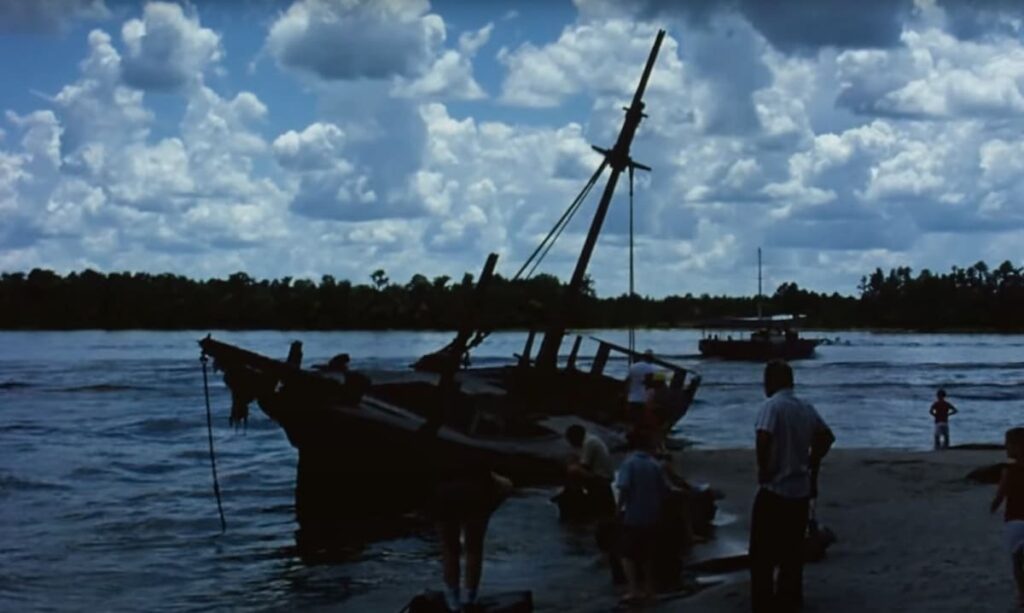
The most dramatic forgotten Walt Disney World space is not a theater or restaurant.
It is an entire island.
Discovery Island sits in Bay Lake between Disney’s Contemporary Resort, Wilderness Lodge and Fort Wilderness.
The 11.5-acre island opened to guests on April 8, 1974 as Treasure Island.
The original concept drew inspiration from Disney’s Treasure Island, complete with a shipwreck visible along the shore.
Disney gradually shifted the island toward conservation and wildlife.
It became Discovery Island in 1977 and developed into a zoological attraction populated by exotic birds, giant tortoises and other animals.
The island featured one of the world’s largest walk-through aviaries and participated in genuine conservation work.
Disney animal-care teams even became involved in efforts to preserve the critically endangered Florida dusky seaside sparrow.
For years, Discovery Island represented Walt Disney World’s primary animal attraction.
Then Disney built an entire theme park around wildlife.
Disney’s Animal Kingdom opened in 1998 with vastly larger habitats, animal-care facilities and conservation infrastructure.
Discovery Island closed on April 8, 1999.
The date is unusually fitting: exactly 25 years after the island first opened.
The animals left.
The guests left.
The island remained.
More than 27 years later, Discovery Island is still sitting in the middle of Bay Lake with no public use.
Unlike a former attraction building that might be difficult to squeeze into a modern park layout, this is 11.5 acres of Disney-owned land surrounded by resorts and waterways in the heart of Walt Disney World.
There are obvious complications to redeveloping an island.
But after more than a quarter century, Discovery Island remains the ultimate example of valuable Disney World property that once entertained guests every day and now does essentially nothing for them.
Why These Spaces Matter More Now
Walt Disney World has always changed.
Attractions close. Restaurants evolve. New ideas replace old ones.
There is nothing inherently wrong with that.
What is unusual is when the replacement never comes.
At Magic Kingdom, an attraction building that hosted Flight to the Moon, Mission to Mars, Alien Encounter and Stitch has spent years without another permanent show.
A large Adventureland restaurant across from Pirates of the Caribbean remains seasonal.
A prime Hub restaurant has largely become a dessert-party venue.
At EPCOT, an entire Future World pavilion has lacked a permanent attraction since 2007.
A restaurant that opened with the park has spent more than three decades cycling through temporary uses.
A large World Showcase expansion site still has nothing comparable to the national pavilions surrounding it.
An entire floor of the Imagination pavilion no longer serves ordinary guests as the interactive attraction it was built to be.
At Animal Kingdom, Disney constructed a major amphitheater for nighttime entertainment and currently has no permanent production there.
And across Bay Lake sits an entire former Disney attraction that has been closed since the Clinton administration.
These spaces become especially noticeable when Disney is simultaneously demolishing other areas to create room for expansion.
Rivers of America and Tom Sawyer Island were removed for Piston Peak National Park.
DinoLand U.S.A. is being replaced by Tropical Americas.
Grand Avenue is being transformed for Monstropolis.
Those projects prove that Disney is willing to spend heavily when it decides more park capacity and new attractions are necessary.
That makes it fair to ask why some of the infrastructure Disney already owns continues to wait.
Disney World Forgotten Spaces FAQ
What happens to Disney World attractions after they close?
There is no single outcome. Some buildings are reused for new attractions, while others become event venues, seasonal restaurants, guest-service spaces or backstage areas. In a number of cases, major purpose-built spaces can remain without a full-time replacement for years.
What replaced Stitch’s Great Escape at Magic Kingdom?
Disney has not announced a permanent attraction to replace Stitch’s Great Escape. The Tomorrowland building previously housed Flight to the Moon, Mission to Mars and The ExtraTERRORestrial Alien Encounter before Stitch’s Great Escape opened in 2004.
What happened to EPCOT’s Wonders of Life pavilion?
Wonders of Life opened in 1989 with attractions including Body Wars and Cranium Command. Its major attractions closed in January 2007, and the building later served as a festival center. Disney announced the PLAY! Pavilion for the space in 2019, but that project never opened.
What happened to the original upstairs ImageWorks at EPCOT?
The original ImageWorks opened in 1982 and closed in 1998. Parts of the upper level have been reused, including for a Disney Vacation Club lounge, but the original second-floor creative playground has never reopened to ordinary EPCOT guests.
What happened to Rivers of Light at Animal Kingdom?
Rivers of Light debuted in 2017 in the purpose-built Discovery River amphitheater and permanently closed in 2020. Disney KiteTails later used the area but ended in 2022, leaving the large viewing venue without a permanent replacement show.
Is Discovery Island at Disney World still unused?
Yes. Discovery Island opened in Bay Lake as Treasure Island on April 8, 1974, became a wildlife preserve, and closed on April 8, 1999. As of September 2026, the island remains inaccessible to guests and Disney has announced no new public use for it.
Disney World History Sometimes Just Sits There
Disney has always been exceptionally good at making the past disappear.
When a successful replacement opens, guests quickly begin associating the location with something new.
World of Motion becomes Test Track. Maelstrom becomes Frozen Ever After. The Great Movie Ride becomes Mickey & Minnie’s Runaway Railway.
The old attraction becomes history because something else has taken its place.
The spaces in this article are different.
They represent stories that ended without another equally substantial story following them.
Sometimes the result is behind a locked Tomorrowland door.
Sometimes it is a dark restaurant across from Pirates of the Caribbean.
Sometimes it is an enormous golden dome at EPCOT.
Sometimes it is a row of amphitheater seats facing an empty lagoon.
And sometimes it is an entire wooded island sitting silently in Bay Lake.
Not every square foot of Walt Disney World needs to contain an E-ticket attraction, and not every closed location needs to be replaced immediately.
But after enough years pass, temporary becomes permanent.
At a resort where usable space and attraction capacity have never been more valuable, these forgotten locations are more than historical curiosities.
They are opportunities Disney already owns.
And until Disney decides to do something more meaningful with them, they remain some of the most fascinating wasted spaces at Walt Disney World.